
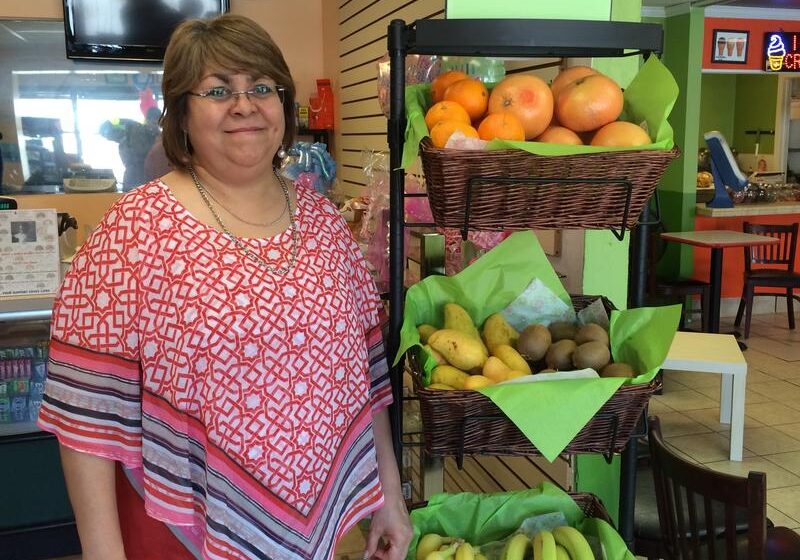
For customers stepping inside Abarrotes Delicias, the noise, traffic and heat of the surrounding Kansas City, Kansas, neighborhood seem to disappear.
The small store offers everything from tacos to snacks to money transfers – or just an air-conditioned place to hang out and watch TV on a lazy afternoon.
Owner Graciela Martinez says she tries to provide a welcoming personal touch when serving her customers, who comprise a diverse sample of nearby residents.
“The majority of our clients are Latinos from Central America,” Martinez says. “Workers that come in to make small purchases or get money orders, stay-at-home moms, kids.”
In a largely Spanish-speaking part of town where there are few grocery stores, small tiendas like this one are often among the few places people can shop for food – and unfortunately, the food offerings are usually not all that healthy.
“In these communities, it’s easier to get soda or candy or highly preserved foods than it is to get the healthy options,” says Vicki Collie-Akers, a University of Kansas researcher and community health worker.
Collie-Akers leads the Health for All Food Retail and Restaurant Initiative program, which aims to improve community health by changing the way small neighborhood stores do business.
Whether they are entering a tienda in Kansas City, Kansas, a large suburban grocery store in Johnson County or a convenience store in a small town, shoppers are typically greeted by enticing displays of chips, soda and candy. And that is no accident.
Junk-food makers offer big incentives to stores in exchange for prime product placement and promotion.
In many parts of town, health-conscious shoppers can easily bypass the snacks and head for the produce. But in food deserts, areas that lack well-stocked grocery stores, that’s usually not an option.
Collie-Akers is trying to change that dynamic in Latino neighborhoods, where obesity and diabetes are persistent problems.
“We focus on how the environment supports or does not support healthy eating or engagement in physical activity,” Collie-Akers says.
It’s not just a matter of stocking some fruits and vegetables and expecting customers to buy them. Changing how stores operate means thinking not like a high-minded health crusader but like a marketer.
“If you’ve been in a grocery store, you know that the impulse buys are right next to the cash register – the gum and the candy,” Collie-Akers says. “We’re trying to make it such that the avocados are right next to the cash register.”
Following the example of food makers and wholesalers that offer branded coolers, shelving and promotions in exchange for prime shelf space, the Health for All Food Retail & Restaurant Initiative offers its own coolers and fruit baskets plus promotion on social media. In exchange, the stores agree to stock fruits, vegetables and other healthy foods and put them within easy reach of customers.
“We’re trying to make it almost the default behavior to get the healthy options,” Collie-Akers says.
But creating this kind of shift isn’t easy, according to Alex Ortega, a University of California, Los Angeles professor who’s been involved with similar programs in East Los Angeles and nearby Boyle Heights for several years.
“So if you build it, it doesn’t mean they’re going to come, right?” Oretga says.
He says he’s seen the strategy work well: Some stores he’s worked with have reported a 20 percent increase in profits since introducing healthy foods.
Effecting real change in community health, however, requires more than a one-size-fits-all strategy.
“There’s different cultures, different language, different kinds of foods that are being bought and prepared,” Ortega says. “You really have to know what the needs are of the community and what the perceptions are of corner stores. And that will vary from community to community.”
While many health advocates talk about the problem of food deserts, some studies show that simply providing better food options in many neighborhoods doesn’t change what people buy or eat.
“You have to have health education and community outreach as part of the intervention,” Ortega says.
Healthy foods projects are being undertaken in more and more areas with large Latino populations. In some of those places, though, the market interventions have been akin to TV makeover shows, with little commitment to the community they’re trying to help.
“They will spend anywhere between a weekend to maybe a month with a store and not doing the kind of back and forth that needs to be involved in terms of tweaking the intervention as the project moves along,” Ortega says.
Organizers for the Kansas City, Kansas, program say they’ve been working closely with store owners through the first year of the program. And as they expand the program to more stores and into restaurants in the coming year, they plan even more community engagement.
They’re now evaluating the first year’s achievements, though to hear store owner Martinez tell it, the program has already made a difference for her customers.
“At first, they asked, ‘Where are the potato chips?’” she says. “So when they found out we didn’t have potato chips, they said, ‘Well, OK, I’ll have a banana.’”
Those are just the kind of results Collie-Akers wants to see.
“Our hope is that that information can be used as we go further to expand the number of stores that are engaged and create some champions within the community of business owners that will help us convey information to others stores that tell them, ‘well, there really is a market for this,’” Collie-Akers says.
Alex Smith is a reporter for KCUR, a partner in the Heartland Health Monitor team.
Reading these stories is free, but telling them is not. Start your monthly gift now to support Flatland’s community-focused reporting.
Related Stories
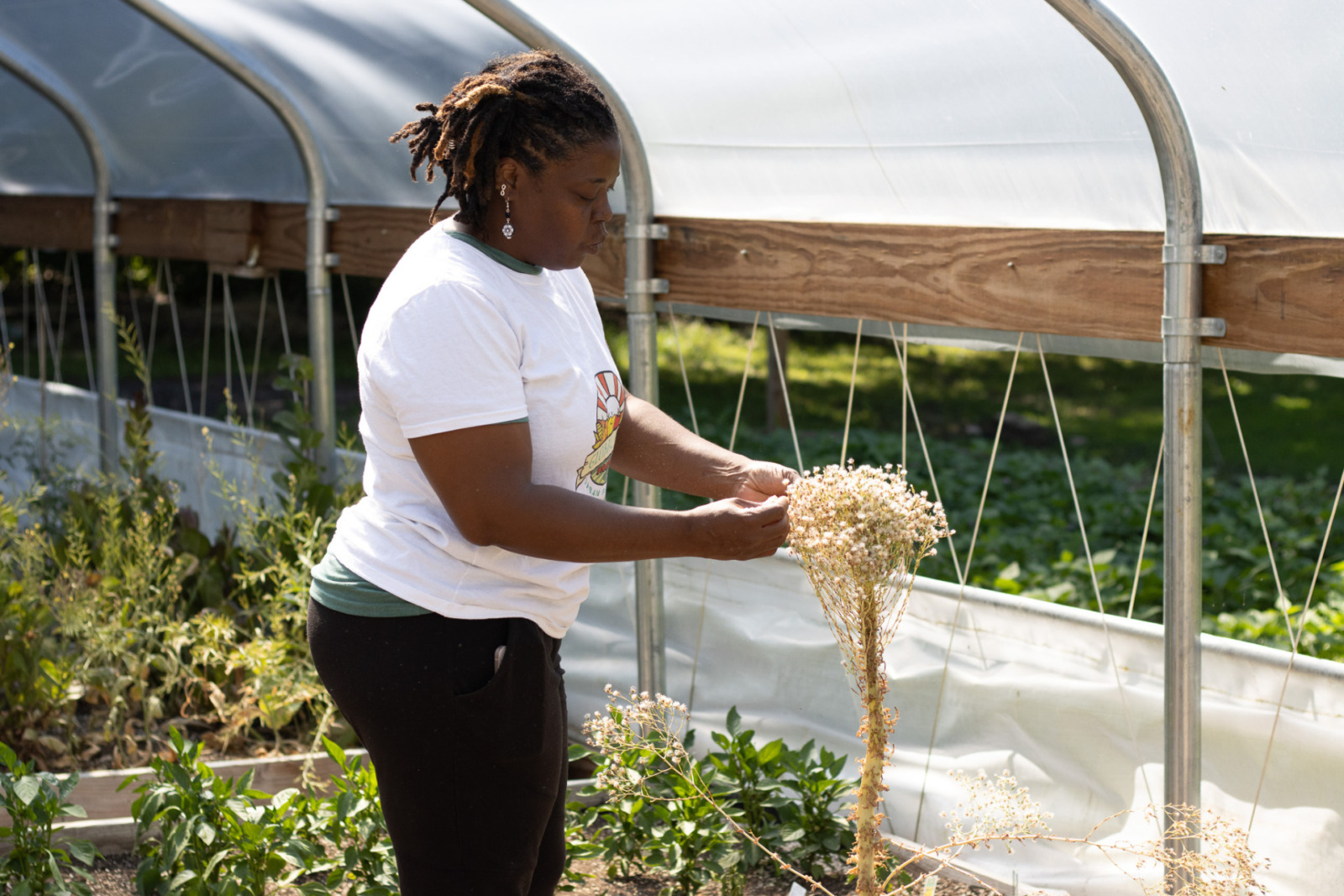
Harvesting Change | Making Local Food Connections in the Heartland
Meet the people who are making Kansas City’s increasingly interconnected local food system more sustainable on multiple fronts.
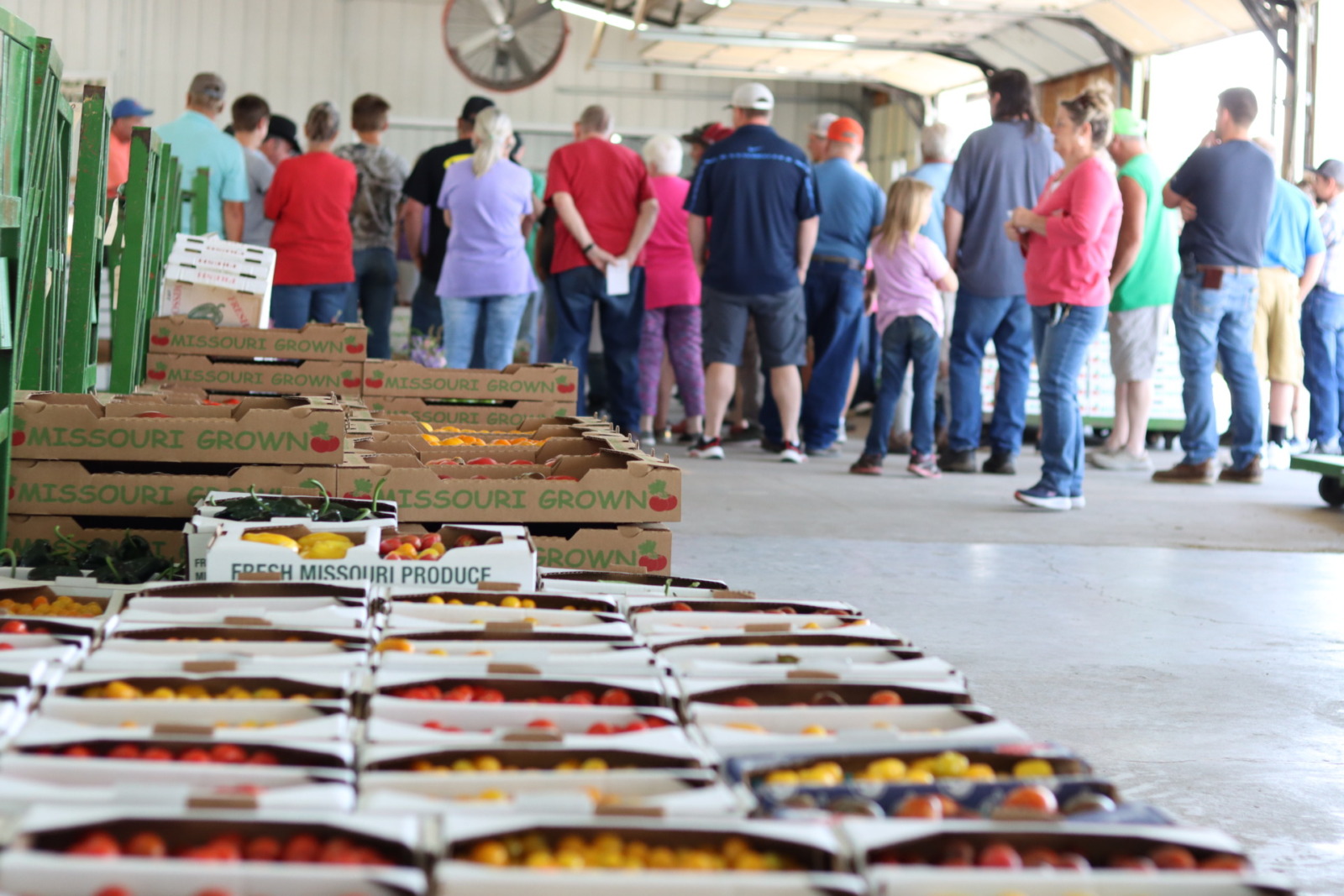
Do We Have a Bid? Auctions Sell Produce by the Lot
Produce auctions in Missouri and Kansas allow wholesale buyers to shop local, offering a key link in the food distribution chain.
Harvesting Change | Growing Roots in the KC Food System
The New Roots farmer training program is a four-year apprenticeship with Catholic Charities of Northeast Kansas and Cultivate KC.