
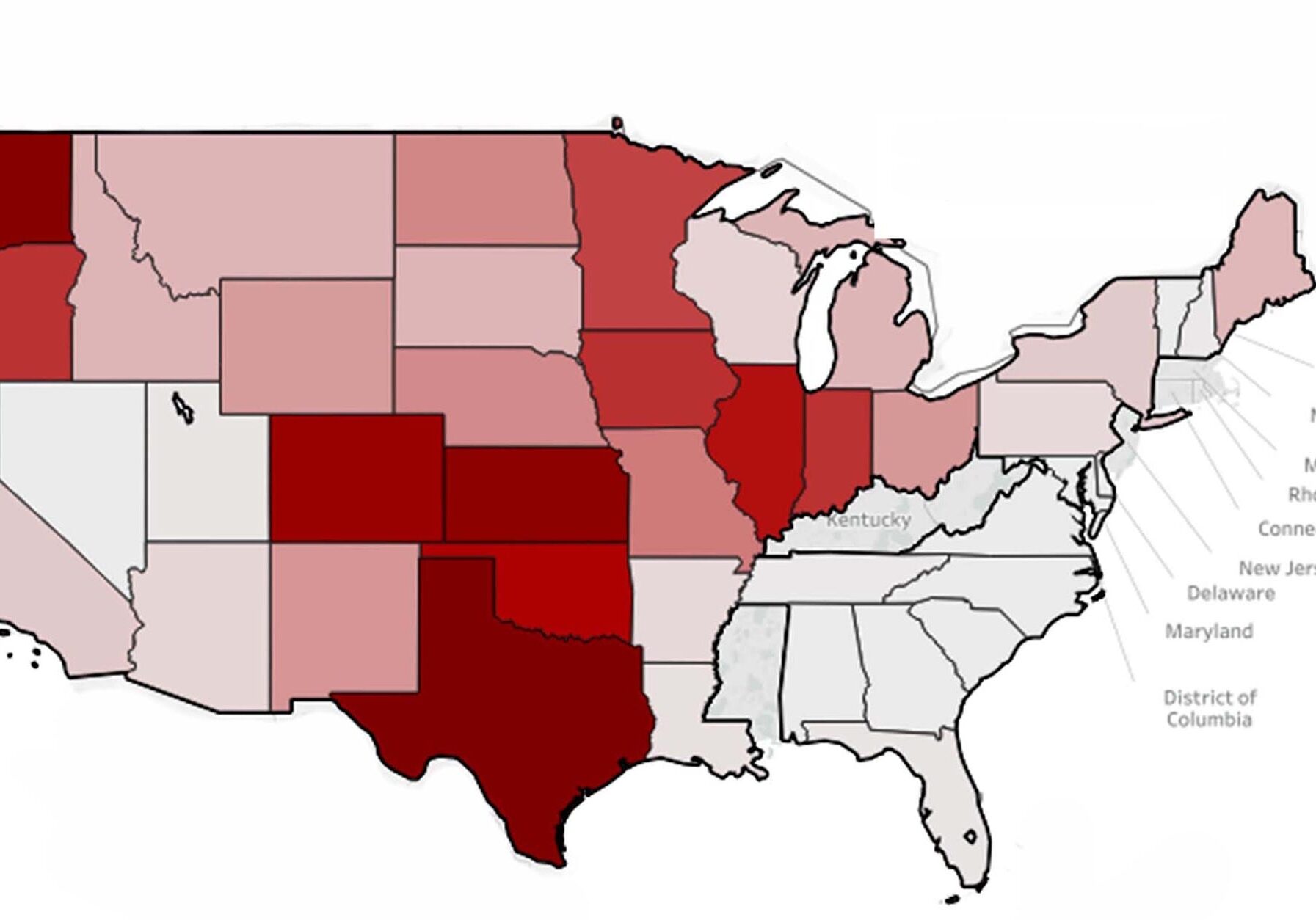
Federal Tax Credits Drive Foreign Wind Investment
December 4, 2017 | Johnathan Hettinger | 3 min read
Investment in U.S. wind energy production has increased tenfold over the past decade with the help of billions of dollars in federal tax help, with foreign companies making up much of the increase.
Indeed, six foreign-owned wind energy companies have received at least $4.8 billion in federal tax credits between 2000 and 2015, according to a 2015 report from Good Jobs First, a nonprofit group that tracks government spending.
Those companies include Iberdrola, a Spanish-owned wind energy company that, at $2.2 billion, has received more money from the U.S. government than any other company.
[FLEX-CONTENT]
Between 2004 and 2014, the amount of U.S. farmland controlled by foreign investors and corporations doubled from 13.7 million acres to 27.3 million, according to an analysis of data from the U.S. Department of Agriculture.
More than a third of that increase, 4.5 million acres, was due to long-term leases of farmland for wind farms and solar farms.
The acreage is valued at $7.9 billion.
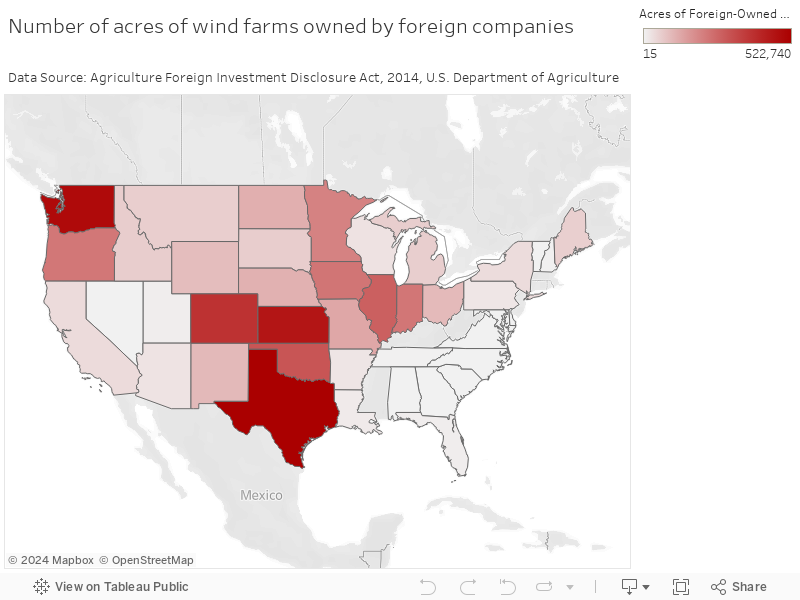
During the same period, the amount of megawatts of produced by installed wind farms grew from 6,723 megawatts to 65,880 megawatts.
Fueling the increase were bountiful U.S. tax credits.
Wind energy companies, including government-owned companies, such as EDP Renewables (owned by Portugal) and Electricite de France (owned by France), were able to take advantage of a tax credit offered after the economic downturn in 2008.
As part of the American Recovery and Reinvestment Act, wind energy companies could choose to convert the production tax credit (based on how much electricity they produce) into an investment tax credit (based on how much they invested, whether the technology worked or not). Through the act, the companies received cash grants up front in lieu of tax credits down the road.
These investments, called Section 1603 grants, were designed to help jumpstart the rural economy after a departure of investment in the industry.
Until the 2008 recession, companies with large tax bills, like financial institutions, would pay wind energy companies to partner on projects; that way the institutions could use the extremely large tax credits that many of the companies didn’t need.
After the financial crisis, these institutions no longer had large tax bills because of their business losses. Because they then did not need tax credits, the investments dried up and the federal government stepped in, said David Loomis, a professor at Illinois State University.
Loomis said that the European companies have had been able to gain so much of the U.S. market and capitalize on these tax credits because they have invested in wind turbines for decades and were better equipped to build utility-scale wind farms.
Despite being located outside the U.S., many of the wind energy companies have used “in-sourcing,” which means contracting with U.S. companies and building their own U.S. manufacturing facilities. They manufacture their wind turbines because of the costs and the physical difficulties in transporting large turbines long distances, said Peter Kelley, spokesman for the American Wind Energy Association.
[FLEX-CONTENT]
[FLEX-CONTENT]
— This reporting project was a collaboration between Flatland and the Midwest Center for Investigative Reporting, an independent, nonprofit newsroom covering agribusiness and related issues.
Reading these stories is free, but telling them is not. Start your monthly gift now to support Flatland’s community-focused reporting.

Related Stories

The End of the Pesticide Arms Race?
To spray or not to spray, that’s the question for farmers. Pests can be the make-or-break factor for a season’s harvest. Between 20% to 40% of global crop production is lost to pests annually, according to the Food and Agriculture Organization of the United Nations. Conventional chemical pesticides have traditionally addressed this challenge, but their…
Rural communities rely on this USDA agency. Trump’s cuts threaten that
USDA Rural Development is Washington’s chief tool to promote economic growth in rural counties — providing funding for everything from renovating old hospitals to providing faster internet service. Sometimes the agency sweeps in to clean up an urgent mess. For instance, last year in Dunklin County, in Missouri’s Bootheel, a sewer system failure sent raw…
‘Time for a Reckoning.’ Kansas Farmers Brace for Water Cuts to Save Ogallala Aquifer
After decades of local inaction, Kansas lawmakers are pushing for big changes in irrigation to conserve water and save the Ogallala Aquifer.