
Aging KCK Congregation Bequeaths Building to Serve Youth
January 26, 2025 | Bill Tammeus | 6 min read
Across much of the nation in recent decades, shrinking churches have confronted the painful question of whether they can afford to maintain a building for worship and other activities.
Time and again the answer has been no. Sometimes that means finding other places in which to continue offering worship. But often it means either abandoning a structure — and, thus, contributing to the deterioration of a neighborhood — or selling an old building to a developer for secular reuse.
There’s sadness, disruption, and even deep grief in all of that. But a Mennonite congregation in Kansas City, Kansas, has found a generative way to give its old building in the Argentine neighborhood a new life that helps needy youth and thus continues the congregation’s decades-old mission.

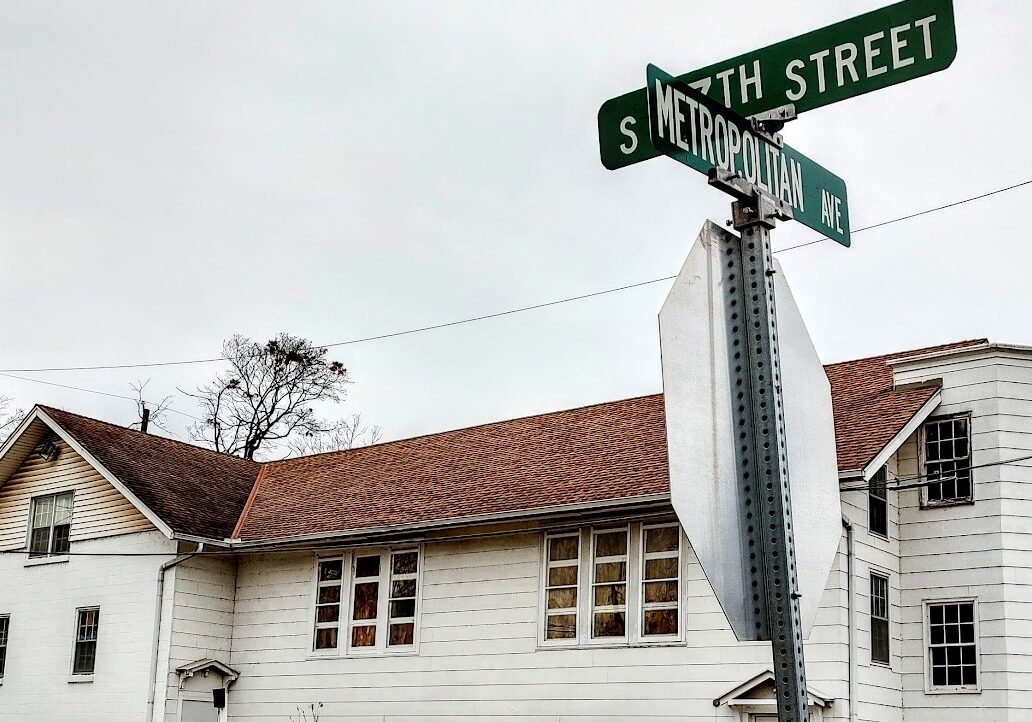
The building that housed the Argentine Mennonite Church at 3701 Metropolitan Ave. now is home to a branch of the Christian nonprofit agency, Youthfront, which runs many programs to help meet the needs of young people. The church gave the building to Youthfront.
Kurt Rietema, senior director of Youthfront Neighborhood, puts it this way: “This is more than a transfer of a building to us. This is the transfer of the church’s mission to us. This isn’t the death of a church and a congregation. This is just new life.”
And that church’s last pastor, Sandeep Thomas, says, “It seemed like a win-win to me in every direction that you look. Youthfront benefits. The Argentine church benefits and the kingdom of God benefits.” Indeed, a small group of church members continues to have informal Sunday morning gatherings in their old building as guests of Youthfront.
To be sure, it took time for both the church and Youthfront to agree to this new arrangement. In fact, it was difficult for remaining church members— planted in the 1920s and serving the multi-cultural Argentine area faithfully since then — to agree that the end was at hand. And it took Youthfront officials time to evaluate whether the agency’s mission could thrive in the church’s aging building.

As Rietema notes, “We’ve (Youthfront) had a ministry in the (Argentine) neighborhood for well over a decade now. And we’ve had different interactions with the Argentine Mennonite Church. It was about seven years ago that they brought on a youth pastor. There was probably some sort of illusion that this … was going to save their church.”
To help that pastor get oriented, Youthfront invited him to serve at its Snack Shack KC operation so he could meet neighborhood kids and understand their many needs.
That way, says Rietema, “The church got to know us a whole lot more and recognized that if anyone is doing a lot of work with youth in this neighborhood it’s Youthfront, and they gained a lot of respect for us over time.”
But when church leaders eventually asked if Youthfront wanted to take over the property, Rietema’s first response was: “‘I don’t think that’s us.’ We really didn’t have a need for this space but we said, ‘We still want to help you think through who the next partner could be because we know what can happen to neighborhoods if churches just close their doors.’”
So Youthfront invited church members to a Christian Community Development Association conference in Kansas City. It was while attending that conference that church members became convinced Youthfront should take over its property.
About that time, says Rietema, the church’s youth pastor left and the church had “a moment of sobriety where they were just recognizing that they were down to just a handful of members and ‘What are we going to do?’”
That’s when, says Thomas, “We began to have conversations within the church about what we wanted to see happen to the congregation. We thought about our older members dying off and still having to maintain our facility. And we didn’t want it to become an eyesore to the neighborhood and a burden to the community. That’s not what we were called to. We’re called to be salt and light and a blessing and to enhance the community.”
Thomas — who now does family therapy through a Christian counseling agency — finally told the congregation that Youthfront is “doing what our church was born to do. And we can’t do that anymore. So why not just turn over the facilities to that organization so it can continue the mission of the church?”
As Rietema notes, “The heart of that church has always been around youth. They started a children’s home in Argentine several decades ago. That later transformed into another organization.”
As the church’s decision to turn over the building drew near, Youthfront said that for the space to work for its mission the pews would have to be removed from the sanctuary. The congregation balked at that news, but Rietema says church members eventually “came back and said ‘yes, do whatever you want.’”

The congregation didn’t ask Youthfront for any money. Instead, church members asked Youthfront to invest in the building.
As Thomas sums up the decision: Both parties “bought the vision and were willing to do that.”
Thomas knows that other churches across the country face different situations, but he says this: “If I were to be speaking to churches, I would say, ‘God may surprise you in what direction he has for your resources. And these are not our resources. Just keep that in mind and honor everything that went in the past to make the church what it is. And ask this: What is the best outcome for the kingdom of God?’”
Dwindling faith communities around the country will need to wrestle with that question. But Youthfront leaders and members of the Argentine Mennonite Church now think they know the happy answer for their unique situation.
(Disclosure: One of the author’s daughters is Youthfront’s vice president of development.)
Bill Tammeus, an award-winning columnist formerly with The Kansas City Star, writes the “Faith Matters” blog for The Star’s website, book reviews for The National Catholic Reporter and The Presbyterian Outlook. His latest book is Love, Loss and Endurance: A 9/11 Story of Resilience and Hope in an Age of Anxiety. Email him at wtammeus@gmail.com.
Reading these stories is free, but telling them is not. Start your monthly gift now to support Flatland’s community-focused reporting.

Related Stories
9/11 Pain Continues as Justice System Plods Along
Every email I get from Danielle Reddan, director of the Victim Witness Assistance Program in the Office of the Chief Prosecutor of Military Commissions, starts the same way: “Dear Survivors & Families.” More than two decades after the murder of my nephew, a passenger on the first plane that Osama bin Laden’s misguided theological thugs…
Gay Bishop Reflects Evolution of Evangelical Lutheran Church
Almost 20 years ago, I devoted a long column in The Kansas City Star to an interview with two local pastors, both in the Evangelical Lutheran Church in America, a Mainline Protestant denomination. The ELCA was then debating whether to change its rules to allow the ordination of LGBTQIA+ people as clergy. The Rev. Donna…
Kansas City’s ‘Stunning’ Array of Sacred Music
Rockhurst University music professor Timothy L. McDonald grew up near New York City where, he says, “we have a lot of sacred music, but it’s my perception that New York has not nearly as many professional and semi-professional sacred music groups as in Kansas City. “It’s stunning to me how many such groups we have…