
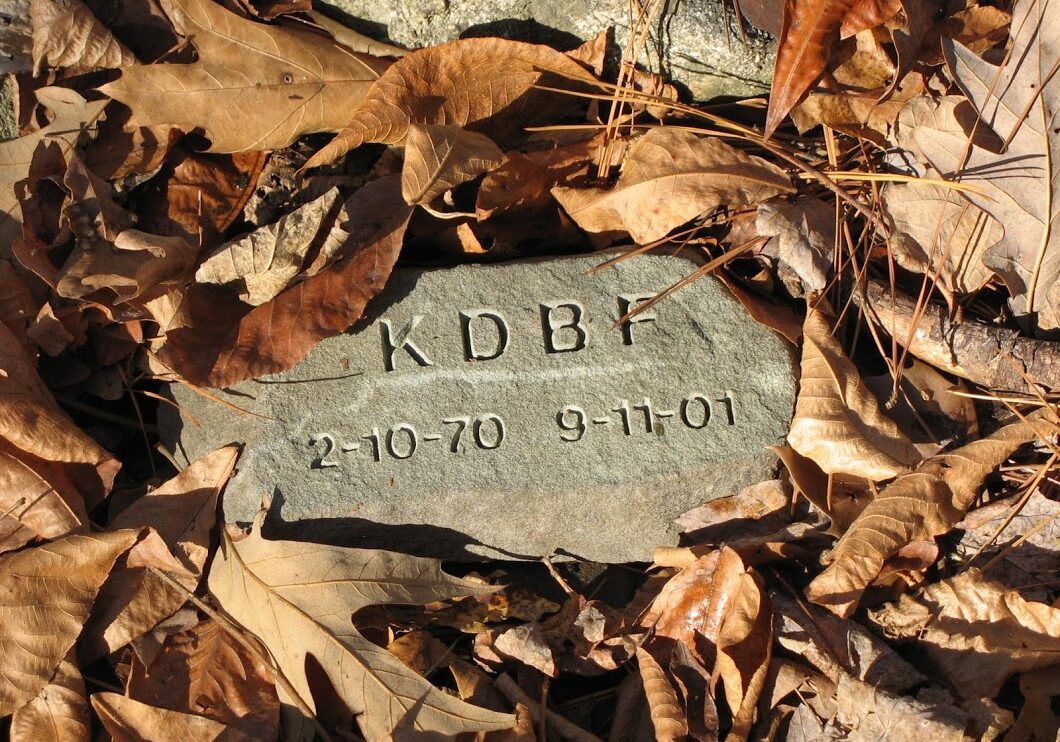
Every email I get from Danielle Reddan, director of the Victim Witness Assistance Program in the Office of the Chief Prosecutor of Military Commissions, starts the same way:
“Dear Survivors & Families.”
More than two decades after the murder of my nephew, a passenger on the first plane that Osama bin Laden’s misguided theological thugs crashed into the World Trade Center on Sept. 11, 2001, I’m sick of reading them.
But the emails still come.
A recent one informed 9/11 families like mine that “the Military Judge issued an amended scheduling order canceling the upcoming session, which was previously scheduled for 27 October – 21 November 2025, regarding the four accused in the case of United States v. KSM, et. al.”
KSM? That’s Khalid Sheikh Mohammed, alleged mastermind behind the attacks that murdered nearly 3,000 people in New York, Washington, and Pennsylvania.
So the email told us about the most recent delay in justice at Guantánamo Bay prison.

The morning of 9/11, I was at my editorial page desk at The Kansas City Star working on upcoming columns. I wondered even then whether I was the only professional journalist in the country personally affected by the terrorists’ slaughter of a close family member. Oddly enough, there turned out to be two of us. The other was Mike Casey, a journalist also at — yes — The Kansas City Star.
Mike’s cousin, Terence M. Lynch, died in the attack on the Pentagon. Terry had turned 49 less than a week before he died. My nephew, Karleton D. B. Fyfe, was 31, father of 19-month-old Jackson and husband of Haven, who had just told Karleton she was pregnant again.
In Terry’s case, Mike told me recently, “it was like the worst of all luck. He worked for Booz Allen, and he had gone to the Pentagon that day to meet with a lieutenant general about improving health care coverage for service members. It was just the worst luck in the world.
“I remember that day very well, going into The Star to work. And the effect at that time was just immense grief for Terry’s family, his wife and his two daughters, my aunt and uncle, and his brother and his sisters. I don’t think I was able to smile for weeks or maybe even months. It was just that intense.”

Mike’s reaction can be multiplied nearly 3,000 times. And that grief — while not debilitating — is ever present.
In February, for instance, I sent Karleton’s widow a note the day after his birthday, saying, “As for yesterday, I just spent the day re-astonished at his absence. Damn.”
And she replied: “Me too, Bill. Me too. I’m honestly finding my grief bigger and more difficult these days. I think it’s because my kids are grown and I’m finally ‘able’ to look at my life and loss and Karleton’s immense loss with a closer lens. It’s brutal.”
It helped me to write a book about this extended family trauma — Love, Loss and Endurance: A 9/11 Story of Resilience and Hope in a World of Anxiety — but that did not remove the agony.
And the fact that some of the perpetrators remain in the Gitmo prison with no legal resolution is one more source of our collective pain.
Why are families like Mike’s and mine still waiting for justice?
A primary reason is that our government continues to make ridiculous, politically motivated decisions that delay things, partly because of its serious violations of basic and essential human rights that took place in response to the dreadful 9/11 attacks. U.S. agents, for instance, used torture to force confessions out of some prisoners. But those confessions can’t be used as evidence in trials. Thus, delay after delay.
Last summer, in what many of us thought was wonderful news, the U.S. military court at Guantánamo Bay announced a plea deal with three of the terrorists, including KSM. They would plead guilty to the mass murders and agree to answer questions from family members in exchange for avoiding the death penalty. But they’d accept a life sentence with no parole.
Just days later, however, then-Secretary of Defense, Lloyd Austin, canceled those deals and was sued by defense attorneys. An appeals court eventually ruled that Austin, indeed, had the power to cancel the deals. Now we’re back in legal limbo, which is where we’ve been since soon after 9/11.
Beyond all that, many of us are following a lawsuit by some survivors alleging that Saudi Arabia’s government assisted the 9/11 hijackers. A judge recently refused to dismiss that suit.
At the end of her most recent letter, Ms. Reddan wrote this: “The remaining sessions for 2025 are currently scheduled for 10 – 14 November 2025. . . and 8 – 19 December 2025. . .”
In other words, this won’t be settled this year. We may have to wait a full 25 or 30 years before we’re through with this or until everyone involved dies. And already some members of 9/11 families have perished without seeing anything resembling justice.
I feel supported by being part of an advocacy group called September Eleventh Families for Peaceful Tomorrows, but sharing pain and regret doesn’t mean it’s gone.
I can’t explain why Mike Casey and I were, as far as I know, the only professional journalists who lost close family members that day. What I do know is that living without our loved ones and without justice has been among the worst experiences of our lives.
Mike thinks about growing up in Youngstown, Ohio, close to Terry and his siblings, and how “we were like brothers, playing sports all the time. We were very close as kids. . .What’s incredibly sad is that we’d all be retired now and have time to visit one another and catch up. So that’s a huge thing to miss.”
In the same way, Karleton and I were very close.

Even after he was grown and working in the financial world, he’d occasionally send me a text or email that said, simply, “Hey: Do you know how tall and handsome I am?” I peaked at 6 feet, 3.5 inches. Karleton was 6-5, so I looked up to him both figuratively and literally.
Earlier this month, another 9/11 anniversary passed, but 9/11 families like Mike’s and mine still wait for a resolution of the cases. Our government continues to fail us, and we see no end to it. But we know this is true for all the other 9/11 families, too.
And what I find impossible to ignore more than 24 years later is this: Vicious misuse of an honorable religion led to all this pain.
Bill Tammeus, an award-winning columnist formerly with The Kansas City Star, writes the “Faith Matters” blog for The Star’s website, book reviews for The National Catholic Reporter and The Presbyterian Outlook. His latest book is Love, Loss and Endurance: A 9/11 Story of Resilience and Hope in an Age of Anxiety. Email him at wtammeus@gmail.com.
Reading these stories is free, but telling them is not. Start your monthly gift now to support Flatland’s community-focused reporting.
Related Stories
Gay Bishop Reflects Evolution of Evangelical Lutheran Church
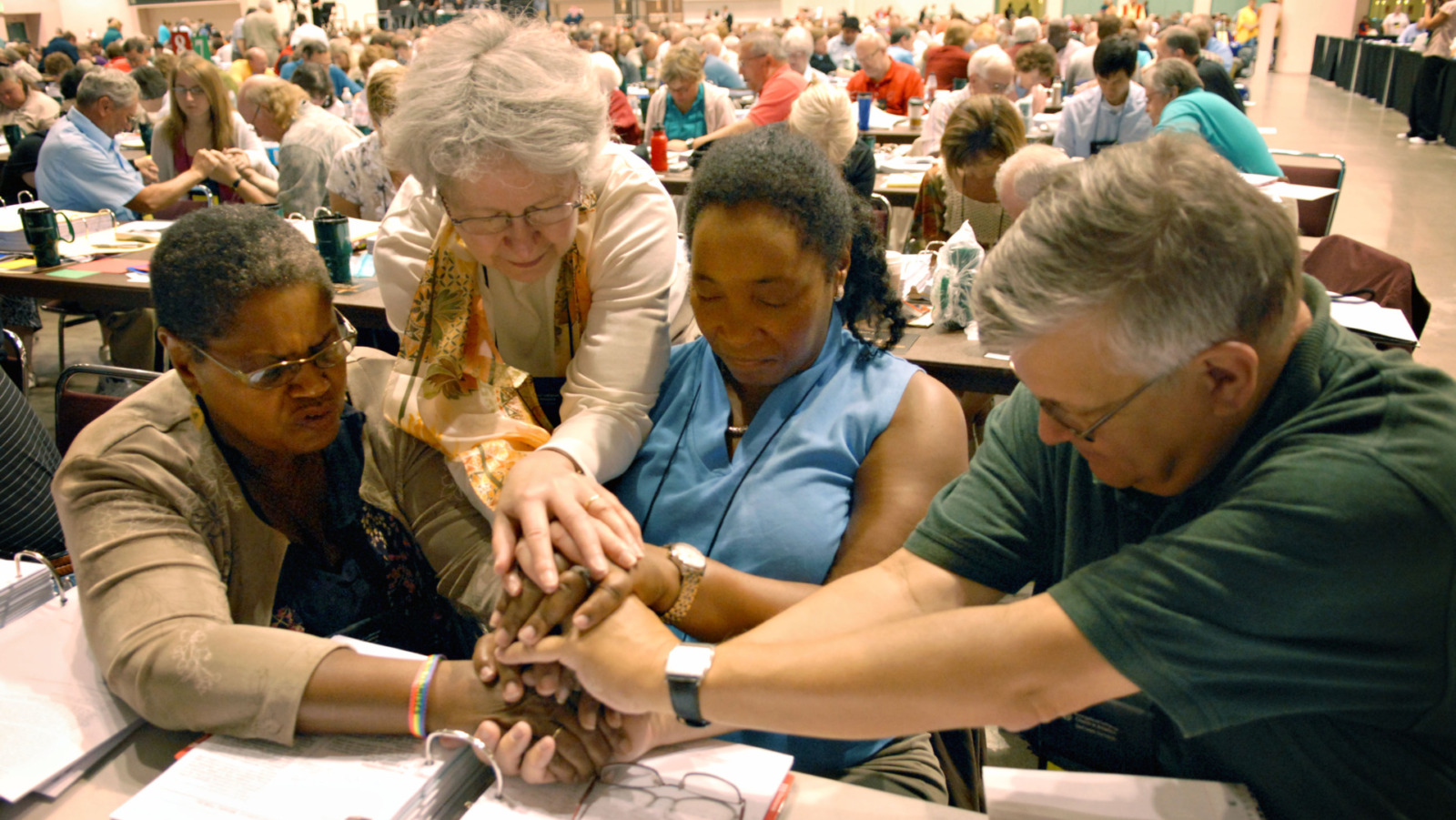
Almost 20 years ago, I devoted a long column in The Kansas City Star to an interview with two local pastors, both in the Evangelical Lutheran Church in America, a Mainline Protestant denomination. The ELCA was then debating whether to change its rules to allow the ordination of LGBTQIA+ people as clergy. The Rev. Donna…
Kansas City’s ‘Stunning’ Array of Sacred Music
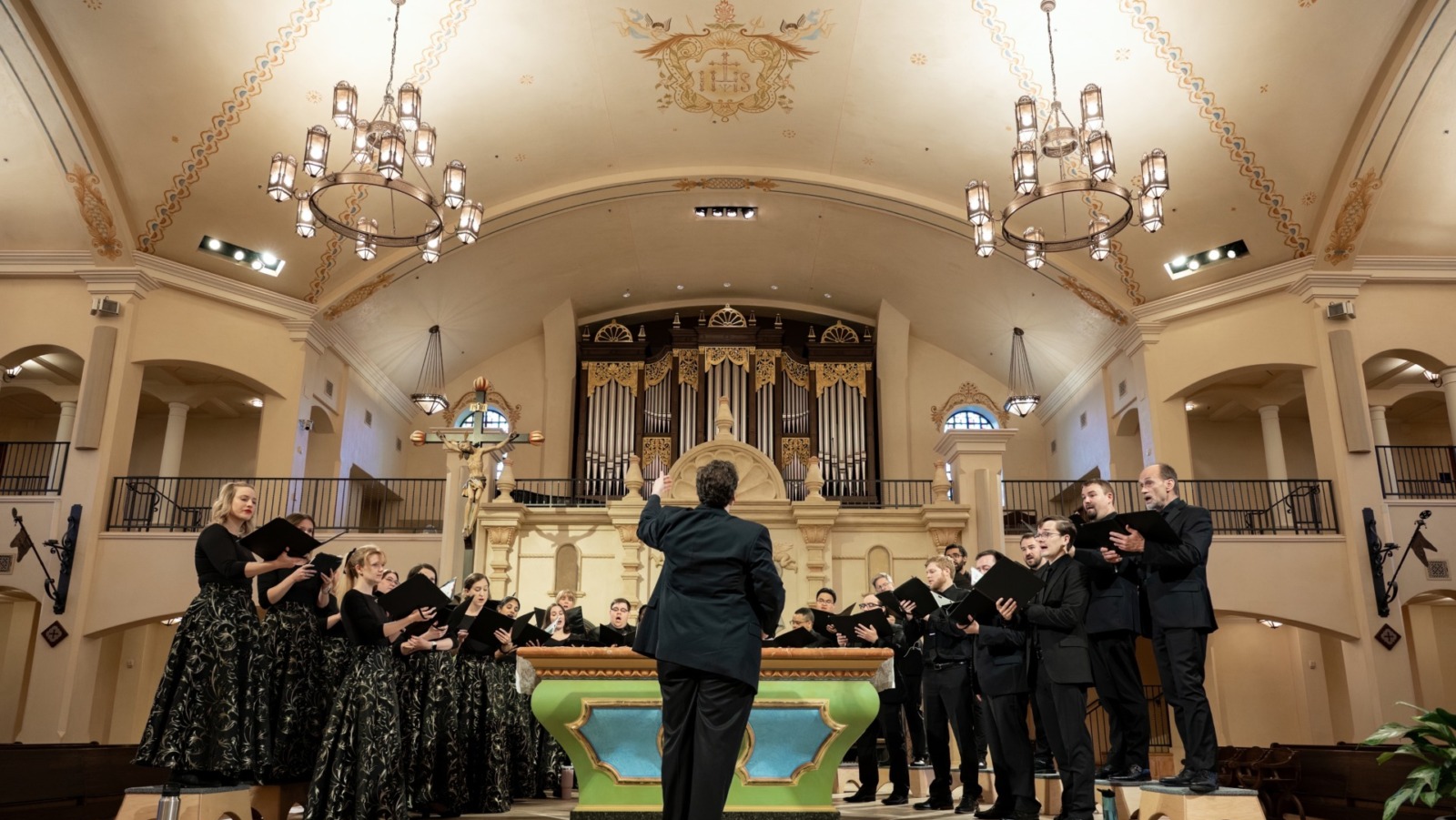
Rockhurst University music professor Timothy L. McDonald grew up near New York City where, he says, “we have a lot of sacred music, but it’s my perception that New York has not nearly as many professional and semi-professional sacred music groups as in Kansas City. “It’s stunning to me how many such groups we have…
Kansas City Establishes New Court in Undaunting Setting
Kansas City is taking court “straight to the people” with a new Community Court that convenes at a multipurpose center in the urban core, not the downtown courthouse. The off-site location at 27th Street and Prospect Avenue is essential to the specialty court’s focus on serving people experiencing instability issues, such as homelessness, by providing…