
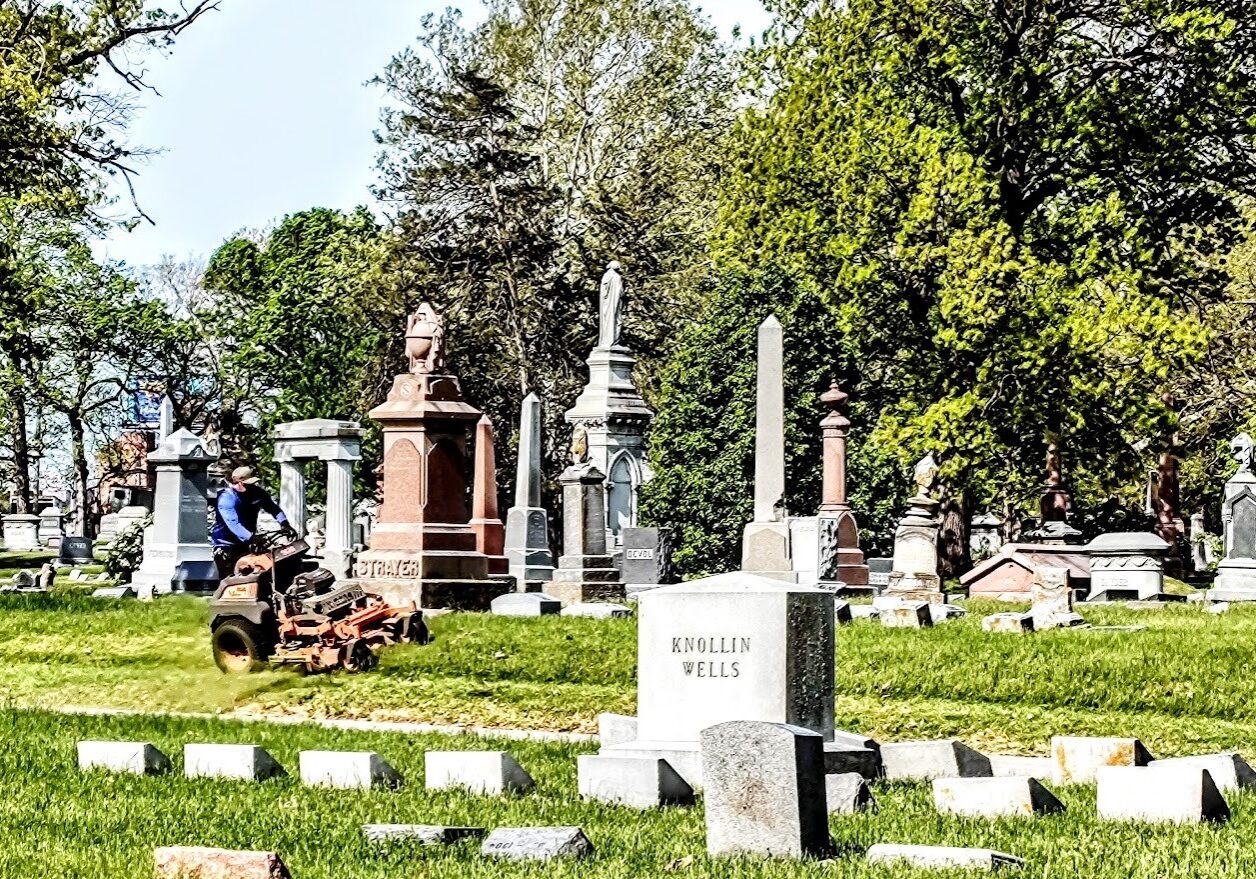
When I die, I won’t make cemetery operators happy. I’ll be cremated and my cremains, as they’re called, will be buried in my church’s front yard, which already holds the cremains of many friends.
My name then will be added to a plaque in our chapel.
Headstone schmeadstone.
Because death is a central concern of religions, each one tries to explain it and create comforting ways to mark its reality. Serious stuff, death. Libraries are packed with books about it, some even readable.
So the dozens of area cemeteries — most operated for profit — must treat death seriously. And yet odd, even funny things happen at cemeteries.
A few weeks ago, for instance, I was at the volunteer-run Elmwood Cemetery on Truman Road to talk with Alison and Steve Paddock, Elmwood board members, about a new project there and, more generally, about issues cemeteries face.

Alison alerted me that our conversation might get interrupted by a woman dropping off a ceramic owl holding a sock filled with human cremains.
She had me at “owl.”
Someone had dumped a suitcase, clothing and other detritus into this woman’s backyard. The suitcase held the owl, which contained the never-buried sock casket. (Why a sock? Another mystery.)
The woman had no idea who left the stuff or who the dead person was. She eventually called Elmwood, and Alison agreed to put the cremains in the cemetery’s new scattering garden.
Sure enough, as I was talking with the Paddocks, the woman appeared, turned over the funerary owl and left before Alison could change her mind. We all laughed, and I took a photo of Alison and Steve holding their new earthenware pet.
Cemeteries aren’t exactly dead zones. Both predictable and weirdly unpredictable things happen at cemeteries all the time.
Elmwood, for instance, which opened in 1872, has a small chapel. Attached to it is a now-unusable bathroom. Nothing in it works. So, thanks to a challenge grant from the Prince Charitable Trusts and other donors, there’s now money to demolish the old bathroom and build a new one for use this fall if the chapel hosts funerals, weddings or concerts, say.
Nothing is certain but death, taxes and the need for bathrooms.
To prepare for the new facility, cemetery leaders held a wall-breaking ceremony in which a hammer or something more serious was used to whack a hole in the outside wall of the old potty room. The new bathroom will be ADA-compliant and have two fully enclosed stalls for male and female privacy.
So, cemetery operators must think not just about the dead but the living, too. With both, however, come oddities.
“We have more mysteries in this place,” Alison said after the owl lady left.
For example, some cremains had been stored in a room at Elmwood since about 1962, Alison said. She finally had time to track down the brother of the woman whose cremains they were. He was shocked that his sister’s cremains had never found a final resting place, but he allowed Elmwood to put them in its scattering garden.
Although Elmwood is volunteer-operated, City Hall covers the cost of mowing, partly because if such cemeteries can’t make it financially, local government must take them over completely. Union Cemetery, for instance, uses volunteers, too, but it was deeded to the city in 1937 and today the Parks and Recreation Department maintains the grounds.
A few miles east of Elmwood, at the Kansas City-Independence border, is Mount Washington Cemetery. The first burial took place there in 1902. Today, more than 70,000 people are interred there, each with a story.

That cemetery faces some of the same challenges as Elmwood, even though Mount Washington is a for-profit operation as part of Charter Funerals.
“The biggest thing that’s happened to cemeteries in the last 20 years,” said Duke Radovich, Charter’s president and chief executive officer, “is the preference of people for cremation. And not cremation with memorialization (a specific marker that needs long-term maintenance). Our family structure, our belief structure, well, people are becoming unchurched, and families are becoming disjointed, and the way cemeteries survived in the beginning was different. Families all got buried at Mount Washington or all at another cemetery. Now it’s scattered.”
(The Radovich group gained control of Mount Washington about a year ago after a long, complicated court battle. But that’s another story.)
Mount Washington and some other cemeteries sometimes struggle because Missouri didn’t require such cemeteries to create an “endowed care” fund until quite a bit later than some other states. The fund at Mount Washington, into which about 20% of the sale price of cemetery lots goes, wasn’t in existence until the 1980s, said Radovich.
Today, the cemetery’s endowed care fund has about $1.5 million, but “our annual cost just to keep the lights on, for staff and whatever — no improvement costs — is almost $700,000. And you’ve got to get that $700,000 from somewhere just to break even, so that comes from new lot sales, niche sales and mausoleum sales.”
Still, this is work Radovich loves, and he and his staff are finding ways to keep the cemetery going while also improving things there.
“Since we took over,” he said, “we have refurbished the mausoleum, replaced all the HVAC, all the wiring. It was in dire need of repairs in terms of tuckpointing and we have done all of that. Right now, we’re working on the pond in front of it so it can hold water again.”
The issues at Mount Washington and Elmwood are common in cemeteries across the metro.
A few years ago, the ornate iron front gates at Rose Hill Cemetery located at 6900 Troost Ave. were lying on the ground in need of repair. Today they’re reinstalled, shining black and are part of an impressive entrance to that Jewish cemetery, just across the street from Forest Hill and Calvary cemeteries.

A final personal story.
For about 25 years, I served as a trustee for the burial site of the co-founder of The Kansas City Star, William Rockhill Nelson. It’s a large stone chapel at Mount Washington. When my friend Bruce Mathews told me he planned to use a photo of the Nelson chapel on the cover of his new book about Mount Washington, I told him he might need to choose something else because we trustees were debating whether to tear down the chapel and rebury Nelson, his wife, daughter and son-in-law. Our available funds could no longer keep the place in shape.
Bruce insisted we not do that, then quickly created the Mount Washington Historical Society. He and others have raised enough funds to secure the chapel long into the future. So, we turned the chapel over to the new society and now it’s open to the public each Memorial Day.
I think Nelson would be happy. However, in all my years of helping to preserve his burial site, Nelson never said a word of thanks to me or the other trustees. I hope to speak to him about that someday.
Correction: This story has been updated to correct the spelling of Alison Paddock’s name.
Bill Tammeus, an award-winning columnist formerly with The Kansas City Star, writes the “Faith Matters” blog for The Star’s website, book reviews for The National Catholic Reporter and for The Presbyterian Outlook. His latest book is “Love, Loss and Endurance: A 9/11 Story of Resilience and Hope in an Age of Anxiety.” Email him at wtammeus@gmail.com.
Reading these stories is free, but telling them is not. Start your monthly gift now to support Flatland’s community-focused reporting.
Related Stories
Kansas City Rabbis Feel Local Impact of Israel-Hamas War
Kansas City rabbis are grappling with the effects of the ongoing war in Gaza between Israel and Hamas and a surge of antisemitism.
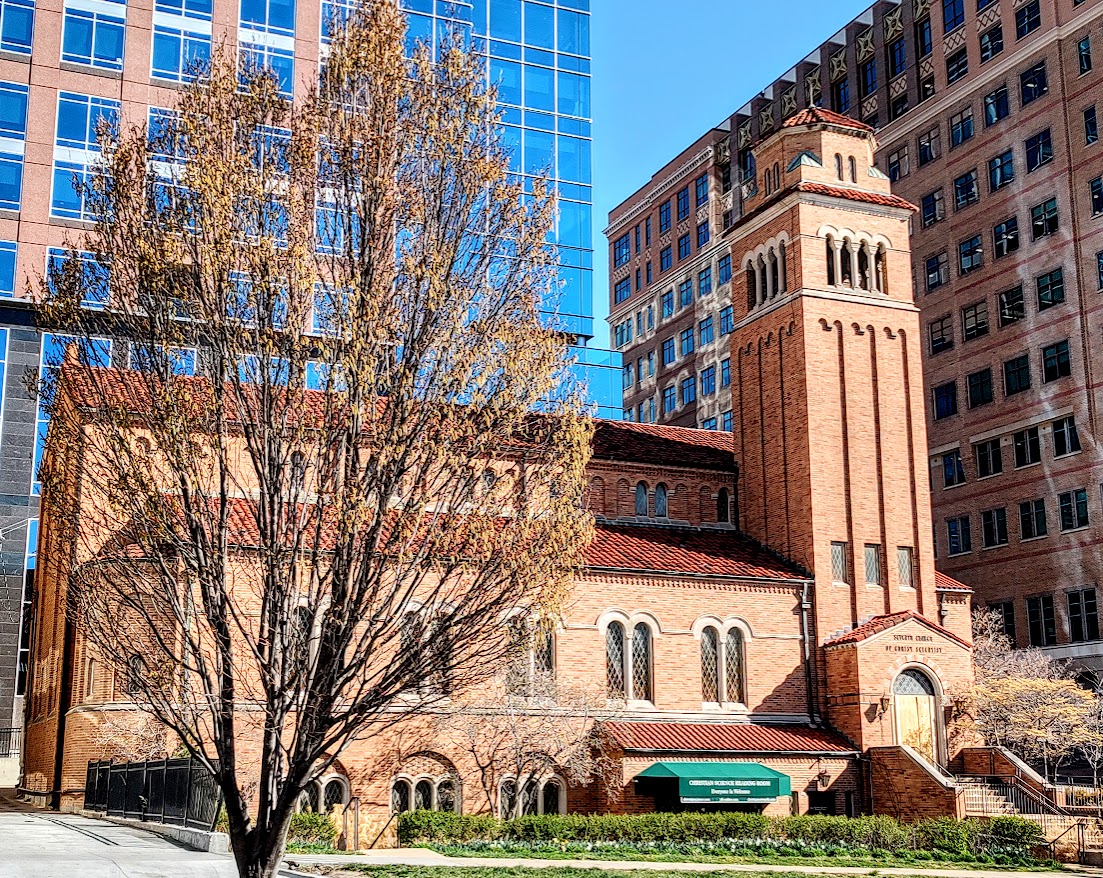
Houses of Worship Define the Landscape of Kansas City
Houses of worship have played a key role in shaping the landscape of Kansas City. It is a story of almost constant change.
‘False Certitude’ Defines Our Religion, and Our Politics
Institutional religion has set a pattern for the sad reality of political divisions among our citizens — encouraging a false certitude about what we believe.