
When Rivers Can’t be Controlled, Farmers are Left in Limbo
April 17, 2016 | | 4 min read
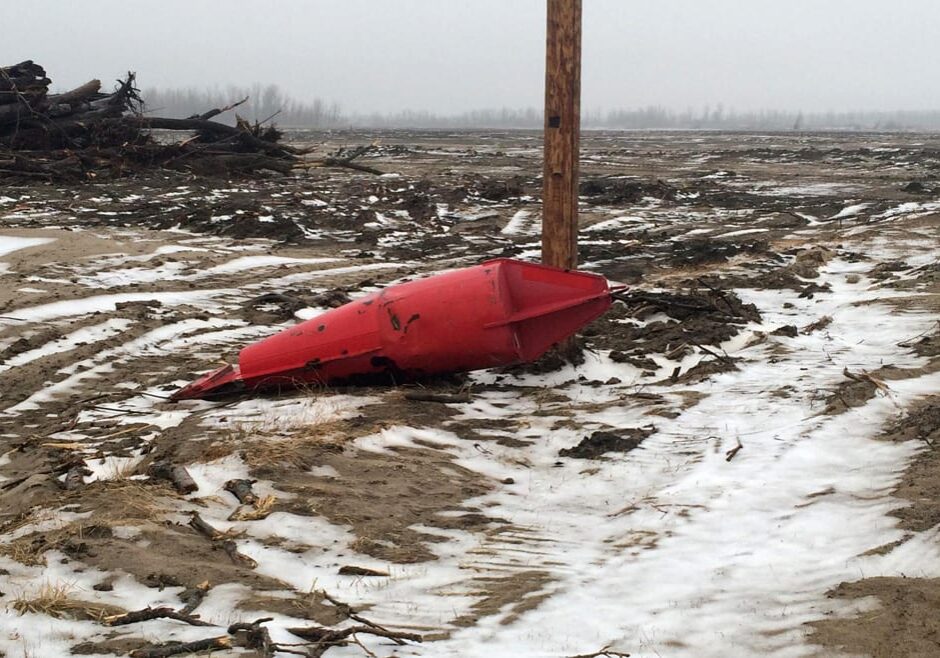
Driving along rough and muddy gravel roads next to what was once a rich soybean field, farmer Adam Thomas gazes out on an upended mess of tubes, wheels and hoses from a nearby farmer’s irrigation system.
Nowadays, his farmland in Miller City, Illinois, looks like a scene from “Lawrence of Arabia.” Layer upon layer of sand as much as 4-feet deep covered nearly 100 acres. Large sand deposits, fallen trees and fragments of a damaged road wreaked havoc on his once fertile farm ground.
The damage is the result of a massive winter flood, which left thousands of acres of Missouri and Illinois farmland damaged.
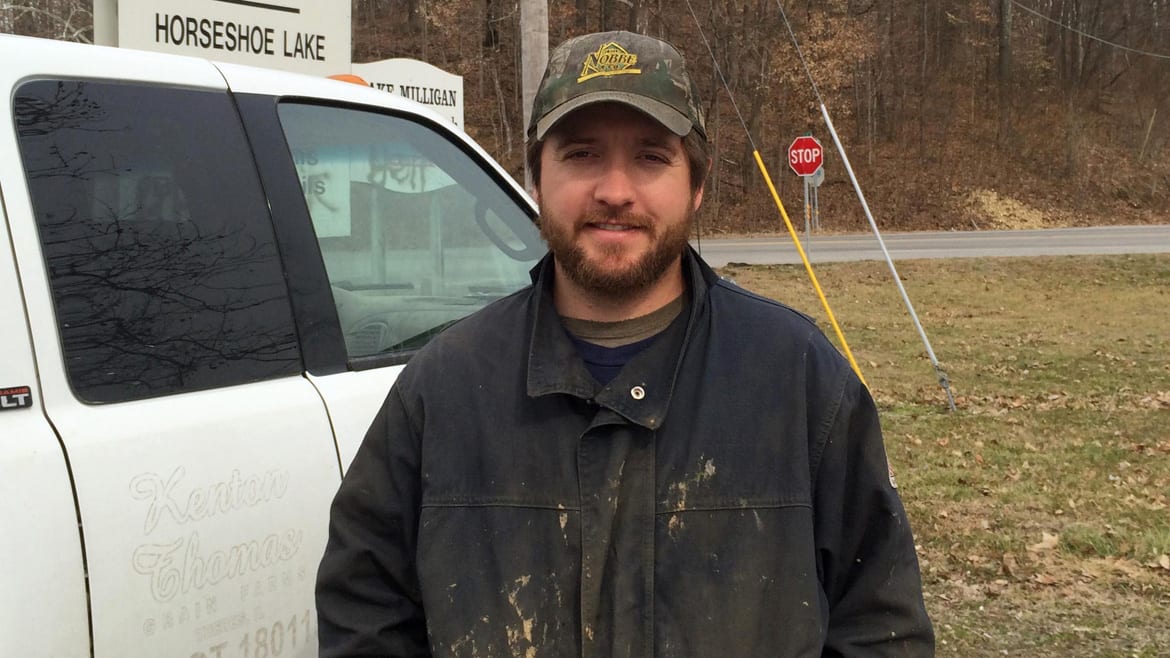
Illinois farmer Adam Thomas worries his land will be flooded again, after a winter flood left a hole in a local levee. (Photo Marissanne Lewis-Thompson | Harvest Public Media)
In January, excessive rainfall in the Mississippi River caused a rare winter flood. Floodwaters shattered records, plunging nearly 43,000 acres of land underwater and causing a mile-long hole in the Len Small levee, according to the Natural Resource Conservation Service.
After nearly three months, the levee still has a gaping hole and farmers like Thomas are left in limbo.
“As long as there’s a hole in that levee, it can put the sand right back where it was,” Thomas said. “There’s no point in fixing the roads. There’s no point in digging the ditches. There’s no point in cleaning anything up, because if you do all that come April it could just put it all right back on it.”
Fields today essentially open right onto the river, which could bring water, sand and silt right back onto farm fields this summer. With normal flood season approaching and a chunk of the levee gone Alexander County Engineer Jeff Denny said time’s running out.
“There’s just not enough time and enough working conditions, working days to be able to get in and make some sort of repair or do something,” Denny said.
The U.S. Army Corps of Engineers said it is placing rocks along the Mississippi River’s bank to prevent it from cutting another channel. As for the levee, there aren’t current plans to fix it.
Illinois’ Alexander County farmers are part of a familiar debate about farmland in the floodplain, and who’s responsible for its protection.
Rivers are unpredictable and despite efforts to manage them, they can’t always be contained. That can leave farmers, business owners and residents of the floodplain in the midst of a confusing situation.
“The Midwestern floodplain soil is some of the richest in the world exactly because it has flooded periodically for a millennia,” said Christine Klein, a law professor at the University of Florida.
When farmers plant in the fertile floodplain they’re left at the mercy of both the river and the engineers that try to control it. Throughout the 20th Century, Klein says, huge levee systems, government disaster relief programs and subsidized federal flood insurance were generally created with good intent, but have created untenable futures.
“The net result of those three things is that people are lured into harm’s way,” Klein said. “They say, ‘Well there’s a levee there. They, somebody – someone who’s hopefully omniscient is telling us it’s safe to be here.’”
Now, farmers in Alexander County are left to play a game of Russian Roulette. To plant or not to plant? Farmer Adam Thomas is planning to delay planting his crop, thanks to the potential for flooding through the busted levee.
“The farmers can’t fix it back,” Thomas said. “If the farmers could fix it back, we’d be fixing it back right now. But we just can’t do it alone this time. And we need some help.”
— Harvest Public Media, based at KCUR 89.3, reports on farm and food issues in collaboration with public media stations across the Midwest. For more information, visit www.harvestpublicmedia.org.

Reading these stories is free, but telling them is not. Start your monthly gift now to support Flatland’s community-focused reporting.
Related Stories
Nick’s Picks | Roads, Bathrooms, Costco and More …
New Toll Road Opens Kansas City’s first toll road opens this week. Starting Saturday, you’ll pay up to $3.50 to travel the new express lanes on U.S. Highway 69 from 103rd to 151st streets in Overland Park. There are no toll booths — cameras scan your license plate, and a bill arrives by mail. KTAG…
Up From the Ashes: Warwick Theatre Revival Draws Applause
Two years ago, John Cleary met a fellow Kansas City actor for drinks. Their conversation centered on the fate of the Metropolitan Ensemble Theatre. A large portion of the ensemble’s home, the Warwick Theatre, was ash, charred timbers and soot-saturated costumes and props — remnants from a recent massive fire. The destruction was so great…
Nick’s Picks | Baseball, Drones, Romance and More …
Royals Reveal Next week, the Kansas City Royals head to Arizona for Spring Training. And that’s the mayor’s self-imposed deadline to lock in a stadium deal. So, is this finally the week owner John Sherman steps to the plate and unveils where the Royals will build their next home? At last week’s council meeting, Mayor…