
Cultivating History Pt. 2: ‘Potato King’ Thrives Amid Racism
February 19, 2025 | | 4 min read
While Kansas would prove friendly to potato growers like Junius Groves, it would not be quite the “free state” envisioned by Exodusters, the African Americans who, following the end of Reconstruction, considered their prospects more promising in the North.
“It was about the same time when the Exodusters arrived in Kansas that the state Legislature was creating opportunities for communities to practice segregation,” said James Leiker, a history professor at Johnson County Community College in Overland Park, Kansas.
In 1879 the Kansas Legislature enacted a law allowing school boards operating in communities of 15,000 residents or more to operate separate elementary schools based on race.
Beyond that was the ongoing threat of mob violence.
Researchers have documented 23 race-related lynchings in Kansas between 1865 and 1950.
Previous Installment
In 2022 members of the Lawrence/Douglas County Community Remembrance Project Coalition and the Equal Justice Initiative of Montgomery, Alabama, dedicated a historic marker near where three Black men were taken from a jail and hanged from the Kansas River bridge in 1882.
A new documentary, “The Potato King,” directed by filmmaker Jacob Handy, premiers Thursday on Kansas City PBS.
‘Not Afraid of Anybody’
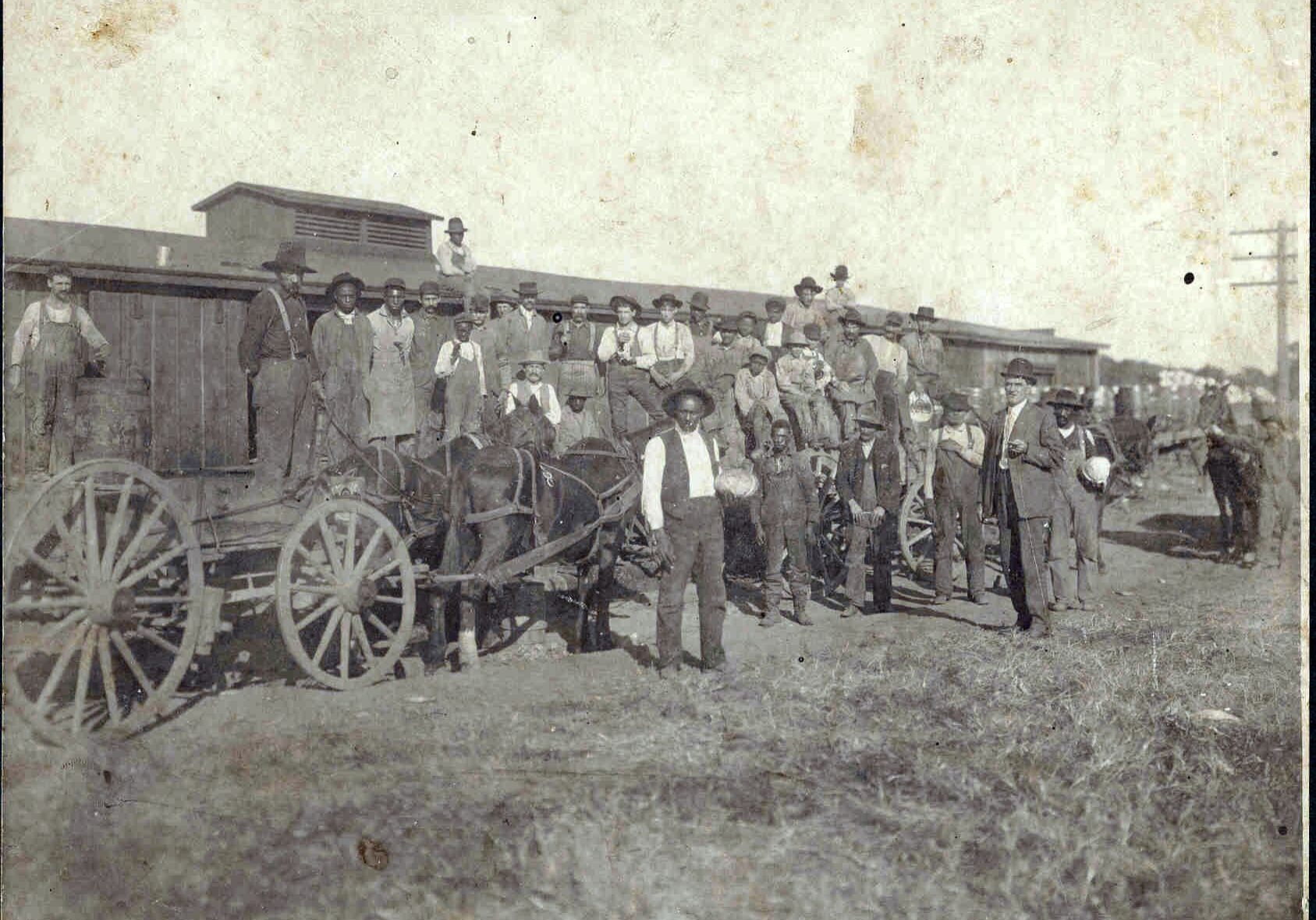
Groves planted his first potatoes in the Kaw Valley at about that time and prospered regardless.
“Junius was not afraid of anybody and did not let anybody stop him,” said great-granddaughter Joyce Groves Holland. “But he was also respectful; he was not up in your face.”

Groves’ success suggests that he largely lived an “insular” life, added Leiker.
“By that I mean he stayed pretty close to his relatives, his known associates, and his community in Edwardsville,” he said.
“My sense is that for safety’s sake and that of his family, he tried to limit his contacts to people he trusted.”
Among those had been Jacob Williamson, a white neighbor.
Groves found his foothold with Williamson, working for 40 cents a day.
Williamson soon offered Groves a deal: he could work nine acres, with seed and draft animals provided him, for a one-third share of any profit.
He married his wife Matilda during that first year.
At the end of the season, they had cleared $125.
The following year Williamson offered them 20 acres, and the third year 66 acres, and Junius and Matilda increased their yields and profits accordingly.
Eventually the pair acquired land of their own.
Tribal Land
Groves grew potatoes, as had members of the Delaware Tribe of Native Americans.
They had been removed by the federal government to land north of the Kansas River beginning in the late 1820s.
Other farmers soon raised their own potatoes there. By 1900 the summer harvest would remind one newspaper reporter of another river.
“Potato digging in the Kaw Valley, like the annual overflow of the Nile, is a remarkable occurrence,” the Lawrence Daily World declared, crediting the “deep sandy loam of the river valley” for such “beauties.”
While federal officials had crowned Groves “Potato King” in 1902, it was in 1904 that his story went mainstream.
That May educator and Tuskegee Institute founder Booker T. Washington profiled Groves in The Outlook, a national weekly.
Newspapers across the country excerpted or summarized the article.
More Publicity
Washington’s subsequent book, “The Negro in Business,” published in 1907, accorded Groves his own chapter.
In 1913 The Country Gentleman, a New York state-based weekly agricultural journal, dispatched a reporter to Edwardsville to learn how he recently had harvested 396 bushels of potatoes per acre compared to the 125 bushels per acre raised by a neighbor.
“The article demonstrated Groves’ ever-increasing desire to improve his land and increase his productivity,” said Susan Elliott, who grew up near Edwardsville and now serves on the Kansas Business Hall of Fame board.
But it’s possible not all of Groves’ neighbors were pleased by his success.
Flatland contributor Brian Burnes is a Kansas City area writer and author.

Reading these stories is free, but telling them is not. Start your monthly gift now to support Flatland’s community-focused reporting.
Related Stories
Nick’s Picks | Roads, Bathrooms, Costco and More …
New Toll Road Opens Kansas City’s first toll road opens this week. Starting Saturday, you’ll pay up to $3.50 to travel the new express lanes on U.S. Highway 69 from 103rd to 151st streets in Overland Park. There are no toll booths — cameras scan your license plate, and a bill arrives by mail. KTAG…

Up From the Ashes: Warwick Theatre Revival Draws Applause
Two years ago, John Cleary met a fellow Kansas City actor for drinks. Their conversation centered on the fate of the Metropolitan Ensemble Theatre. A large portion of the ensemble’s home, the Warwick Theatre, was ash, charred timbers and soot-saturated costumes and props — remnants from a recent massive fire. The destruction was so great…
Nick’s Picks | Baseball, Drones, Romance and More …
Royals Reveal Next week, the Kansas City Royals head to Arizona for Spring Training. And that’s the mayor’s self-imposed deadline to lock in a stadium deal. So, is this finally the week owner John Sherman steps to the plate and unveils where the Royals will build their next home? At last week’s council meeting, Mayor…