
Pondering the Many Versions of Jesus Christ
December 24, 2023 | | 7 min read
Just who was Jesus of Nazareth, whose birth Christians celebrate this week? The sweet, no-crying baby in the manger? The angry man overturning the temple’s money-changing tables? The Prince of Peace? The Truth? God’s son who came to die for sinners? A “misunderstood Jew,” as scholar Amy-Jill Levine calls him?
Mike Graves, a former seminary professor and now Country Club Christian Church’s scholar in residence, has a perhaps-unexpected answer:
“I don’t for a moment think Jesus came just to die,” he writes in his new book, “Jesus’ Vision for Your One Wild and Precious Life.” “I believe he came to live, and for the way he lived, he was put to death.”

Graves’ book does a flip on Christ’s Seven Last Words from the Cross by focusing on his seven first words (teachings) — first either chronologically or in importance.
I asked Graves recently to explain his take on Jesus. The interview has been edited for clarity and length.
Tammeus: How did you meet the Jesus you write about in the book, the Jesus who is about this world and not the next?
Graves: I was born into a very nominal Roman Catholic family. We quit going to church when I was 10. I told them I wasn’t getting anything out of it, and they agreed. In reflection, I think I was getting something out of it, I just didn’t realize it — like an appreciation for beauty and tradition.
But when I came to an evangelical faith as a freshman in college (University of Houston), I didn’t have much regard for that Catholic tradition. It took me a long time to appreciate it but then also a pretty long time for me to say (to evangelicals), ‘I’m not sure that the Jesus you’re introducing me to is the one I find in the gospels.’
Q: In the evangelical church, was the message you heard mostly about personal salvation?
A: There were two traditions. One was the nondenominational Bible, but that was minor compared with Dispensationalism.
In that theology, Jesus would return and assign some folks to hell and a lucky few to heaven — if they accepted Jesus. Then there were the Southern Baptists (Graves got his master’s and Ph.D. degrees from Southern Baptist Theological Seminary), who were very evangelical. But once you get a Ph.D. you go: ‘Hmm. Maybe I haven’t always read this (Bible) right.’ So that just started an exploration for me.
Q: When you talk to people about a Jesus who is about life and not death, what kind of either pushback or buy-in do you get?
A: I think a lot of people are fascinated when I say that only four pages of each gospel deal with Jesus’ death — and even that gets trumped by the resurrection. So, what are you going to do with all these other pages? Don’t they matter?
Q: What if you gave a talk about your book to Midwestern Baptist Theological Seminary here (a Southern Baptist school)?
A: I think the pushback there would not be against what Jesus did with his life and what he calls us to do. Rather, they would say he was born to die. That was his purpose. The things he does on the way, that’s part of it, but he’s here to die as a penal substitutionary atonement death.
Q: Some from that branch of Christianity, when confronted with systemic problems like environmental degradation, would say: ‘Why worry? The end of history is coming soon.’ What does this book say to them?

A: Well, I keep trying to remind readers that Jesus was a Jew. And Judaism doesn’t have that view whatsoever. That’s a late view that has come into Christianity. What I don’t understand is if you say that nothing matters except the next life, then what’s the point of this life?
Q. How do your ideas about Jesus affect your ministry?
A. My ministry now is exclusively teaching and preaching. So, everything I’ve ever taught and preached has a Social Gospel bent.
Q. What did you struggle with in trying to present this view of Jesus?
A. My brain works oddly. With all this talk about the Seven Last Words of Christ, I thought, ‘What were the first words?’ That was the beginning. The hardest part was asking, ‘OK, if you’re going to mirror seven, what are the seven going to be?’ That’s when I stumbled on the idea of things that were first-in-time placement but also those that are first because of their heft. Once I got the outline for the seven, I wrote this in six weeks.
Q. I recently heard a preacher on Christian radio say that the most important question to ask is, ‘Am I going to get to heaven?’ Your book has a different approach. What would you say is the most important question people should ask?
A: Probably ‘What’s my life going to be about? What am I going to do? How am I going to live? Is there some model to follow?’
Q. In adopting your view of Jesus being about life as opposed to death, what do you do with the concept of hell? Have you walked away from that?
A. Yeah, I have. As a friend of mine used to say, ‘Could God have the prerogative to do that?’ Sure, but wouldn’t it fit the nature of God to say, ‘Just everybody come on in’? Plus, I think the reading of hell is a very skewed notion. It’s a development in theology over thousands of years. . .To construct a theology out of that is like creating dispensationalism. You had to be there when they invented it. Once they school you on it, you’ll see it everywhere. But if you read the text yourself, I don’t think First Century folks would be convinced.
Q. Isn’t the same true of the phrase that gets translated into English as “eternal life,” which really means a “flourishing life”?
A. Yep.
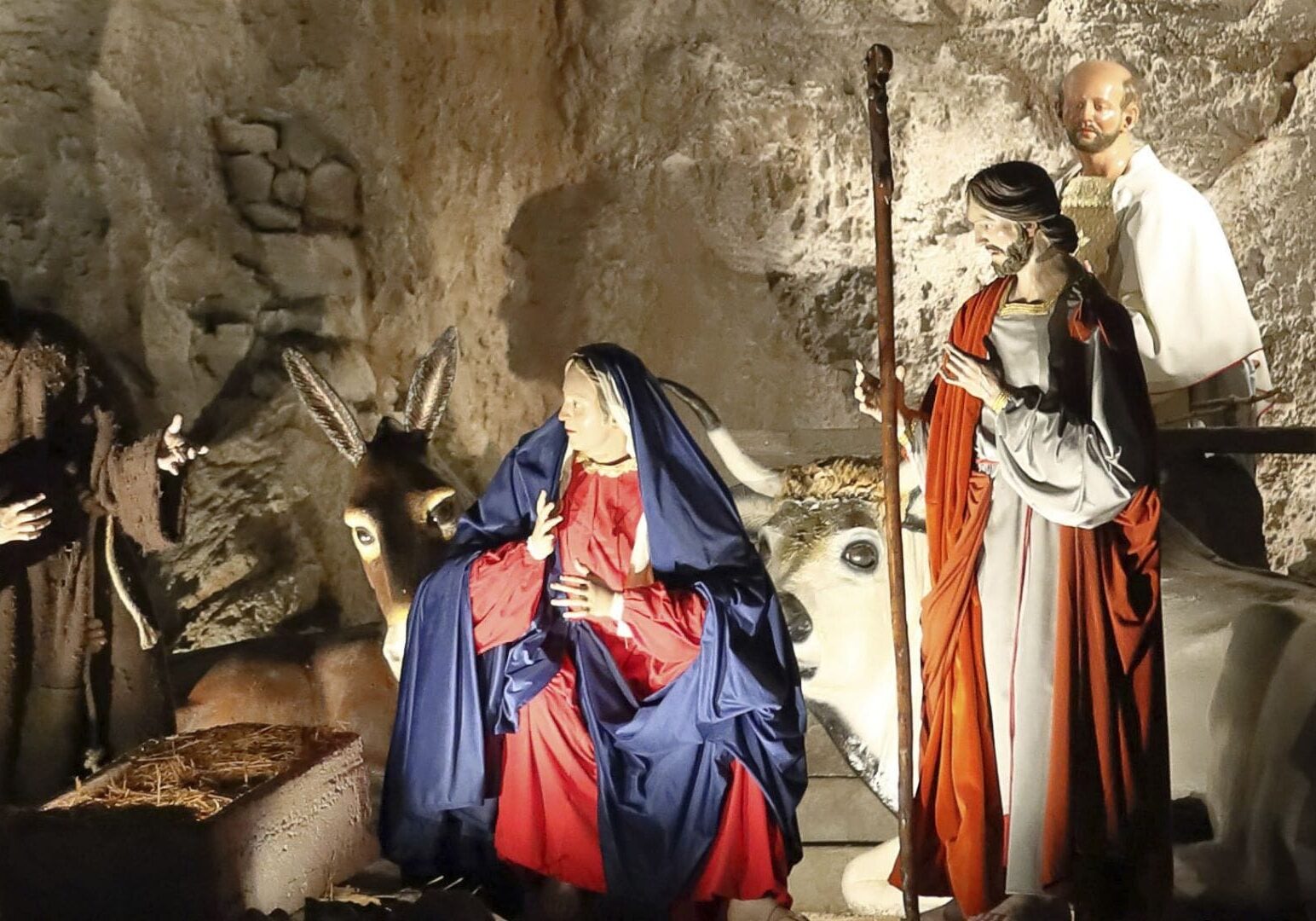
Q. There’s the cultural Jesus, the charming baby in the manger. How is he different from the Jesus in your book?
A. Well, lots of people have given up on the church but still love Jesus. I think we can build on that if they think this baby is cute, they like his story and he does good things. That way you can get people past the third-grade level of Christianity to at least maybe the high school level and maybe then the college level.
Bill Tammeus, an award-winning columnist formerly with The Kansas City Star, writes the “Faith Matters” blog for The Star’s website, book reviews for The National Catholic Reporter and for The Presbyterian Outlook. His latest book is “Love, Loss and Endurance: A 9/11 Story of Resilience and Hope in an Age of Anxiety.” Email him at wtammeus@gmail.com.

Reading these stories is free, but telling them is not. Start your monthly gift now to support Flatland’s community-focused reporting.

Related Stories

Nick’s Picks | Roads, Bathrooms, Costco and More …
New Toll Road Opens Kansas City’s first toll road opens this week. Starting Saturday, you’ll pay up to $3.50 to travel the new express lanes on U.S. Highway 69 from 103rd to 151st streets in Overland Park. There are no toll booths — cameras scan your license plate, and a bill arrives by mail. KTAG…

Up From the Ashes: Warwick Theatre Revival Draws Applause
Two years ago, John Cleary met a fellow Kansas City actor for drinks. Their conversation centered on the fate of the Metropolitan Ensemble Theatre. A large portion of the ensemble’s home, the Warwick Theatre, was ash, charred timbers and soot-saturated costumes and props — remnants from a recent massive fire. The destruction was so great…

Nick’s Picks | Baseball, Drones, Romance and More …
Royals Reveal Next week, the Kansas City Royals head to Arizona for Spring Training. And that’s the mayor’s self-imposed deadline to lock in a stadium deal. So, is this finally the week owner John Sherman steps to the plate and unveils where the Royals will build their next home? At last week’s council meeting, Mayor…