
Playing Catch-Up with Missouri Mental Health
October 24, 2016 | | 4 min read
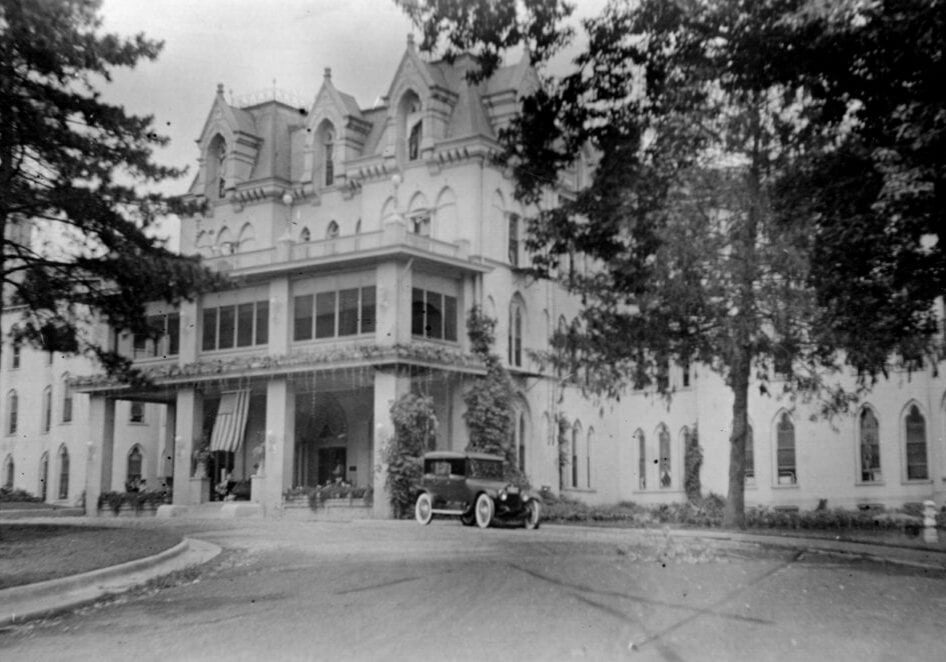
When Missouri’s second mental hospital opened in the late 19th century, State Lunatic Asylum No. 2 in St. Joseph was designed to provide lots of natural light and fresh air.
Yet as war and economic calamity frayed the nation’s psyche, over-crowding swamped the hospital’s lofty goals. The census of the St. Joseph facility peaked at around 3,000 patients in the 1950s — more than ten times its intended capacity.
The overcrowding wasn’t limited to Missouri. By 1963, President John F. Kennedy signed the Community Mental Health Act. The aim was to replace a system that oftentimes warehoused patients in undesirable conditions with a network of outpatient counseling and housing options.
Many mental health advocates argue that today’s reality does not match those noble intentions. They contend an underfunded community system has taken us back to the days of old, with untreated mental illness landing many sick people in nursing homes and prisons.
Troubles in Kansas
For many critics, Kansas’ Osawatomie State Hospital is Exhibit A for the failure of the current system, as chronicled in a recent series by the Kansas Health Institute News Service, a partner in the Heartland Health Monitor, along with KCPT and KCUR. The hospital is located about 50 miles southwest of Kansas City.
Late last year, federal regulators yanked the facility’s Medicare eligibility after deeming it overcrowded and understaffed.
As part of this series, Flatland uses St. Joseph as a barometer to examine the state of the community mental health system in Missouri. The state converted the old St. Joseph state hospital into a prison in 1999, and the hospital’s replacement sits right across the street — with 108 beds designed to serve the western part of the state.
Though Missouri has avoided any high-profile, Osawatomie-type breakdowns, observers agreed that the community-based system in the Show-Me State is also underfunded.
A Kansas City Solution?
A wide range of officials hope a new facility in Kansas City will prove to be a cost-effective model for providing emergency services to the mentally ill throughout the state. The Kansas City Assessment and Triage Center is scheduled to open on Oct. 31.
The video above discusses the crisis center’s place in the history of deinstitutionalization.
Mark Stringer, director of the Missouri Department of Mental Health, said that Missouri has about 3,300 inpatient mental health beds, taking into account both the private and public sectors. He said that number seemed to be adequate based upon the state’s population, but acknowledged that the department has ceded emergency inpatient services to the private sector because of budget constraints.
Garry Hammond, the CEO of Family Guidance Center, a St. Joseph-based behavioral health provider serving nine counties in the northwest part of the state, agreed with Stringer’s assessment. Hammond also agreed that the state’s relatively low reimbursement rates hamper its ability to compete with other providers for qualified staff.
Nevertheless, Stringer said, both the General Assembly and Gov. Jay Nixon have been very generous of late in their mental health budgets, including authorizing the $211 million project to rebuild Fulton State Hospital, the state’s only maximum security psychiatric facility. The project is scheduled to be completed in 2018.
Like others, Stringer applauded the move away from warehousing patients in overcrowded state hospitals.
“Missouri, like other states, did the right thing by downsizing those institutions,” he said. “But we did not create adequate community resources, and so we have been playing catch-up over the last six decades. And we are closer now to where we need to be than we ever have been before, but we still have a way to go.”
—Mike Sherry is Flatland’s online news editor. Follow more health stories @FlatlandKC.

Reading these stories is free, but telling them is not. Start your monthly gift now to support Flatland’s community-focused reporting.
Related Stories
Nick’s Picks | Roads, Bathrooms, Costco and More …
New Toll Road Opens Kansas City’s first toll road opens this week. Starting Saturday, you’ll pay up to $3.50 to travel the new express lanes on U.S. Highway 69 from 103rd to 151st streets in Overland Park. There are no toll booths — cameras scan your license plate, and a bill arrives by mail. KTAG…
Up From the Ashes: Warwick Theatre Revival Draws Applause
Two years ago, John Cleary met a fellow Kansas City actor for drinks. Their conversation centered on the fate of the Metropolitan Ensemble Theatre. A large portion of the ensemble’s home, the Warwick Theatre, was ash, charred timbers and soot-saturated costumes and props — remnants from a recent massive fire. The destruction was so great…
Nick’s Picks | Baseball, Drones, Romance and More …
Royals Reveal Next week, the Kansas City Royals head to Arizona for Spring Training. And that’s the mayor’s self-imposed deadline to lock in a stadium deal. So, is this finally the week owner John Sherman steps to the plate and unveils where the Royals will build their next home? At last week’s council meeting, Mayor…