
The state line divide will be especially stark tomorrow on Election Day: Not only will residents on the Kansas and Missouri sides be voting on different candidates and issues, they’ll also be voting according to different laws concerning what identification is needed to cast a ballot.
In Missouri, registered voters can cast their ballot simply by presenting a copy of a utility bill with their name and address on it. In Kansas, things are more complicated: Voters have to register with both photo identification and proof of U.S. citizenship, like a passport or birth certificate.
Voter I.D. laws, like those affecting Kansas voters, are a divisive issue all over the country. The U.S. Supreme Court recently rejected a petition to stop the Texas voter I.D. law from taking effect by tomorrow’s election. With the law in place, voters will have to show a photo I.D. before casting their votes.
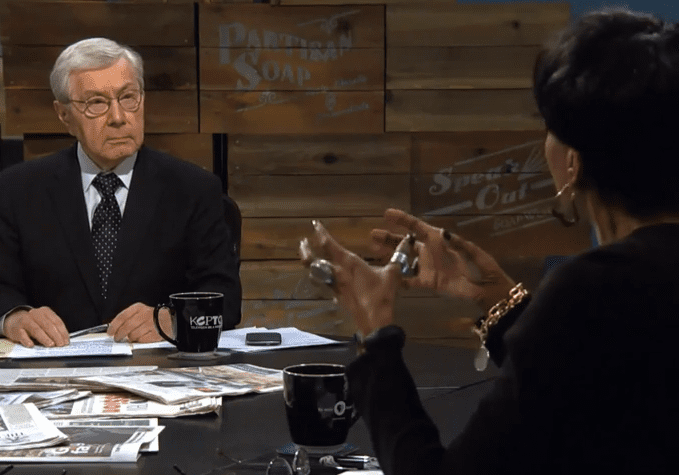
The Ruckettes, as the guests are called, discussed both sides of this multifaceted issue on Thursday’s “Ruckus.” Mike Shanin moderated this heated debate.
The discussion opened with Gwen Grant, CEO of Urban League KC, who — seemingly by accident — referred to voter I.D. laws as voter suppression laws. She corrected herself, but was unapologetic.
“I think they are one and the same,” she said. “The primary purpose for the voter I.D. law, from my perspective, from looking at the Republican Party, is really to … compress, suppress the vote. The Obama campaign, through two presidential elections, expanded on the electorate, and, when that expansion took place, it brought a more democratic or liberal voter: African Americans, Latinos, older people.”
Grant said the issue of voter fraud was invented to disenfranchise these minority voters who are often more likely to vote Democratic.
Woody Cozad, the president of Cozad Company, countered Grant’s argument. He pointed to the Cooperative Congressional Election Study, which, according to Cozad, concluded 6.4 percent of non-citizens cast a ballot in the 2008 election. This number was also cited by the Washington Post.
Cozad cited another example from the Post, referring to the 2008 election of Sen. Al Franken in Minnesota. Franken won by 312 votes, which the study in question claims could be accounted for by the non-citizen votes in the state.
“He won that election with fraudulent votes,” Cozad said. “And he cast a vote that made Obamacare possible. It does matter.”
Steve Rose, a columnist for the Kansas City Star, said he doesn’t have a problem with the idea of presenting a photo I.D. at the polling place, but he does have a problem with requiring a passport or birth certificate for voter registration.
“I think it’s a major burden on people who are disadvantaged,” he said. “For Secretary of State Kris Kobach to say ‘Well, all they have to do is sit on their couch … take a photo of their birth certificate on their smart phone and email it in … That’s an easy, 1-2-3 thing to do, and I don’t understand why everybody can’t do it.’ Well, a lot of people can’t do it, and there are thousands of people in the state of Kansas who want to vote who cannot get registered to vote because of the hassle.”
Grant said it’s not always easy to attain a birth certificate, even as a citizen. Cozad countered that it’s impossible for a non-citizen to attain a birth certificate at all.
The full conversation can be viewed above, starting at 13:05.
Reading these stories is free, but telling them is not. Start your monthly gift now to support Flatland’s community-focused reporting.
Related Stories

Johnson County GOP declares a “Great night for Kansas”
Several hundred people attended the Johnson County Republican Party’s free watch party at the Overland Park Marriott Tuesday night to watch election results. Through out the evening legislators from House District races, Kansas Insurance Commissioner Ken Selzer and U.S. Congressman Kevin Yoder gave victory speeches, while watching the results come in for the rest of…

Educators working down to the wire to defeat Missouri Amendment 3
First thing tomorrow morning, Andrea Flinders plans to send a mass text message to members of the local branch of the American Federation of Teachers reminding them to vote. “I think we will get a good turnout from our members,” said Flinders, who is the president of the local branch of the American Federation of…