
By Lauren Langdon
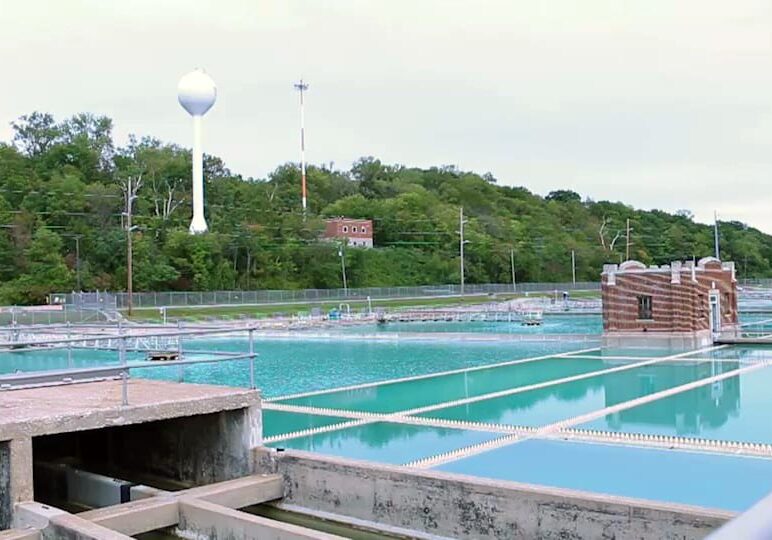
As the “Big Muddy” winds its way through Kansas City, it might be hard to believe that approximately 660,000 residents rely on the Missouri River for their drinking water — after it has been treated, of course.
But, did you know that the treatment process itself can introduce potentially hazardous contaminants to the water?
That’s something curiousKC discovered as it researched this question: From a proper scientific and medical perspective, what is in our tap water and is it appropriate for the human body of adults and children? The questioner did not provide a name, and attempts to reach them by email were unsuccessful, but the inquiry left us thirsting for an answer, so we pursued it anyway.
And, as it turns out, in July, the Environmental Working Group, released a database that tracks the contaminants in tap water. The database is searchable by ZIP code or utility name.
“Tap water is not pure distilled water, it has chemicals in it, and that’s not a bad thing,” said David Greene, manager of laboratory services for Kansas City Water Services. “Mineral water has chemicals in it, and they’re desirable.”
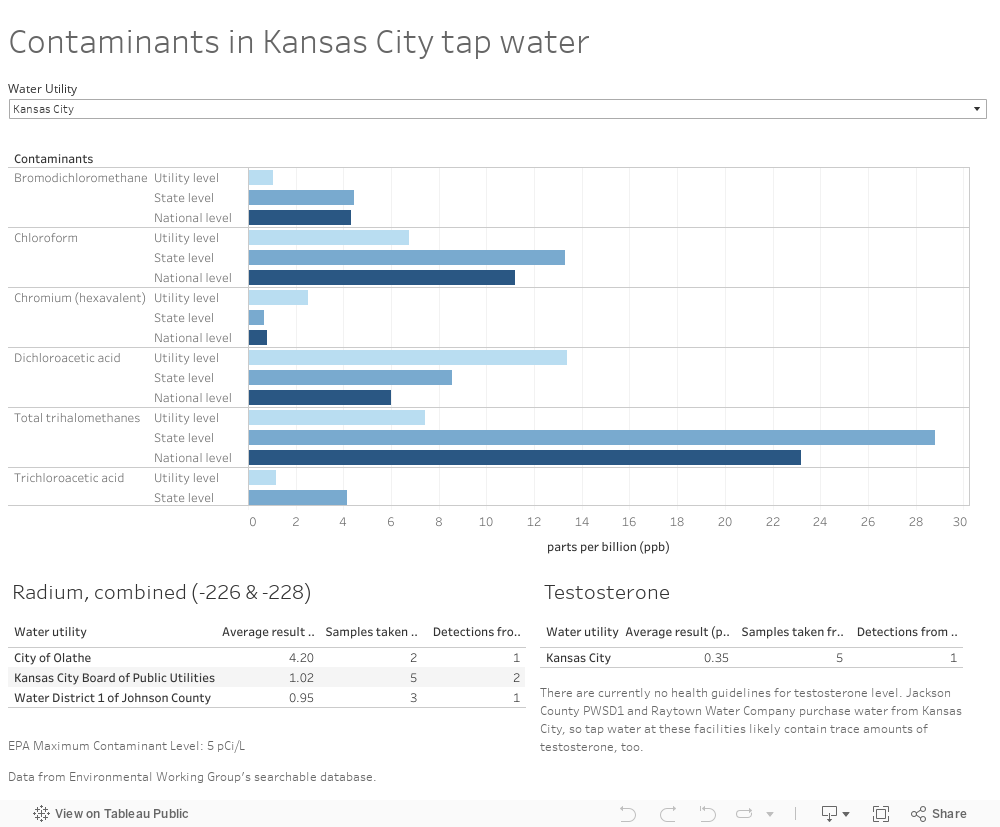
Turning Missouri River water into tap water can take four days. First, the clay and visible particles are removed, and then the water is disinfected using chlorine. This treatment process creates five of the six contaminants detected above health guidelines at KC Water.
Hexavalent chromium, commonly called chromium-6, was also detected above health guidelines, but there is currently no federal limit for the contaminant. Chromium-6 naturally occurs in the Missouri River.
For contaminants like chromium-6 that are not regulated by the federal Safe Water Drinking Act, Greene said risk assessment can take a while to catch up. These contaminants are detected on very small levels, and Greene said the database should not alarm consumers.
[FLEX-CONTENT]
While it’s up to KC Water to turn river water into tap water, consumers can help by minimizing their impact on the environment and the waterways.
“It’s important for everybody to think about protecting the source water,” Greene said. “What can we do at home to keep from pouring chemicals down the sink or over applying lawn fertilizers, things like that.”
— Lauren Langdon reported this as a student in a multimedia reporting class at The University of Missouri.
Reading these stories is free, but telling them is not. Start your monthly gift now to support Flatland’s community-focused reporting.

Related Stories

The End of the Pesticide Arms Race?
To spray or not to spray, that’s the question for farmers. Pests can be the make-or-break factor for a season’s harvest. Between 20% to 40% of global crop production is lost to pests annually, according to the Food and Agriculture Organization of the United Nations. Conventional chemical pesticides have traditionally addressed this challenge, but their…

Hundreds of Bee Species Face Decline in Missouri and Kansas
To Tom Schroeder, every bee is a work of art. His own words, backed up with hundreds of photos in his camera roll from the prairies and woods of Kansas City WildLands. With more than two decades of volunteering with the group, he’s become a bee enthusiast– but not an expert, he’ll clarify. “We’re the…
Developers eye idle KCK power plant as the region pursues data center projects
A defunct Kansas City, Kansas, power station astride polluted land has caught the eye of investors eager to develop an energy-hungry data center. The investors have offered to pay millions of dollars for the environmental remediation of the Kansas City Board of Public Utilities’ defunct Quindaro Power Station — and then some. The Unified Government…