

Missouri becomes third state to enact ‘Right To Try’ drug therapy law
July 15, 2014 | | 2 min read
Missouri residents who have exhausted conventional disease cures will have access to experimental drugs under legislation signed on Monday by Gov. Jay Nixon.
The so-called Right to Try legislation gives patients and their doctors the ability to procure drugs that have yet to gain approval from the U.S. Food and Drug Administration if the pharmaceutical manufacturer agrees to provide the product.
The Goldwater Institute, an Arizona-based think-tank, is pushing Right to Try legislation throughout the country. According to the institute, Missouri is the third state to enact the legislation after Colorado and Louisiana.
Critics say Right to Try bills are unneeded, given that the FDA has a process that allows patients to obtain investigational drugs.
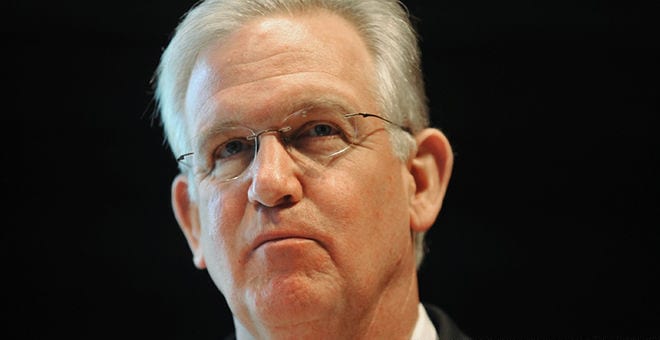
Missouri Gov. Jay Nixon
State Rep. Jim Neely, a Cameron Republican, sponsored the Missouri legislation. A physician, he has a 40-year-old daughter who has colon cancer. The PBS NewsHour featured Neely and his daughter, Kristina, last month in a feature on Right to Try laws.
“The Right to Try Act is about guaranteeing the rights of those who are most in need,” Neely said in a news release issued by the Goldwater Institute. “The Right to Try Act gives terminally ill patients a chance to continue their fight when they are left with no other options.”
According to the news release, Kristina has been battling colon cancer for more than a year but has been disqualified from clinical trial opportunities because she was pregnant at the time of her diagnosis.
The Missouri law was among several Nixon signed Monday as part of his final bill signings from this year’s legislative session.
The Goldwater Institute said a Michigan Senate committee is scheduled to vote Wednesday on Right to Try legislation.
The institute also said lawmakers have introduced similar bills in Delaware, Minnesota, and New Jersey.
Major Funding for Health coverage on KCPT provided by Assurant Employee Benefits and the Health Care Foundation of Greater Kansas City.
Reading these stories is free, but telling them is not. Start your monthly gift now to support Flatland’s community-focused reporting.

Related Stories

When Going Under the Knife Does Not Mean Surgery
Chef Educator Rachel Ciordas deftly sliced collard greens into a ribbon-like chiffonade as students from the University of Kansas School of Medicine watched with a degree of awe typically reserved for an episode of the Food Network’s “Chopped.” After Ciordas demonstrated how to peel, chop, or grate the raw ingredients, the future physicians donned aprons…

Caregiving Squeezes Households Between Young and Old
Melissa Johnson knows her life is hardly unique. The Oak Grove, Missouri, woman cares for her infirm 72-year-old mother, who lives in her own home nearby. She calls her mother daily. She brings dinner to her several times a week. Johnson, who coordinates care with her aunt, a team of therapists, and a nurse, is…
Feeding Tubes and Defibrillators
Let’s begin with two stories about the growing and important field of bioethics. The first is from Ryan Pferdehirt, the newly named Flanigan Chair in Bioethics at the Kansas City-based Center for Practical Bioethics. A hospital once asked him to consult on a bioethics case in which a son thought his desperately ill, hospitalized mother…