
Lawrence Farmers’ Market Rolls Out Double Up Program for Protein
July 12, 2024 | Cami Koons | 8 min read
LAWRENCE, Kansas – On two Saturdays each month, Supplemental Nutrition Assistance Program (SNAP) recipients can turn $25 into $75 at the Lawrence Farmers’ Market.
Participants can swipe their SNAP cards for $25 and receive an additional $25 in Double Up Food Bucks (purple tokens used for produce) and another $25 in Double Up Protein Bucks.
The protein bucks come in the form of red plastic tokens and can be spent on meats, eggs, bee pollen, cheese, beans, hummus and protein balls.
The protein program is similar to Double Up Food Bucks, which has been in the area for about a decade and gives SNAP recipients a dollar-for-dollar match to spend on produce.
The Lawrence protein program, which is in the pilot stage, is the first of its kind and was funded by the Douglas County Community Foundation.
“One of our goals at Lawrence Farmers’ Market is to improve access to local healthy, affordable foods to everybody… It’s part of our mission as a nonprofit farmers market,” said Emily Lysen, the director of development for the market.
So far, the program has been successful in driving more SNAP recipients to the farmers market.
How it Works
Last year, Lysen applied for a Livewell Community Wellness Grant from the Douglas County Community Foundation to pilot the protein match.
The foundation awarded $5,000 to the program, which Lysen has budgeted to allot $500 each week that the tokens are available. The program started in May and she expects it to wrap up in September as the grant funding runs out.

“Hopefully, we can show how successful this nutrition program is and we can expand to other farmers markets and grocery stores,” Lysen said.
Since the start of the season, the number of customers using the extra SNAP program has doubled. Now the market sees around 20 folks each Saturday who come to use their SNAP allocation on local goods.
SNAP recipients can come to the information booth at the Lawrence Farmers’ Market, where they can swipe their EBT cards. Market staff will then give folks $1 wooden SNAP tokens in the amount they swiped for up to $25 in purple tokens (to be used on produce) and up to $25 in red tokens for protein purchases.
Tokens are then used like regular currency at stands in the market.
At the end of the day, vendors bring their tokens to the market staff for reimbursement.
“It seems like it’s working really well,” Lysen said. “There’s high vendor participation in it and the feedback from the community has been that people are really excited about it.”
The Double Up Food Bucks program focused on produce started in 2009 at farmers markets in Detroit and has since expanded to 30 states. According to the Fair Food Network, more than 763,000 families participated in a Double Up program in 2022.
Check the Map

The Kansas City area was an early adopter of the Double Up Food Bucks program. Donna Martin, the project director for Double Up Food Bucks Heartland, which serves both Kansas and Missouri, said the program officially launched in local grocery stores in 2015.
The following year Martin said the Heartland program included farmers markets and several existing initiatives under the one program. Since then, it has expanded to include 165 locations across the bordering states.
“Having more fresh fruits and vegetables has been proven to improve diabetes rates and heart health,” Martin said. “We work with folks who are on food assistance and we know they have a great deal of struggle being able to afford fresh fruits and vegetables.”
From 2020 to 2023 the program issued more than $3 million in Double Up Food Bucks, just in Kansas, according to the Heartland annual report.
Heartland partners with local and state organizations such as the Mid-America Regional Council, Cultivate KC, and state extension offices to raise the 50% match required by the USDA grants.
Martin and others hope to see a reform to the funding program to lower the match amount. As it stands, Heartland partners would have to gather $6 million to maintain the $12 million program in Kansas and Missouri.
Community Supporting Community
Currently, almost 20 vendors are participating in the Lawrence protein incentive program.
Lysen said several adjusted their offerings to include things like protein balls or beans to participate.
“Everybody is interested in getting their food to as many people as possible,” Lysen said.
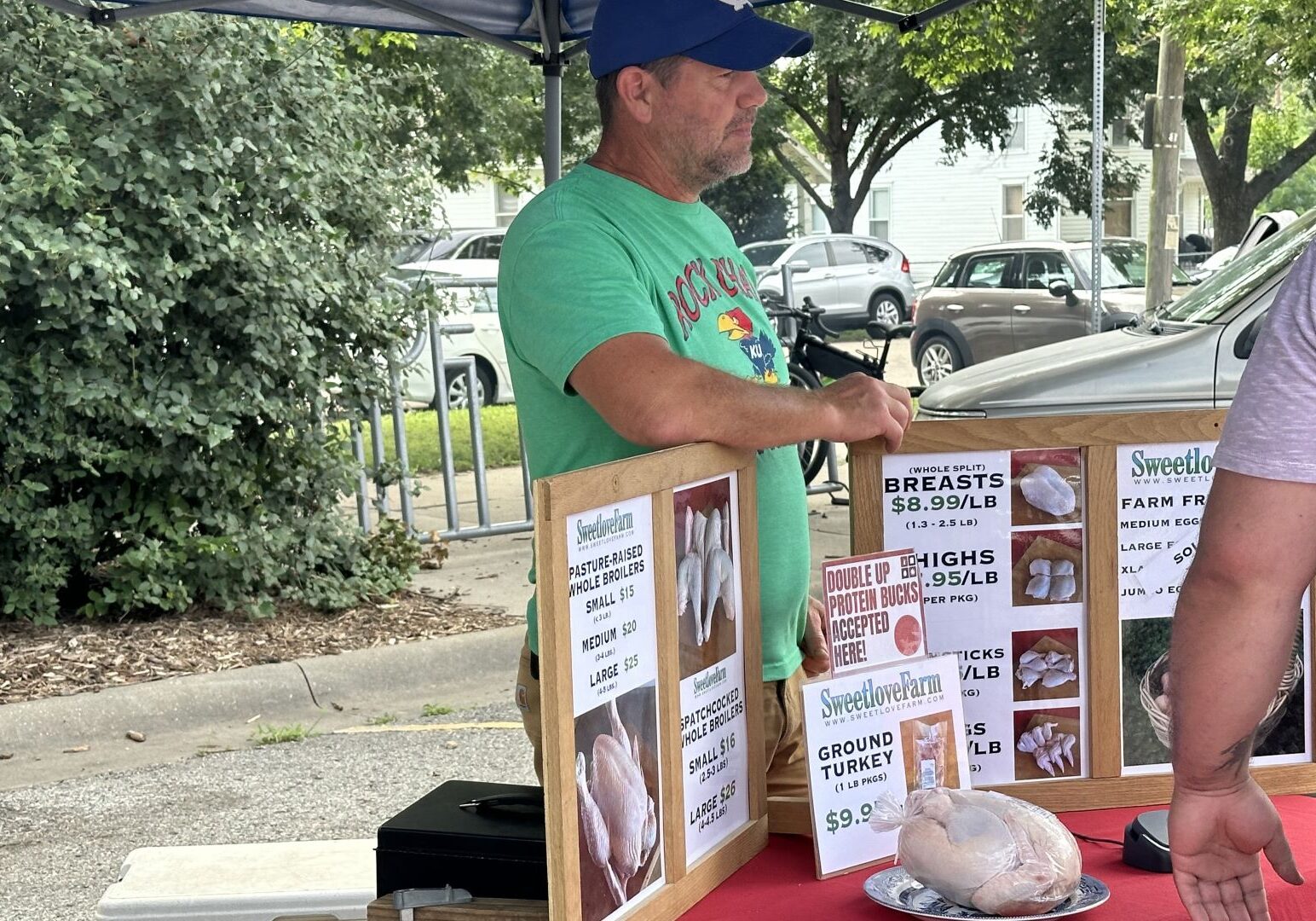
Phil Holman-Hebert owns Sweetlove Farm and has sold meat and eggs at the Lawrence Farmers’ Market since 2008. He was happy to participate in the Double Up Protein Bucks program and make his products more accessible to folks.
Through the decades he has sold at the farmers market, Holman-Hebert has been very sensitive about the price of his products.
“We’re very conscious about not wanting to sell elitist food,” Holman-Hebert said.

A large part of his role as a farmer, he feels, is to be the link between quality proteins and people who cannot raise their own food.
“The overwhelming majority of us don’t have an opportunity to connect with where our food comes from,” Holman-Hebert said. “My role in the world is to be the bridge.”
The farmers market allows Sweetlove Farm to connect with its community, and Holman-Hebert sees the Double Up Protein program as a way to enhance that connection.
So far, a lot of the customers who have used the red tokens at Holman-Hebert’s stand are folks he has seen as regular farmers market customers, but not folks who have shopped with him in the past.
To him, it’s a mark of success for the program that those customers now have access to locally grown protein.
“It’s a wonderful and gratifying thing that we live in a community that has the resources and made that happen,” he said, noting the importance of a community supporting one another. “As a society, it’s not a bad thing to share our resources.”
Those shopping with the nutrition assistance program gain greater access to high quality, locally sourced foods, which typically have a higher price tag than at the grocery store.
And local producers benefit by expanding their customer base. Plus, it shows government buy-in and support for the local food system.
Lysen said as processing and input costs continue to increase for local livestock producers, she started thinking about how to boost their sales.
“This idea came about trying to get our meat vendors and our egg vendors to have more money and to get more proteins into the hands of the people who need it the most,” Lysen said.
If the goal of the nutrition program is to keep folks fed with nutritious food, Lysen sees the Double Up Protein Bucks as a great avenue to do so.
“We understand fresh fruits and vegetables are awesome but we have a whole other wide array of foods out there,” Lysen said.

Martin disagrees slightly, citing reports that conclude Americans already take in more than enough protein. Her goal is to increase the amount of fruits and vegetables folks have in their diets since only about 10% of U.S. adults have the recommended amount of fresh fruits and vegetables in their diets.
“We want to have people eating more healthy foods and in particular, produce,” Martin said. “And we want our local farmers to benefit and more of our food dollars to stay in our communities.
That’s part of the beauty of these types of programs, is it allows SNAP shoppers to have more choice.”
Lysen hopes the new protein program in Lawrence will help folks realize that they can spend their SNAP dollars at the market and keep their spending local.
“We’d love to get more people down to the market who don’t realize we can double, or in this case almost triple up their money,” Lysen said.
Lori Trenholm, the director of community investment at the Douglas County Community Foundation, said the program fits well with the Livewell mission to “build lifelong healthy habits for kids.”
“Our farmers market is a wonderful addition to our community and we’re so happy to support it,” Trenholm said.
Typically, Livewell grants don’t renew the same projects. But Trenholm is hopeful that the early success of the pilot program will carry the program forward and encourage future funding from other partners.
“We’d love to see it continue,” she said.
Folks interested in the program or in supporting it can learn more at the Lawrence Farmers’ Market website.
Flatland contributor Cami Koons is a freelance journalist focusing on food chain and sustainability issues.
Reading these stories is free, but telling them is not. Start your monthly gift now to support Flatland’s community-focused reporting.
Related Stories
Lady Pitmasters Work to Break Barbecue’s Gender Stereotypes
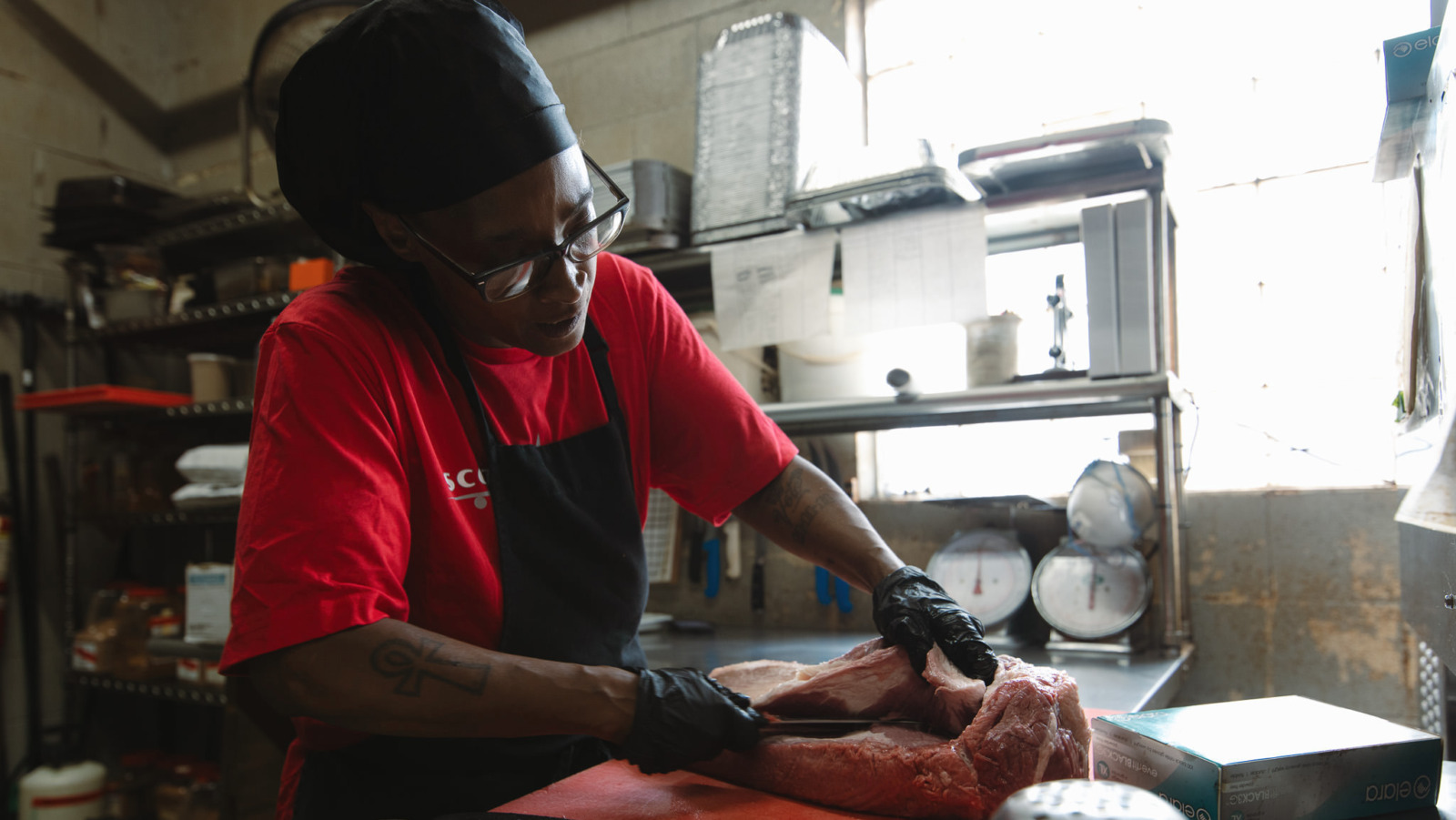
Work in a barbecue joint can involve hoisting 85-pound cases of brisket and cleaning away the soot, grease, and grime inside the pits. No place for a woman? Tell that to aspiring pitmaster Veronica Scroggins and her mentor Scott Umscheid, owner of Scott’s Kitchen & Catering at Hangar 29, located in a former car rental…
Sheep, Native Plants and Fire Tested as Methods for Managing Invasive Honeysuckle Next to the Blue River
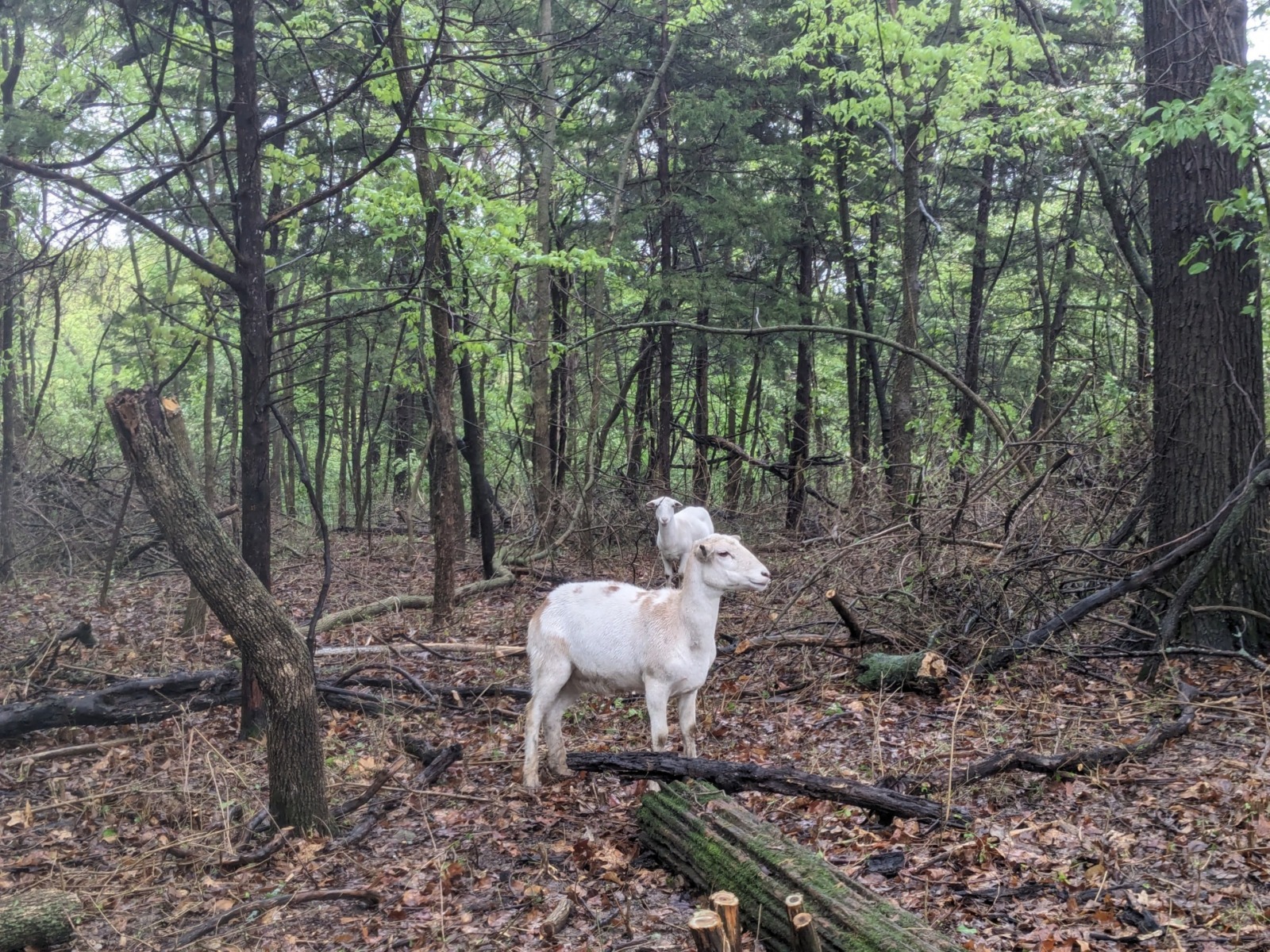
Editor’s Note: Additional information was added into this article to identify the species of bush honeysuckle that impacts Missouri. For information on identifying invasive honeysuckle or other invasive plants, visit the Missouri Department of Conservation’s Website. Something is suffocating Missouri’s forest floors. It’s leafy, it’s dense, it’s pervasive, and it can grow so thick that…
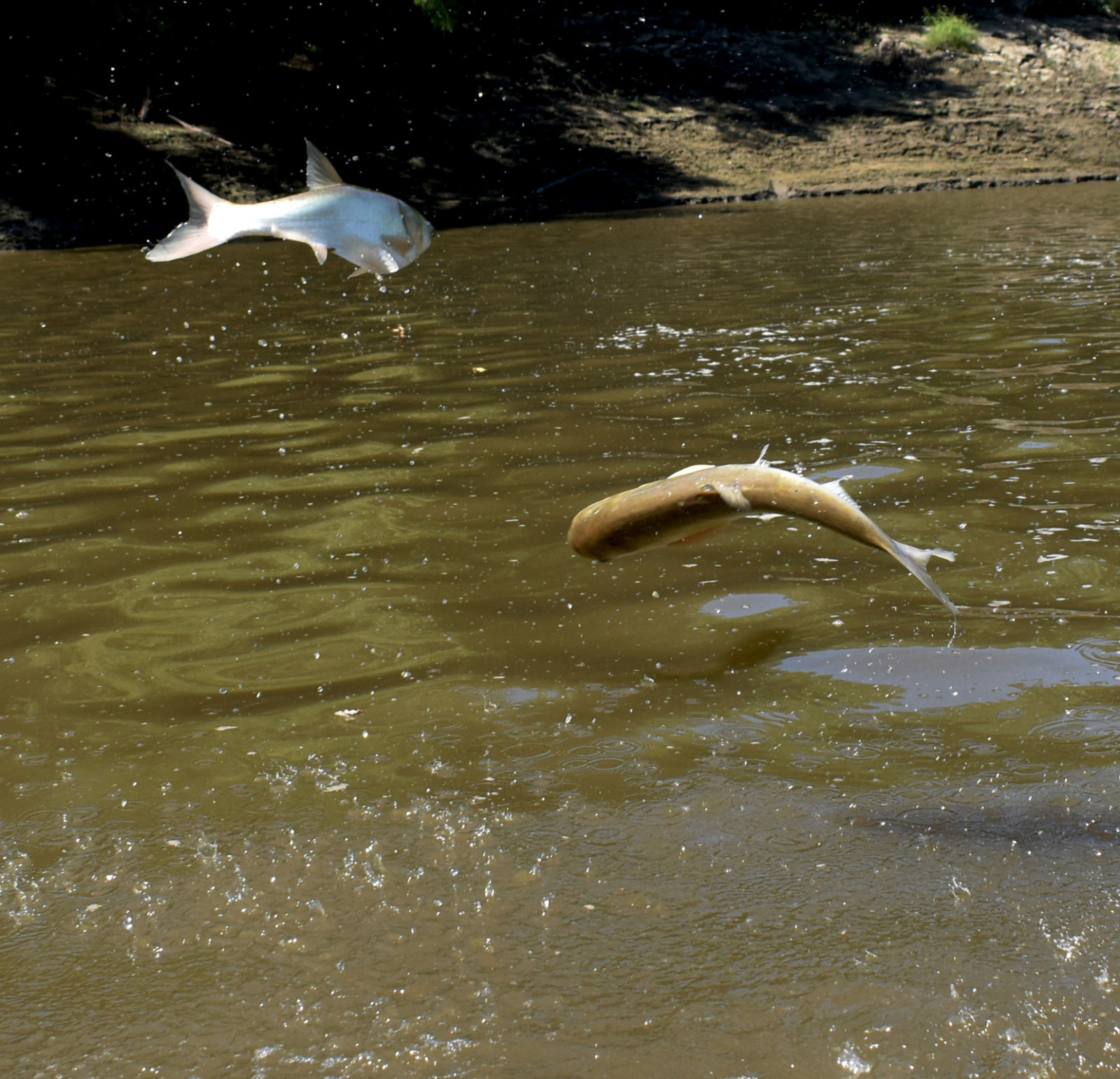
Missouri Business Tests New Net to Catch Invasive Carp Leaping Out of Platte River
A little ripple tears through the muddy water. It’s small. It’s so small, in fact, that coupled with the regular movements of the river, you wouldn’t even notice it – unless you knew what to look for. Within seconds, a silver carp flies out of the water and launches itself several feet into the air….