
New bus route addresses health needs of KCK residents
August 14, 2014 | | 2 min read
It was nearly a decade ago that the Rosedale Development Association, a nonprofit community improvement corporation, identified lack of transportation as a significant barrier for neighborhood residents who wanted better access to medical care, grocery stores and other basic services.
The feedback came via a community-needs survey conducted by a volunteer working with the organization, said Erin Stryka, program manager of the association’s Rosedale Healthy Kids program.
After a less-than-positive response from area transit authorities back then, she said, the push for a bus route serving the area languished until a coalition of neighborhood organizations and church leaders revived the idea a couple years ago. Stryka has served as the association’s point person on the project.
“It just kind of became a mission for some of us,” she said.
Stryka said proponents of the route packed the audience as elected officials with the Unified Government of Wyandotte County and Kansas City, Kan., held budget deliberations last year.
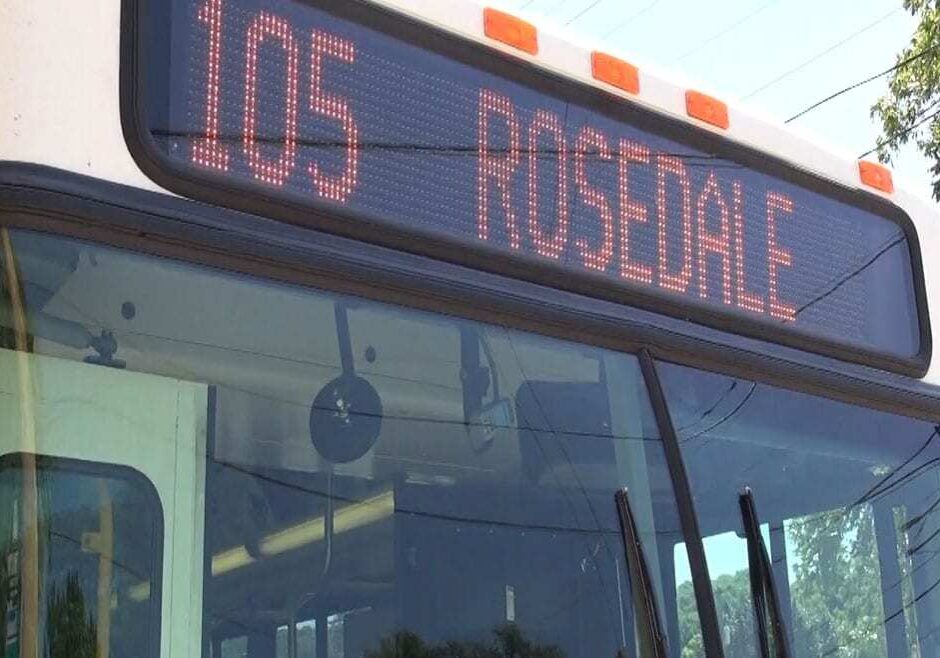
The board of commissioners agreed to allocate $250,000 to run the health-focused route, which began operation in late June as the 105-Rosedale run. The route runs between the Rosedale and Argentine neighborhoods.
Ridership is about 40 percent above the break-even point, Stryka said. The 105 is the first new route in KCK in about a decade, according to officials with the Kansas City Area Transportation Authority (KCATA).
Public transportation addresses a social-equity issue by giving low-income residents the same mobility enjoyed by more well-heeled populations, said Daniel Serda, a city planning consultant and a Wyandotte County representative on the KCATA board of commissioners.
On a more practical level, Serda cited the example of a diabetic who is relying on a friend for a trip to the doctor and has to cancel because the friend gets sick or has car problems.
“You could end up in a week or two in a health crisis that lands you in the emergency room out of something that really boiled down to the fact that your friend’s car broke down,” he said. “There is almost a level of absurdity with it, but that is the reality that a lot of folks in our community are facing.”
Explore some of the key stops along the route:
Major Funding for Health coverage on KCPT provided by Assurant Employee Benefits and the Health Care Foundation of Greater Kansas City.
Reading these stories is free, but telling them is not. Start your monthly gift now to support Flatland’s community-focused reporting.
Related Stories
Caregiving Squeezes Households Between Young and Old
Melissa Johnson knows her life is hardly unique. The Oak Grove, Missouri, woman cares for her infirm 72-year-old mother, who lives in her own home nearby. She calls her mother daily. She brings dinner to her several times a week. Johnson, who coordinates care with her aunt, a team of therapists, and a nurse, is…
Feeding Tubes and Defibrillators
Let’s begin with two stories about the growing and important field of bioethics. The first is from Ryan Pferdehirt, the newly named Flanigan Chair in Bioethics at the Kansas City-based Center for Practical Bioethics. A hospital once asked him to consult on a bioethics case in which a son thought his desperately ill, hospitalized mother…
After Tuberculosis Outbreak, Wyandotte County Parts Ways with Health Director
The director of the Wyandotte County Public Health Department is no longer with the agency, a spokesperson confirmed Tuesday. It comes after turmoil during the handling of the major tuberculosis outbreak, shown by emails obtained by the Kansas News Service. Elisha Caldwell had been head of the local health department while an outbreak of TB grew…