
Internet ‘Last Mile’ Experiment Coming to Clinton County
April 13, 2021 | Jacob Douglas | 5 min read
Clinton County is a testing ground for an experimental technology that could help solve the “last mile” problem in delivering broadband connections in rural America.
The county is one of just seven locations across the country that have been selected to test a variety of broadband solutions as part of technology nonprofit US Ignite’s Project OVERCOME.
The Clinton County test will feature RF Over Fiber, a wireless broadband solution designed to extend fiber optic networks to homes and businesses that are hard to reach. The project has been funded with a $300,000 grant.
“This is a great project for Clinton County and for communities around the country where access to high-speed connectivity is not available due to the cost of that ‘last mile’ of fiber, which would make it prohibitive for the consumer,” said Joe Lear, northwest regional director for the University of Missouri Extension, in a news release.
“The project allows us to evaluate an experimental method that may possibly bridge that last mile at a reasonable cost.”
Participants in the Clinton County test include the University of Missouri Extension, Missouri University of Science & Technology, Worcester Polytechnic Institute, United Electric Cooperative and Maximize Northwest Missouri.
According to BroadbandNow, about 780,000 Missourians lack access to broadband internet speeds, defined as 25 megabits per second download and 3 megabits per second upload speeds. In Clinton County, 76% of households have access to 25/3 Mbps.
A survey in the summer of 2020 also found that nearly 90% of respondents said high-speed internet was an important factor when deciding where to live. With high-speed internet, supporters say economic development and rural entrepreneurship will grow rapidly.
“I think getting end-of-the-road access to high-speed broadband can really foster hope and the idea of possibility,” said Christel Gollinick, founder and president of JUPER Communications in Trimble, Missouri.
Radio Frequencies
How exactly does this technology work? Well, it’s not as complicated as you might think.
Essentially, devices referred to as “radios” will be put in close enough proximity to pull from the existing fiber network. Those radios will shoot a signal to a tower, or a tall building that will have radio receivers on it. In turn, those receivers will transmit the connection to another device called an “intelligent router” that will use machine learning to digitally stitch together the different radios and disseminate a broadband connection, wirelessly.
That may sound like a lot of effort to get internet to homes out of reach of fiber networks, but the solution will actually be a more affordable method to reach across the last mile.

The RF Over Fiber network is expected to deliver download speeds around 100 Mbps. Much like other wireless connections, line-of-sight will need to be kept, a challenge Casey Canfield, an assistant professor at Missouri S&T, said will be looked into as the project goes on.
Canfield hopes the project will prove that RF Over Fiber is a viable solution to be expanded in other regions of the state, and rural areas across America.
“We’re really hoping to make everything open source, and we’re carefully documenting everything so that if other folks want to follow in our footsteps, they’re able to do so,” Canfield said. “This town is just one representative of a bajillion other towns across rural America.”
Other solutions for the last mile have been tossed around by major tech giants, and several others are being tested in other communities as part of Project Overcome.
But one particularly high-profile alternative already is being implemented in select regions of the country.
Elon Musk’s Starlink internet uses satellites (that’s right, in space) to beam wireless internet connections to Earth. With a small satellite dish placed where nothing blocks the view, users can expect anywhere from 50-150 Mbps speeds. Musk tweeted in February that he expects speeds to reach 300 Mbps by the end of the year.
Currently, more than 1,000 Starlink satellites orbit Earth, and 10,000 customers are using its service.
Entrepreneurship
The Clinton County project was spawned in the hope that high-speed internet adoption will lead to economic growth and new rural entrepreneurship.
Sarah Low, director of MU Extension’s Exceed – Regional Economic and Entrepreneurial Development program, said that small businesses may, for example, need technical assistance from a small business development center, but the closest one to Clinton County is in Kansas City.
“What if you could jump on Zoom to talk with SBDC counselors?” Low said in a press release. “What if you could move back to Clinton County but continue to sell your goods or conduct your business from there? Bringing money from outside the community and outside Missouri is what will help us grow our economy.”
In addition to the internet connection, the project will team up with the local 4-H to provide education on how to use computers and boost internet literacy for families and businesses in the area.
The Clinton County project is hoping to connect around 30 households for free, and will finish in March of 2022.
“We’re trying to start small for this proof of concept so we can make sure it works,” Canfield said. “Then from there, the sky is the limit.”
Jacob Douglas covers rural affairs for Kansas City PBS in cooperation with Report for America.
Reading these stories is free, but telling them is not. Start your monthly gift now to support Flatland’s community-focused reporting.
Related Stories
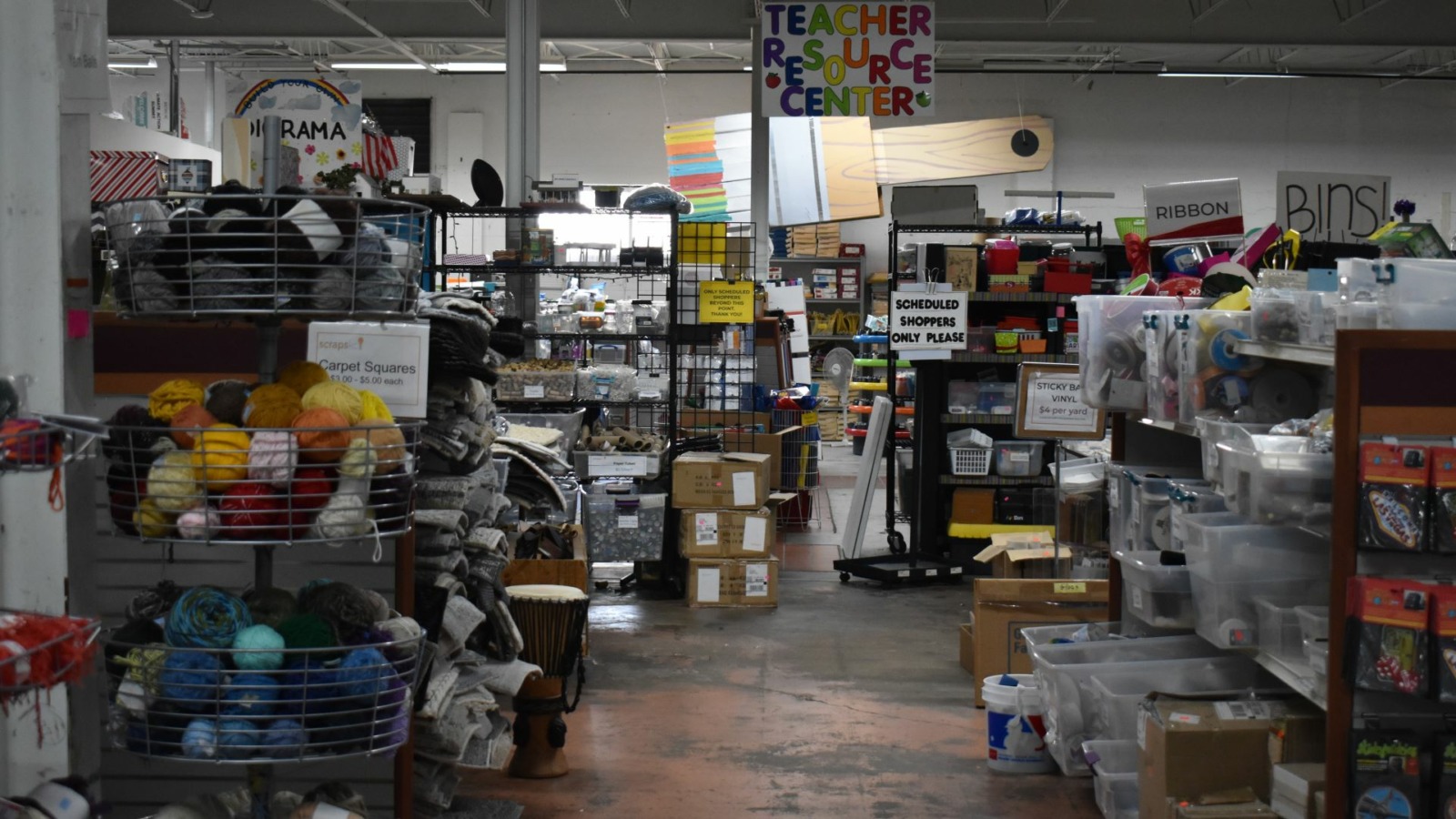
As Landfills Approach Capacity, Upcycling Gains Momentum
As Kansas City area landfills approach full capacity, more people are embracing upcycling as a sustainability strategic to divert waste.
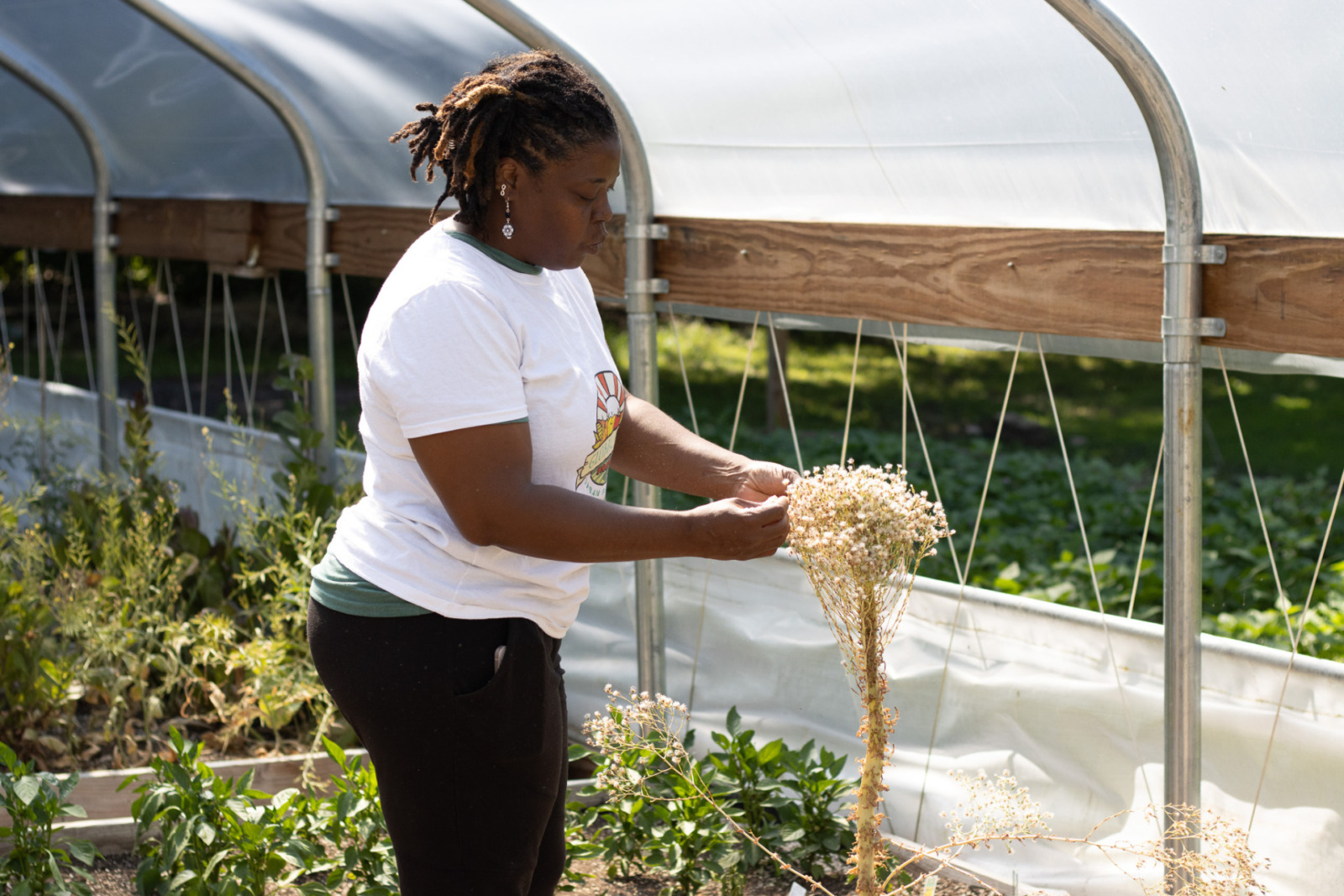
Harvesting Change | Making Local Food Connections in the Heartland
Meet the people who are making Kansas City’s increasingly interconnected local food system more sustainable on multiple fronts.
Parched in the Panhandle: Town Frets About Water
How Seaboard Foods rebuilt the Oklahoma panhandle’s economy, which ushered in a new era of groundwater depletion from the Ogallala Aquifer.