
Evergy Plans Major Coal Shutdowns, But Environmental Groups Say It’s Not Fast Enough
May 4, 2021 | Brian Grimmett, Kansas News Service | 5 min read
Scientists say that if we’re going to stop rising global temperatures, the world will need to greatly reduce the amount of carbon it’s emitting into the air.
Electricity production is one of the largest culprits and transitioning away from fossil fuels is seen as a key step in stopping climate change.
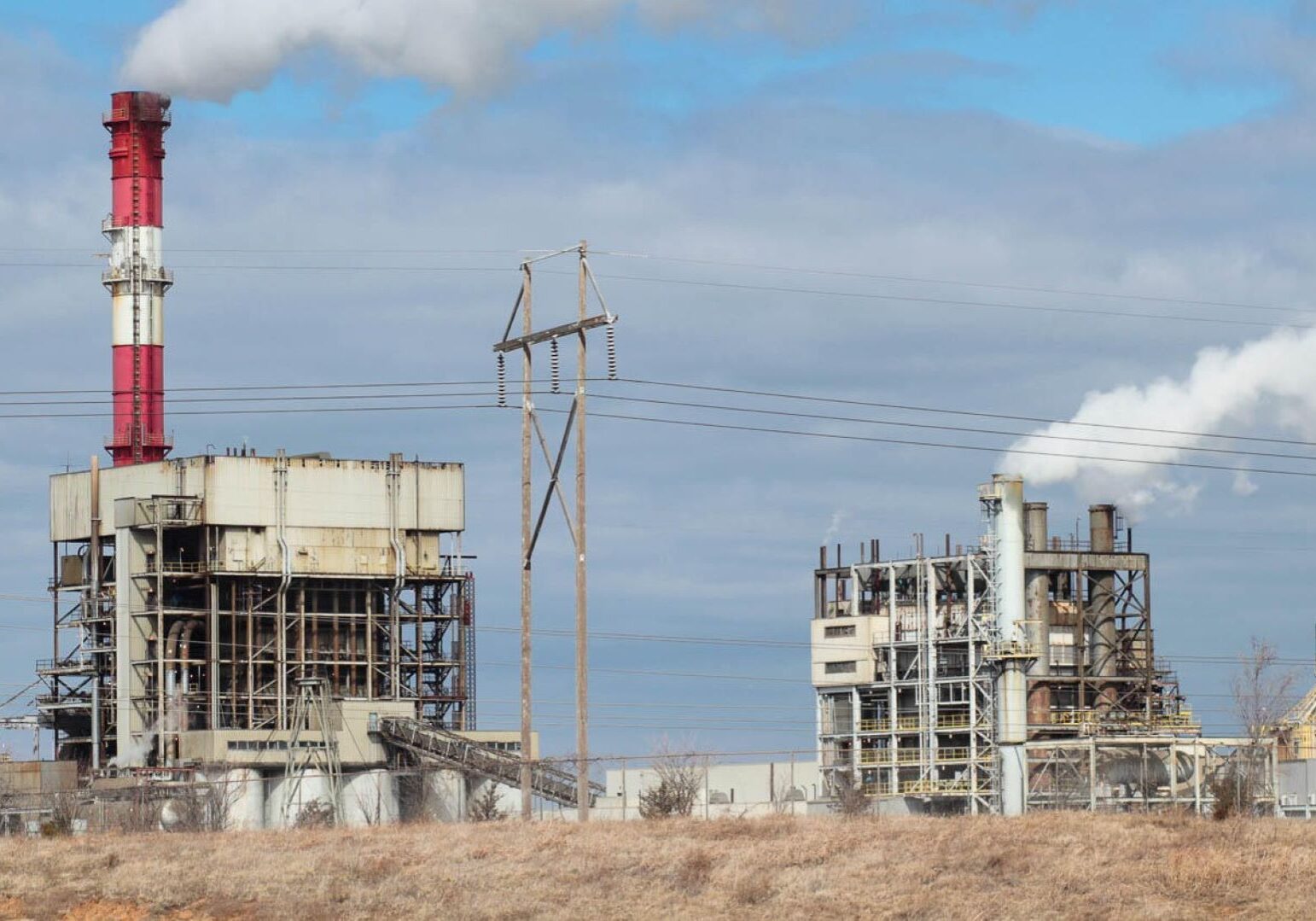
Under mounting pressure to ditch fossil fuels and amid shifting economics that make coal increasingly less competitive, the largest utility in Kansas pledges to close nearly all of its coal-burning plants in the next 20 years.
In the meantime, it’s moving to harvest more energy from the wind and the sun.
Environmental groups remain unimpressed. They say Evergy could abandon coal for renewable energy far more quickly.
The update comes from the latest long-term planning document Evergy is required to file with state regulators in Missouri. Kansas regulators are also asking for a state-specific plan for the first time. That’s not due for another month.
“We are ahead of the national average and ahead of most utilities in the amount of carbon reduction that we’ll be able to do,” Evergy spokesman Chuck Caisley said.
The plan calls for retiring about 20% of its coal power generating capacity in the next ten years. Evergy would retire its last three coal plants in 2039.
The first plant scheduled for retirement is Lawrence Energy Center in 2023. A plant near St. Joseph, Missouri, would close in 2024, followed by a unit north of Topeka in 2030 and a unit near La Cygne, Kansas, in 2032.
“That falls way short of what’s needed in order to stop the climate crisis,” said Andy Knott, a deputy regional director of the Sierra Club’s Beyond Coal campaign.
But Caisley said Evergy can’t shift to renewable energy until it has the capacity to generate enough electricity to replace it. And even though it’ll keep some coal-burning plants open until 2039, they likely won’t be operating at full capacity. Instead, they’ll be run seasonally to meet peak demands.
The plan would reduce Evergy’s carbon emissions by 70% from 2005 levels by 2030. The Biden administration would like to see the electricity generation sector have net-zero emissions by 2035. Evergy’s current plan wouldn’t get there until 2045.
Beto Lugo is the executive director of Clean Air Now, an environmental justice organization in Kansas City. He said the closure of the coal plants is a big win for communities of color that are often more impacted by pollution than other groups.
“That’s why the communities need to be a part of those discussions,” he said. “They need to be at the table guiding a lot of these projects.”
Lugo said it’s particularly important that those communities benefit in some way from the renewable energy projects planned.
Evergy says it plans to build 3,200 megawatts of renewable energy in the next decade, nearly doubling its renewable capacity. Most of the new development will be in large-scale solar energy farms. The first project would be completed as early as 2023.
The Sierra Club’s Knott and other environmental advocates also worry that the plan calls for potentially building several new natural gas power plants after 2035. They would provide always-ready power to replace some of the lost coal. (Wind and solar lack the on-demand convenience of coal and gas.) While natural gas releases fewer carbon emissions than coal, it’s still a fossil fuel built on a supply chain that emits large amounts of greenhouse gases.
“Building new gas would continue the climate disaster,” Knott said. “That is not the right direction to go.”
But Caisley said the analysis for the plan was done using today’s technology at today’s prices. He said the further the plan gets into the future, changes are nearly inevitable.
“Our hope is that over that time period the technology exists in order to not have to make an investment in carbon,” he said. “But we’re not there yet.”
The plan was also made without considering newly approved financial tools that would make it easier and more financially appealing for Evergy to retire older coal plants earlier than expected.
Ashok Gupta is an energy economist with the National Resource Defense Council. He said the plan is definitely a step in the right direction, but it needs to do more of what is proposed, and quicker.
He said the new financial tool will play a key role in making that happen.
“This is not the end of the process,” Gupta said. “And we expect a lot to change even in the annual update by next year.”
Brian Grimmett reports on the environment, energy and natural resources for KMUW in Wichita and the Kansas News Service. The Kansas News Service is a collaboration of KCUR, Kansas Public Radio, KMUW and High Plains Public Radio focused on health, the social determinants of health and their connection to public policy.
Reading these stories is free, but telling them is not. Start your monthly gift now to support Flatland’s community-focused reporting.
Related Stories

The End of the Pesticide Arms Race?
To spray or not to spray, that’s the question for farmers. Pests can be the make-or-break factor for a season’s harvest. Between 20% to 40% of global crop production is lost to pests annually, according to the Food and Agriculture Organization of the United Nations. Conventional chemical pesticides have traditionally addressed this challenge, but their…

Hundreds of Bee Species Face Decline in Missouri and Kansas
To Tom Schroeder, every bee is a work of art. His own words, backed up with hundreds of photos in his camera roll from the prairies and woods of Kansas City WildLands. With more than two decades of volunteering with the group, he’s become a bee enthusiast– but not an expert, he’ll clarify. “We’re the…
Developers eye idle KCK power plant as the region pursues data center projects
A defunct Kansas City, Kansas, power station astride polluted land has caught the eye of investors eager to develop an energy-hungry data center. The investors have offered to pay millions of dollars for the environmental remediation of the Kansas City Board of Public Utilities’ defunct Quindaro Power Station — and then some. The Unified Government…