
Crime & Safety, Healthcare, News & Issues, Personal Safety, Questions Answered, Racial Justice, curiousKC
curiousKC | How Do You Discuss the Scary Virus With Children?
December 14, 2020 | Vicky Diaz-Camacho | 8 min read
Kids can handle more than adults think, say two Kansas City moms.
This is their response to the following curiousKC query: How are parents protecting their children from allowing fear to be their primary emotion in COVID times?
Fear is the body’s natural response to a threat, which people are living with these days. The two area moms, Enam Haddad and Annie Watson, said addressing those fears is good to do, no matter the child’s age.
“I think some people underestimate how much children understand and how much information they can absorb,” Haddad said. “You know, they understand, even if we don’t say anything to them. They kind of sense our body language.”
Haddad is a parent of three and founder of FlexPlay, a childcare service that caters to entrepreneurial parents. When she started the childcare service, it focused on parents who work from home, in pre-COVID times. Then the pandemic hit.
As a mom and entrepreneur herself, she felt firsthand the impact the public health crisis had on her young children and childcare businesses. She listened to the conversations her kids would have with their friends. Most of the time, young ones talk about what’s changed, what they can’t do, where they can’t go and who they can’t hug.
Haddad said rather than shy away from these sensitive conversations, she broaches the subject with the child’s age in mind and taps into their naturally curious minds. Kids know when an adult isn’t being honest.
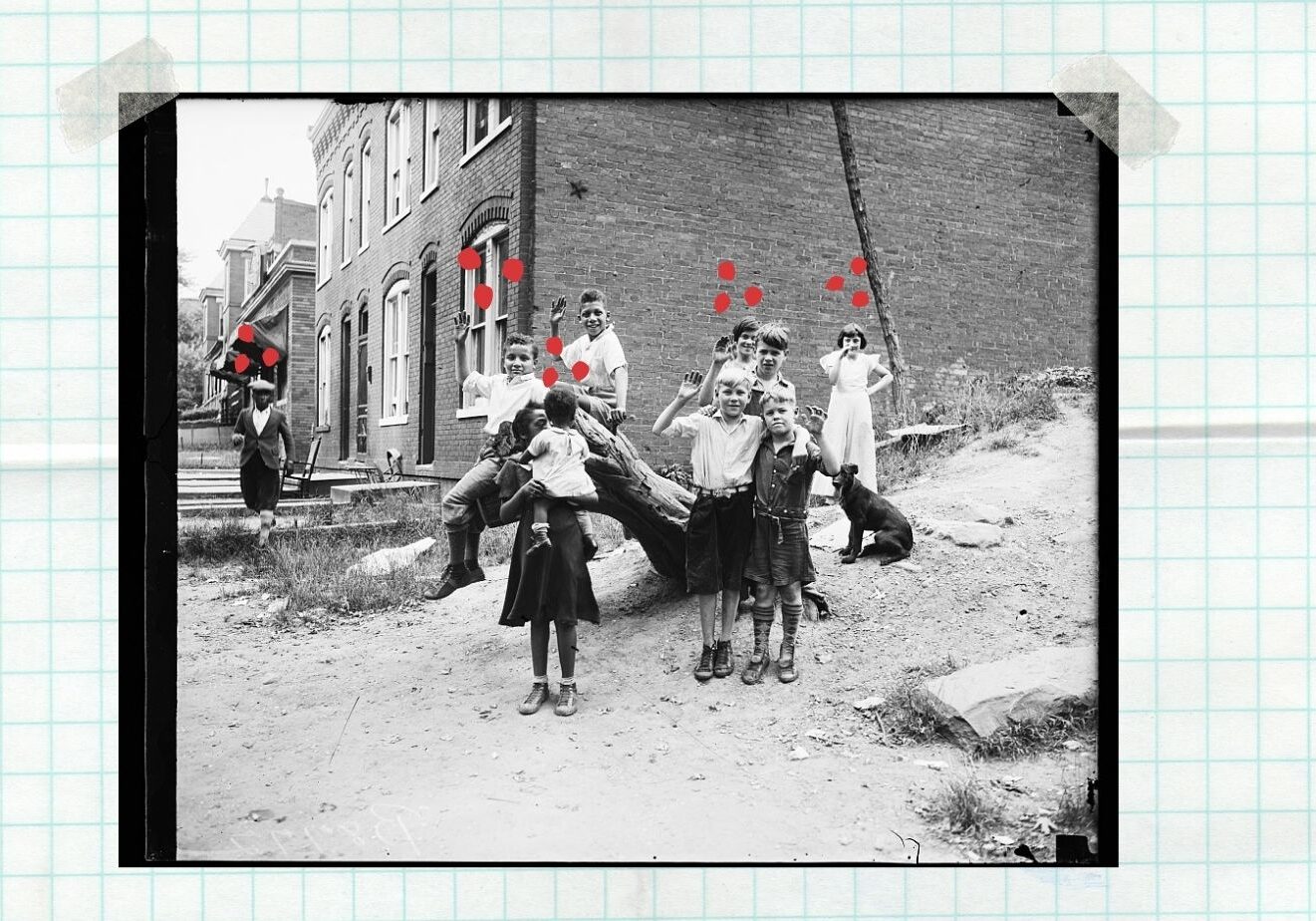
So she uses the scientific approach to explain how the virus works and puts it into simpler terms. For example, Haddad uses a visual — the COVID-19 virus is like a bunch of little red dots.
To protect others, she told her students, create an invisible bubble by stretching your arms out and swinging them around, up, down, front back and back around. That’s social distancing. They also covered how masks work as a barrier to prevent the “red dots” from jumping to another person.
She advises other parents to use these visuals and interactive examples to break down complex science. It’s helpful to emphasize what they can control versus what cannot. That also helps to encourage kids to ask more questions.
“They have that power to play a part so they’re not completely victims to it,” she said.
Another parent, Annie Watson, agrees.
Watson, a former early childhood educator and mother of four, is a big advocate for open and honest conversation. She was also the lead writer of the failed Pre-K ballot initiative, which sought to tack on a small tax in Kansas City that would improve access to quality early childhood education.
Now in the throes of a pandemic, Watson has shifted her focus to educating her own children at home while working full-time, albeit remotely.
“The mental health (impact) and the mental load of families and of children is real,” Watson said. “Those emotions are real. Any young kid can grapple with those things and they should.
“There is a developmentally appropriate way to talk about absolutely anything.”
Watson said rather than shield children from the concept of “scary” or the fear that many feel right now, it’s best to be explicit that these feelings are temporary.
Keep the emphasis on feeling.
“You aren’t sad. You feel sad,” she said. “Because if you are sad, then that means that is who you are and you will never be anything else.”
The mental health (impact) and the mental load of families and of children is real,” Watson said. “Those emotions are real. Any young kid can grapple with those things and they should.”
annie watson, former early childhood educator
What’s more, Black, Indigenous and other people of color, such as Watson, are forced to confront other difficult topics, which include racial, health and economic disparities. These have been particularly amplified in this pandemic.
“Specific to Kansas City, I think we are clearly seeing the educational disparities that many of us knew existed, but we’re seeing them play out in our own homes in a very different sort of way,” Watson said.
Shielding children from fear, she added, is a privilege that BIPOC families do not have.
“This concern about, well, you don’t want children to be scared of the world is also another way that white dominant culture, white supremacy, really shows up in parenting (with) this fear of conflict and… sullying childhood,” she said. “Who gets to feel fear and why, and what does that mean?”
It’s personal for her. She is helping her own kids unpack COVID-19 and racial unrest at the same time. For example, her son had internalized racist ideas she assumes were floating around in his classroom. Now that he’s home, she has been able to correct the misconceptions he’d learned.
“What does it mean to exist in this country and in this world, in their own skin in Kansas City? For non-Black and Brown kids, like my kids, that is particularly challenging,” she said. “Not only do my kids not see Asian educators, there’s not a huge Asian population in Kansas City. (So) they’re often left out of the conversations just in general.”
Race issues are interwoven in this public health crisis. Research has consistently shown the disproportionately negative impact the virus has on BIPOC communities.
So, how does one reckon with racial issues and a public health pandemic?
The key is to model inquisitive and inclusive behavior at home, said Hibba Haider, a pediatrician at Health Partnership Clinic and Choice Physicians Group. That’s what she does for her own children.
“As a leader of the family, tell them why it’s ethically important to do what is basically needed to be done to protect not just our own selves, but our community — our families, our fragile, our immunocompromised friends,” Haider said.
The virus is not hitting children as hard as adults, she added. That’s proven in the number of children hospitalized at Children’s Mercy. The most recent data show that roughly 5% — or 750 — of COVID-19 tests in a group of more than 15,000 children come back positive.
At home, her daughters feel the weight of the virus hurting friends or people they know, she said. Even though they still attend school in-person while she goes to work at the hospital, their lives have been drastically altered.
So, she said, it’s important to discuss what’s changed and how to address this new normal.
“You know, every child responds to this differently,” she said.
Stress and fear can negatively impact a child’s development. So, in an uncertain climate, it is important for parents to be in the know about what’s safe and what isn’t.
For instance, some parents are so concerned with leaving the home, she noticed some are skipping their child’s wellness check-ins and immunization shots. Haider urged parents to prioritize doctor visits and any necessary immunization or medication. This way, children remain healthy and are able to build a strong immune system.
And, rather than focus on the negative points of the pandemic, focus on how to care for the community and learn mindfulness.
“Motivate yourself to challenge your negative thoughts. Negative thoughts bring us down. And there are many reasons for negative thoughts today — racial disparity, you know, social injustice, this pandemic,” she said.
She offered a few tips. Teach kids how to destress by introducing creative coping skills such as art therapy. Things as simple as writing down a list of things you’re grateful for can help, she said.
“Too much fear, too much of anything is toxic. Too much fear can drive a heightened level of anxiety in them,” she said.
Anxiety can impede a child’s ability to perform well in their studies, eat well and communicate. So, she says to look out for symptoms such as loss of appetite, irritability and inability to focus. Children communicate what’s hurting them, but in a different way. To dispel uncertainty, learn with them.
“If we know better, we do better,” she added.
Correction: An earlier version of this story stated that Dr. Hibba Haida works for Children’s Mercy Hospital, which she does not. Dr. Haider is a physician at the Health Partnership Clinic and Choice Physicians Group.
Reading these stories is free, but telling them is not. Start your monthly gift now to support Flatland’s community-focused reporting.

Related Stories
Meet the Kansas City Public Schools board candidates for the April 2025 election
This story was originally published by The Beacon, an online news outlet focused on local, in-depth journalism in the public interest. Meet the Kansas City Public Schools board candidates for the April 2025 election All seven candidates running for the Kansas City Public Schools board support the $474 million bond issue that’s also on the…
SCOTUS Justice Applauds KC Stage Adaption of Her Book
As the first Latina, and the third woman on the U.S. Supreme Court, Justice Sonia Sotomayor is noted for reasoned questioning and, at times, searing dissents. But legal opinions, despite obvious historical weight, aren’t the writings that Sotomayor referred to as her life’s work during her recent visit to Kansas City. The messaging within her…
Nick’s Picks: Election Day, College Hoops, COVID Battle and More …
Election Day or Election Week? It’s nearly time to say goodbye to all the political ads that have appeared during every commercial break for the past couple of months. Are you going to miss them? What about all the candidate robocalls blowing up your phone? Election Day is finally here on Tuesday. But if you’re…