
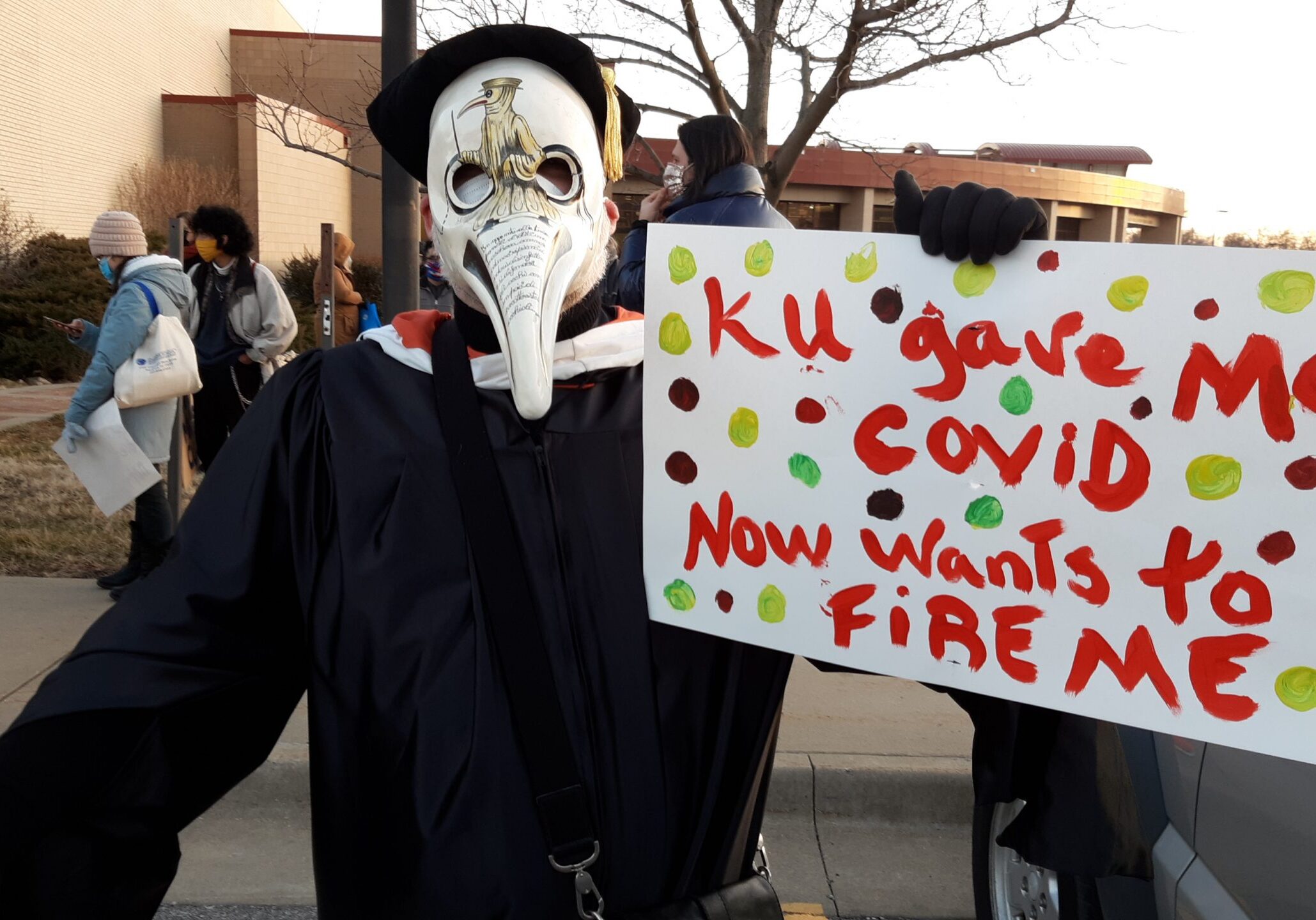
COVID-19 Challenged The Business Model At Kansas Universities And Revealed A ‘Tectonic Shift’
August 10, 2021 | Suzanne Perez | 5 min read
WICHITA, Kansas — The college business model — one that depends on students living on campus and attending classes in person — was broken even before the pandemic.
COVID-19 just made things more obvious.
Classes moved online. Campus buildings and dormitories sat empty. Students flocked home.
And many haven’t returned.
Enrollment at Kansas colleges and universities fell by 8.1% last fall — more than the national average. With continued uncertainty over COVID-19 and the highly contagious delta variant, universities could face the biggest money crisis in their history.
“The pandemic … converged with longer-term challenges facing enrollment,” said Blake Flanders, president and CEO of the Kansas Board of Regents.
Those problems include a steady decline in the college-going rate of Kansas high school graduates, as well as struggles recruiting international students who’ve proven so lucrative to public universities. Meanwhile, schools can’t keep many of the students they’ve already enrolled.
But it’s more than that, says Guy Smith, executive editor of the ReportOUT education journal.
“Faith in the value of higher education is suffering the greatest decline in recent history,” he said.
Return on Investment
As high school students and their families consider the options — public and private universities, trade schools, certificate programs and a growing array of online options — they’re weighing the return on investment, Smith said.
Since the 1980s, the cost of a four-year degree has risen nearly eight times faster than wages. Student loan debt in the United States totals more than $1.7 trillion and is growing six times faster than the nation’s economy.
And according to new data, more than a third of college graduates hold jobs that don’t require a college degree.
“If the point of going to college is to have a four-year experience living with others away from home and studying liberal arts and studying your passion — great,” Smith said. “If the point of college is to find a career and eventual employment, colleges are woefully inadequate.”
University enrollment is down, and so are revenues from tuition and fees. Colleges also lose money when kids aren’t living in dorms, eating in dining halls or shopping in the bookstore.
Nationwide, more than 60 colleges have closed or merged in the past decade, and experts expect that decline to continue, particularly as the impact of federal stimulus funds fades.
Thinking differently
Joshua Kim, director of online programs at Dartmouth University’s Center for the Advancement of Learning, said the pandemic launched colleges online and put their technology plans on fast-forward.
And many saw benefits — not only in the move to more flexible online teaching, but things like telehealth and telecounseling. Universities that once required students to meet with advisors in person, for example, embraced the convenience of Zoom calls or doing business via email.
“I don’t think, coming out of COVID, that we will ever think of our students in the same way,” Kim said. “And I don’t think we’ll think of teaching and learning in the same way.”
At Wichita State University, more than a fourth of the school’s credit hours came from online classes even before the pandemic. More and more, students use that option to better fit classes into their schedules.
“I could see … that percentage moving up a little bit,” said Teri Hall, vice president of student affairs at WSU. “But I think that there are still going to be students who want the in-person experience.”

Hall said traditional, in-person college has a level of “educational serendipity” you can’t get elsewhere.
“You might come across something that’s happening in one of the courtyards that is a powerful experience, that might change the way you think about your major or the way you think about life,” she said.
Doubling Down
Beginning next fall, Kansas State University will become the fifth of the state’s six major universities to require first-year students to live on campus.
The move is intended to ease students’ transition to college and “enhance student success,” said Thomas Lane, K-State’s vice president for student life. Freshmen who live on campus tend to make better grades, stay in school and graduate.
They also represent more revenue for the university.
The new requirement could add costs for students and their families upward of $12,000 a year for a basic room-and-board plan. And it signals a doubling down on the traditional college business model, which depends on students living and eating on campus.
Overall college attendance dropped about 5% last spring. Two-year schools saw even steeper declines.
Robert Vela, president of San Antonio College in Texas, said higher-ed should use federal COVID relief funds not just to repair deficits, but to rethink the way they do business.
“The money needs to be an investment in changing some of these structural kinds of components … that have been there for many years,” Vela said.
His school bucked the trend and boosted enrollment during the pandemic.
“You ask somebody, ‘Why is that there?’,” he said. “And they say, ‘Well, it’s been like that forever. … It’s just what we do.’”
Smith, the ReportOUT editor, says what universities have done doesn’t work, and the pandemic laid bare many of the problems.
“Higher education is in for a tectonic shift here,” he said. “When the history of our world is written, it will be pre-COVID and post-COVID. Everything’s going to change . . . and colleges are no different.”
Suzanne Perez reports on education for KMUW in Wichita and the Kansas News Service, a collaboration of KCUR, Kansas Public Radio, KMUW and High Plains Public Radio focused on health, the social determinants of health and their connection to public policy.
Reading these stories is free, but telling them is not. Start your monthly gift now to support Flatland’s community-focused reporting.
Related Stories

Nick’s Picks | Redistricting, Heat, Football and More …
Back to School Week Kansas students returned to the classroom last week, now it’s Back to School week for Missouri kids. Mayor Quinton Lucas was scheduled to greet students on the first day of class in the Kansas City school district today. In addition to the pain of getting up early, Missouri students will be…
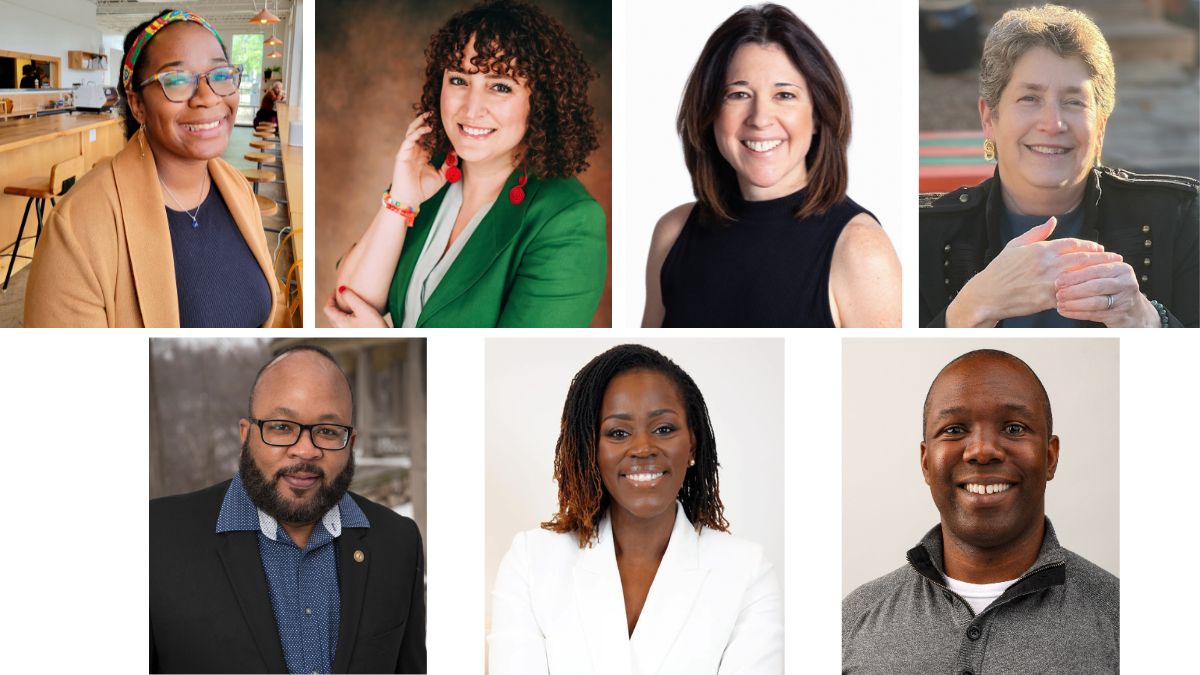
Meet the Kansas City Public Schools board candidates for the April 2025 election
This story was originally published by The Beacon, an online news outlet focused on local, in-depth journalism in the public interest. Meet the Kansas City Public Schools board candidates for the April 2025 election All seven candidates running for the Kansas City Public Schools board support the $474 million bond issue that’s also on the…
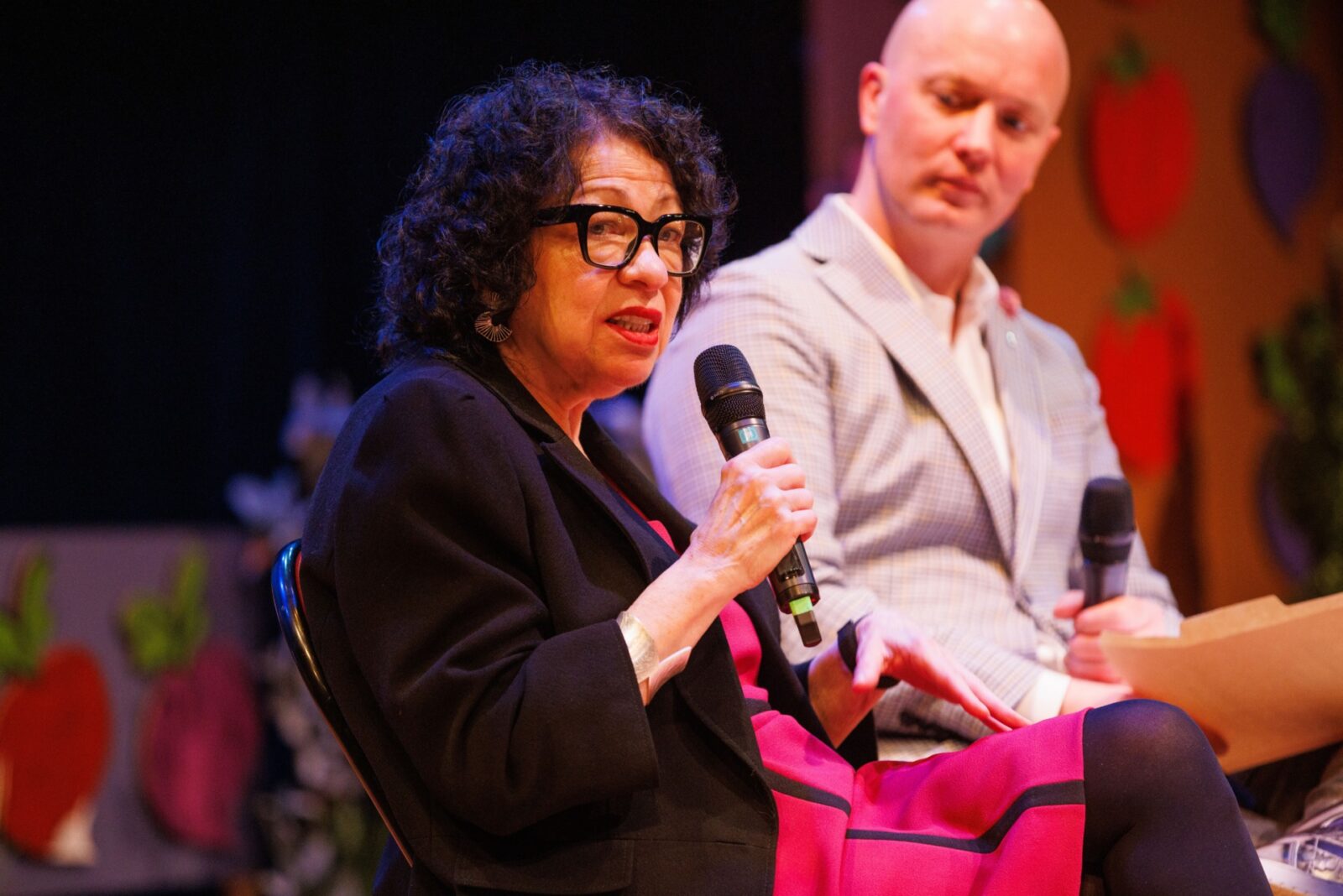
SCOTUS Justice Applauds KC Stage Adaption of Her Book
As the first Latina, and the third woman on the U.S. Supreme Court, Justice Sonia Sotomayor is noted for reasoned questioning and, at times, searing dissents. But legal opinions, despite obvious historical weight, aren’t the writings that Sotomayor referred to as her life’s work during her recent visit to Kansas City. The messaging within her…