
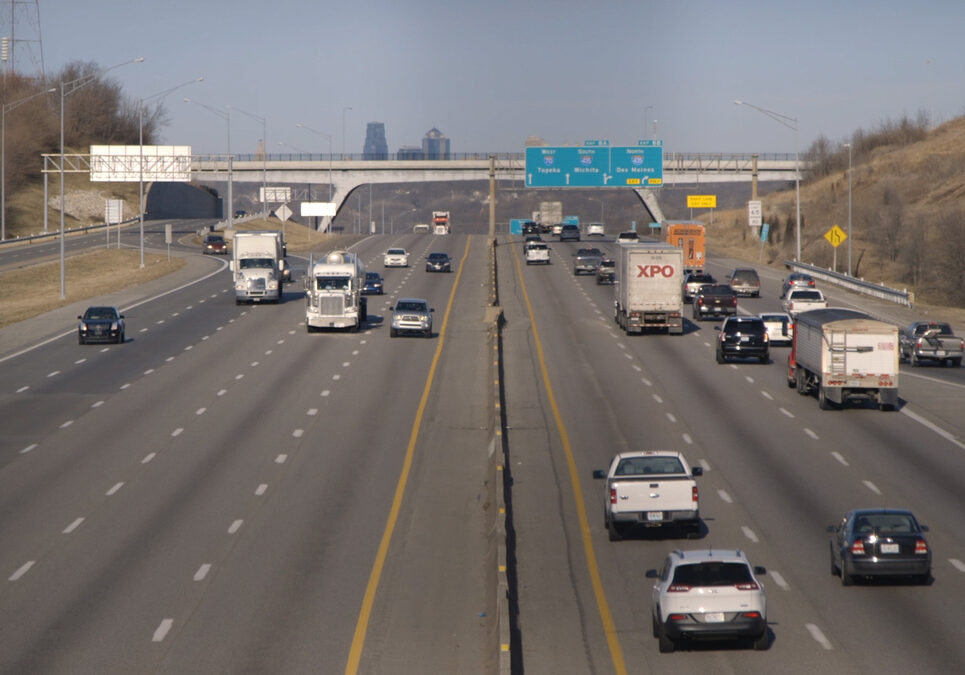
In the late 1800s, Kansas City progressives inspired by the City Beautiful movement built a network of wide boulevards and tree-lined parkways.
After World War II, residents flocked to suburbs built on a grid of asphalt that has been lengthened and widened over the decades. Meanwhile, the federal government built interstate highways that solidified our role as a national logistics hub.
Motorists might love the results, even if they bemoan rush-hour chokepoints.
But progressives of our day hate the pollution brought on by an expansive transportation system that encourages driving.
StreetLight Data, a tech firm based in San Francisco, has added fuel to the simmering debate about the repercussions of sprawl in our region. The Kansas City area came in fifth worst among the 100 largest metro areas ranked in StreetLight’s inaugural U.S. Transportation Climate Impact Index.
The graphic below shows how the Kansas City area fared in the six individual categories that fed into the overall ranking. Kansas City’s low ranking in the overall index was driven in large part by the fact that the single most heavily weighted factor was vehicle miles traveled per capita.

Jim Hubbell, StreetLight’s senior transportation planner and solutions engineer, has a particularly useful perspective on all of this. You see, Hubbell lives in Kansas City. He also spent two decades as a transportation planner with the Mid-America Regional Council.
Hubbell notes that our ease of movement in these parts – reflected in a top 10 ranking in the “circuity” category – actually is a double-edged sword when it comes to climate change. Our massive street and highway system and ample parking actually encourage more driving, and make it more difficult to develop alternative transportation options.
Hubbell said the circuity component of the index was not so much a pat on the back, but rather a swat on the backside for metro areas that can do more to reduce their emissions.
No one expects radical change overnight, given that the present situation resulted from decades of local and regional planning decisions that paved the way for sprawl. Kansas City is particularly noteworthy for the high number of miles motorists travel each day.
“I don’t think people making policy (in the past) really thought about the long-term consequences,” said Kansas City Councilman Eric Bunch, co-founder of the nonprofit BikeWalkKC, which advocates for bike- and pedestrian-friendly policies. “It became a bit of a self-fulfilling prophecy: ‘If we build it, they will come.’ ”
Now that pothole season is upon us once again, Bunch said that Kansas Citians are getting a jaw-rattling reminder that a vast road network does more than foul the air. It also stretches a road maintenance budget mighty thin.
Governmental intervention might ultimately turn the tide toward more environmentally friendly communities, but market forces are already reshaping the landscape.
Hubbell noted that downsizing Baby Boomers and environmentally conscious millennials, who eschew white picket fences for rental units near their workplaces, are driving a loft and apartment boom. You can see this happening everywhere from downtown Overland Park to Gladstone.
So what might the StreetLight data crunchers find in the 2040 edition of the Transportation Climate Impact Index? Perhaps they will tout Kansas City as a turnaround artist for cracking the top 10 thanks to policy changes that picked up steam two decades before.
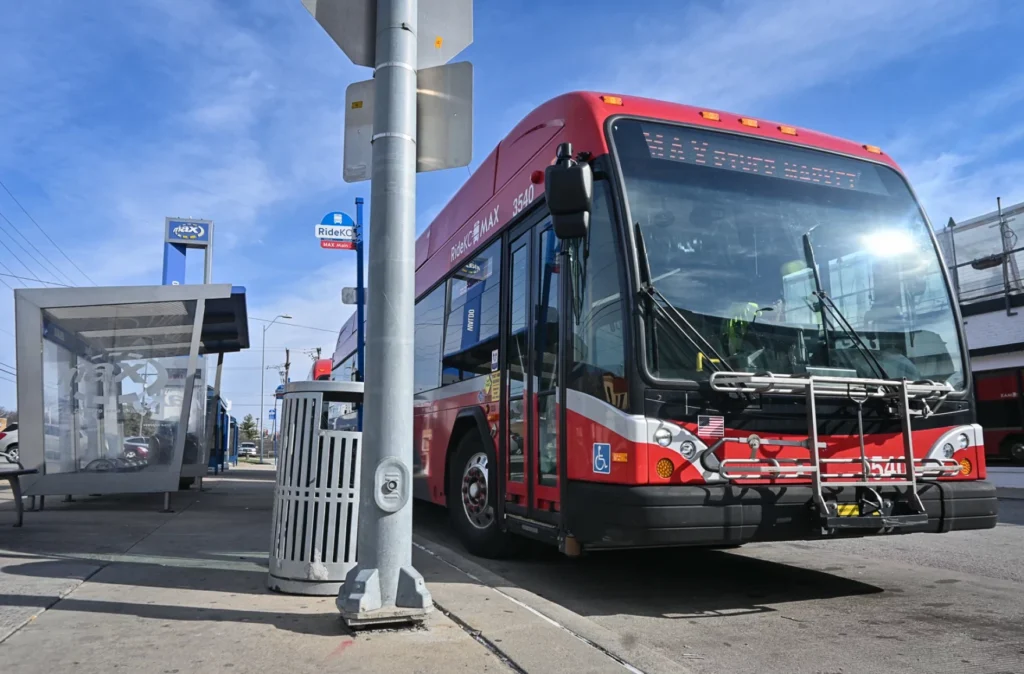
Under that hypothetical scenario, bus ridership will have soared due to the elimination of fares in Kansas City. Meanwhile, the city will stand out as a commuting superstar through dogged implementation of its Bike KC Master Plan and its Complete Streets ordinance.
MARC may also come in for special recognition due to its many initiatives, including its development of a greenhouse gas inventory, its continued implementation of a regional bikeway plan, and its visionary transportation framework that emphasized public health, the environment and climate change.
Meanwhile, the Kansas City region will have embraced a contraption that its 19th century forefathers probably never envisioned, but is touted by Tom Jacobs, MARC’s director of environmental programs. Jacobs has purchased an electric-assist bike.
“It’s awesome,” Jacobs said. “I think electric bikes are going to be a huge part of the solution.”
Reading these stories is free, but telling them is not. Start your monthly gift now to support Flatland’s community-focused reporting.
Related Stories
Nick’s Picks | Veterans, Mission Gateway, Big Sonia and More …
Shutdown Deal on the Way Is America’s longest government shutdown about to end? It could be over by the end of the week, after a group of eight Democrats agree to join Senate Republicans in a vote to reopen the government, at least through January. The deal comes without a guaranteed extension of health care…
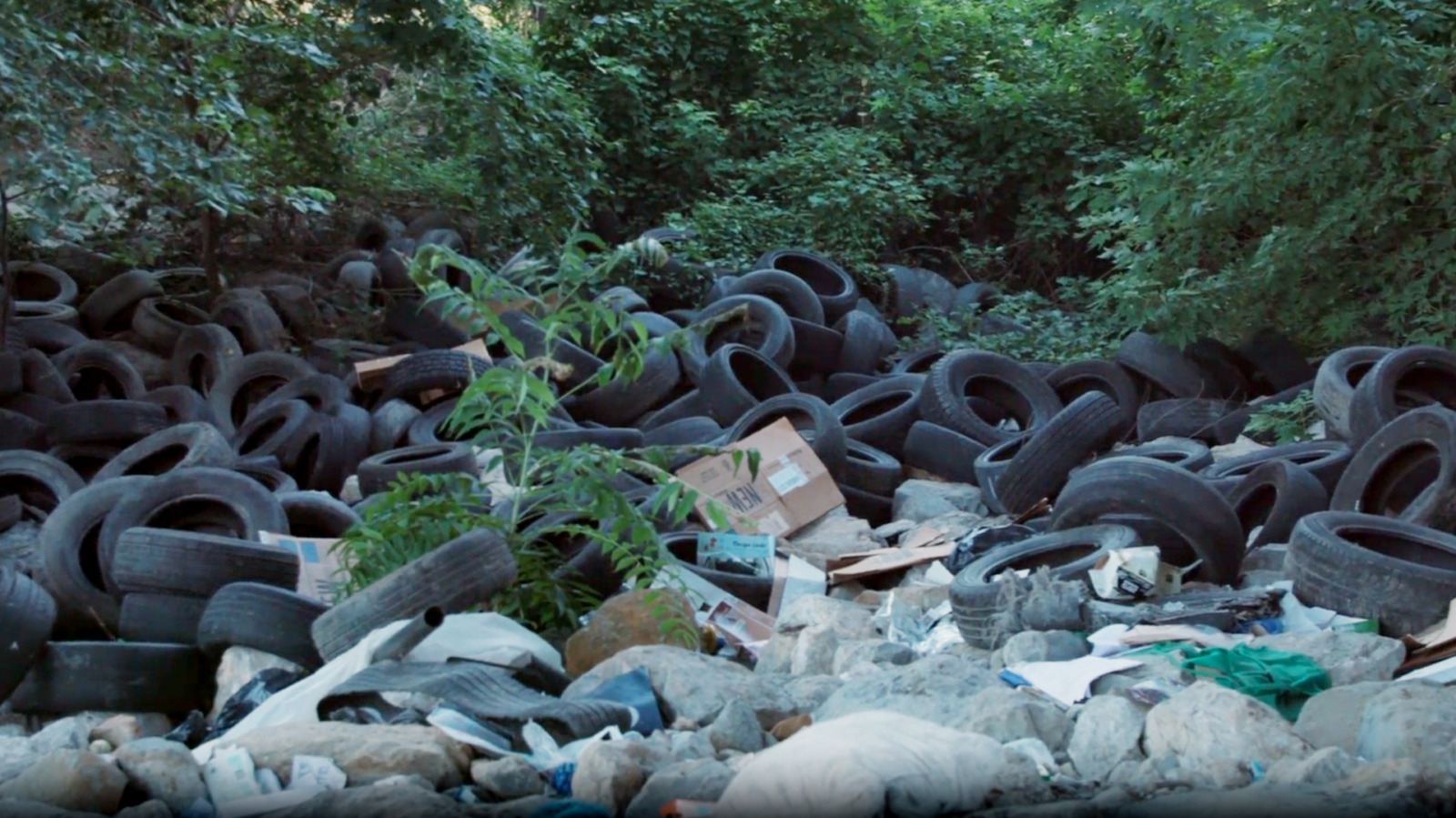
Blue River Cleanup Targets Trash, Invasive Species
A restoration project is underway along the Blue River watershed, a collaborative effort by four nonprofit partners: The Heartland Conservation Alliance, Bridging The Gap, Deep Roots, and Mid-America Regional Council. The groups signed the contracts officially in May. “The day that we got our signed contract sent to us from the city kind of felt…

The End of the Pesticide Arms Race?
To spray or not to spray, that’s the question for farmers. Pests can be the make-or-break factor for a season’s harvest. Between 20% to 40% of global crop production is lost to pests annually, according to the Food and Agriculture Organization of the United Nations. Conventional chemical pesticides have traditionally addressed this challenge, but their…