
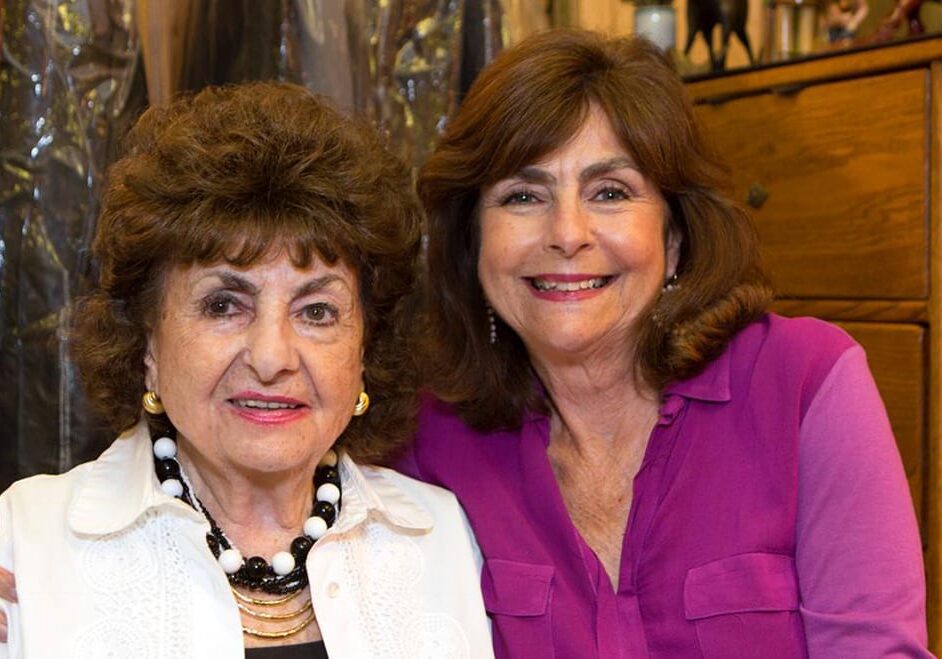
This story is part of our coverage of Kansas City’s SevenDays project, which aims to bring people together to conquer hate and celebrate diversity. The project is led by Mindy Corporon, who lost two family members in the April 2014 shootings at the Jewish Community Center in Overland Park, Kansas. For each of the seven days, Corporon joins us for a video intro to the day’s activities (above), and Flatland is running a daily dispatch from students at the Missouri School of Journalism, inspired by the day’s theme. Journalism student Cara McClain wrote on today’s theme, “you”.
The notion of self care is gaining momentum, as many people recognize the impact it can have on their lives. The Kansas City, Missouri-based Secondary Trauma Resource Center has been working for the past five years to expand people’s understanding of what self care is, how vital it is to organizations, and how it can be supported in the workplace.
Executive Director Julia Westhoff is the sole paid employee of the Second Trauma Resource Center. She has worked from the beginning in building the organization from a project with six other women who saw secondary trauma, the effect of working with victims of trauma on the caregivers, which she says is one of the biggest issues facing the nonprofit sector. So Westhoff and her team worked on creating a model and curriculum to train caregivers on how to take care of themselves and recognize and stem the effects of secondary trauma.
[FLEX-CONTENT]
In this interview, Westhoff talks about the symptoms of secondary trauma, her own experience with it, and some of the challenges of implementing self-care practices.
Can you explain what secondary trauma is and some of the symptoms of it?
Secondary trauma is basically that effect – whether it be physical, emotional, spiritual or any other type of effect – on a person who works with people who have been traumatized. That could be anything from an autoimmune disease, which happened to me and happens to a lot of people when their stress levels are elevated for a long period of time, to other stress-related health conditions, obesity, chronic pain, to a loss of interest in things they used to do like spending time with friends, to depression and anxiety. It really has a whole host of effects that are related to stress.
How did you find out about the connection between your autoimmune disease and secondary trauma?
This is kind of a new area being studied, but there’s a lot of correlation between working in a stressful job and having elevated levels of cortisol or having your adrenal gland be out of whack. If you think about, for instance, if you’ve been in a car accident, you kind of feel like your blood is rushing and the hair on the back of your neck is standing up. You can feel those physical effects of stress, and that’s a good thing because in those types of rare instances you really need to be able to focus on what you need to do immediately to get out of a dangerous situation. If you’re constantly experiencing that, whether that be working with victims of trauma, handling a crisis line, working in the ER, or helping folks who are in crisis, then your body kind of undergoes a change based on that. It can lead your body to think that it is always under stress and produces these extra autoimmune antibodies and things like that aren’t good for you. That can lead to something that is called Hashimoto’s Disease, which essentially makes you feel like you have the flu all the time.
Tell me about the Secondary Trauma Resource Center’s approach. How do you address secondary trauma as a systemic issue?
All of us came from organizations that provided some kind of training on self care, where they say, “This is a hard job, are you taking care of yourself?” Usually the recommendations were, do some yoga, take a bubble bath or whatever it is, but we were all doing that. Everyone we knew was doing that, but still nothing was changing. If you work in an organization where your boss doesn’t really support you in your self care, you work really long hours or the work is too difficult, then nothing is going to change. So I came from a background that was more interested in a public health model where we can look at how you cause behavior change and how you create a culture shift. That kind of public health thinking now is the socioeconomic model so you need to create change on the individual level, the supervisor or relational level, the agency level, and the societal level. We train in all of those aspects, not just the individual self care.
You have said on your website that secondary trauma is not necessarily a negative thing. Why is that?
If you are working with people who have been traumatized and you and your worldview changes, you can take trauma that someone else has experienced and use that for something good. You understand that the trauma is a terrible thing, that you were helping that person and that you are making great change in the world. That’s really important when there are a lot of people in this world that don’t acknowledge that that’s happening. So you can be changed but not have it be a negative thing as long as you are making sure that those changes are not all negative. Maybe it will cause you to be a more spiritual person, or maybe it will make you redouble your efforts to help those in need.
If you are working with people who have been traumatized and you and your worldview changes, you can take trauma that someone else has experienced and use that for something good.
Why is self-care important to begin with?
Self-care is the basis for any kind of change. You need to really believe in your heart of hearts that if you are not taking care of yourself, then you are not going to be able to take care of other people. It’s almost become a cliché at this point but the idea of being on a plane when the masks drop, you need to adjust your own mask before you can help other people. I see it time and time again where people come into the fields where I work, they think they’re going to save the world, and nobody else cares. They were 20 hours a day every day, and then they really quickly get burnt out. They can’t do it anymore, so all of that training that they did, all the work that they did is eventually for nothing.
I was wondering if you ever encounter people who feel like they are being selfish if they focus on self-care. If so, how do you respond to that mentality?
I think the tide on that is really changing. I feel like maybe the generation that came before me had more of the thinking that you would come to work, you get your work done, and there’s really no need for employers to support their staff in anyway other than a paycheck. But I think that now more people are really understanding that this is important, but they may not be quite sure how to get there.
Do you have a specific moment of when it became clear to you the reality of secondary trauma and the need for self care?
I have a lot of those moments in my personal life, and a lot of it has to do with developing this autoimmune disease. Five or six years ago, I had two small children. My husband was working two jobs. We were trying to make ends meet. I was working at a rape crisis center, volunteering and was doing all the childcare. Eventually I noticed that I was having a lot of physical and emotional changes. I was becoming depressed, and even more than that, I was having a hard time getting out of bed in the morning. I was having a hard time walking up the stairs in my house. I felt like I had the flu all of the time. I stopped laughing at jokes. I stopped really enjoying life. It took a couple of years for me to finally get this diagnosis but when I did, it all made sense to me. Had I known back when I started my job that taking care of myself was not just a nice thing to think about but was really important because of the physical effects that ended up happening. I’m going to have this autoimmune disease for the rest my life – there’s no cure for it. So to me, that’s really important, but that’s just one example. I can remember going to the hospital to meet with someone who is just been raped. After hearing her story, I just broke down sobbing, and she was having to comfort me. That’s not really ok.
Now that it has been five years since you started the Secondary Trauma Resource Center, what are the biggest lessons that you’ve learned?
There are so many lessons that we are learning all the time, and one of the hardest things for us is to really make organizations, especially the leaders of the organizations, understand the importance of it. I think people are on board with the idea, but in terms of actually setting aside time and resources to devote to this, we are still a long way from that.
This story is part of the KCPT and Hale Center for Journalism project Beyond Belief, a series of stories and discussions about faith in our city. The project is part of Localore: Finding America, created by AIR, a Boston-based network of independent public media producers. Principle funding comes from the Corporation for Public Broadcasting.
Reading these stories is free, but telling them is not. Start your monthly gift now to support Flatland’s community-focused reporting.
Related Stories

Tackling the Scourge of Christian Nationalism
In recent decades, Christian Nationalism’s warped ideas have begun to attract the attention of scholars and teachers at universities and seminaries here in the Heartland. They’re trying to understand both its appeal and its dangers and to give students the tools necessary to make their own judgments about whether it’s good old basic Americanism or,…
Downtown KC Renaissance Seeds Congregations
As civic, commercial and residential life has blossomed in Kansas City’s Downtown in recent years, religious life has grown there, too. But that doesn’t mean it’s been easy for newly planted Downtown faith communities to flourish. “It’s been tougher in one sense than we thought it would be,” says the Rev. Troy Campbell, pastor of…
Taking ‘Bold Political Stances’ To Fight Injustices
It didn’t take long for the new Greater Kansas City Pastors Association to spring into action. As The Kansas City Star reported in early September, just one “day after thousands of people descended on the Missouri Capitol to demonstrate their outrage over congressional maps aimed at minimizing Kansas City’s voting power,” the new pastors’ group…