
The Other Natural Gas: Making Energy From Waste
January 17, 2016 | | 4 min read
Every day, a facility on the outskirts of Grand Junction, Colorado takes in eight million gallons of what people have flushed down their toilets and washed down their sinks. The water coming out the other end of the Persigo Wastewater Treatment Plant is cleaner than the Colorado River it flows into. The organic solids strained from that water are now serving a new purpose – producing fuel for city vehicles.
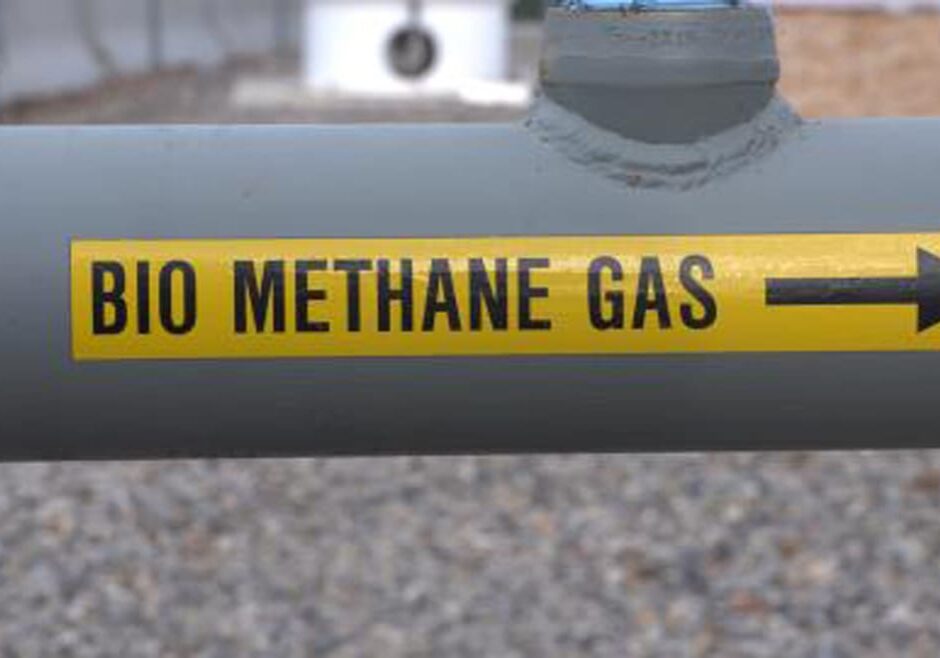
The solids at Persigo have been processed for decades so they can be safely dumped at a landfill. That processing produces methane, which the plant used to just burn off into the air. Yet, using more infrastructure to further refine that methane, they now end up with natural gas that’s chemically identical to what’s drilled from underground.
Grand Junction has been replacing an aging fleet of garbage trucks and city busses with compressed natural gas vehicles, fueled mostly by the human sourced gas from the treatment plant. The city’s wastewater services manager, Dan Tonello, says Grand Junction is the first city in the nation to do that.
“We’re looking at hundreds of thousands of dollars a year being saved by implementing this process,” Tonello said, “and for a utility our size that’s significant money.”
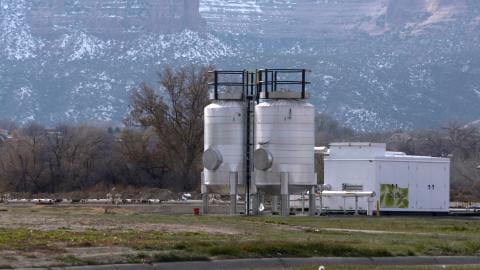
The renewable natural gas project in Grand Junction, Colorado, cost $2.8 million. It will pay for itself in seven years. (Rebecca Jacobson | Harvest Public Media)
Joanna Underwood is the President of Energy Vision, a non-profit dedicated to expanding the use of this renewable natural gas, or RNG. She applauds the Grand Junction project as a common sense way to both save money and lower greenhouse gas emissions.
“That’s a model for small wastewater treatment plants anywhere in the country,” she said.
She points out there are other sources for RNG beyond human waste. We interviewed Underwood in the ground-floor restaurant of a Denver Hotel and she started walking among the tables, pointing those sources out: the ham and eggs left over on customers’ plates, their unfinished toast and the coffee in their cups. Natural gas can be made from food waste too.
Right now, food scraps from restaurants are being collected along with that from grocery stores and large food manufacturers all over Colorado’s densely populated Front Range. In a few weeks it will all be heading up to Northern Colorado, where the Heartland Biogas Facility is in its final stages of construction. It basically does the same thing as the Persigo treatment plant does with solid waste, but on a much bigger scale.
“It’s very unique. It’s one of the largest in North America,” said Bob Yost. His company, A1 Organics is partnering with the Heartland facility to coordinate all the food coming in.
Yost said there could soon be 25 to 30 semi loads of food waste making its way to the plant, where it is then mixed together with manure from a local dairy. It turns out the best way to get the most natural gas from waste is to process a balanced diet of both food scraps and animal waste.
After the facility extracts the RNG from the waste, it’s injected into a pipeline along with fossil natural gas, feeding a nationwide delivery system.
Joanna Underwood of Energy Vision, she says if all the organic waste in the country was gathered, current technologies could produce enough natural gas to replace about half of the diesel fuel used in the US transportation sector.
So, not a replacement for the traditional oil and gas industry by a long shot, but Underwood argues practical solutions to climate change have to be assembled piece by piece.
“One thing isn’t gonna do it,” she said. “But for this sector, which in and of itself is big, it’s not a small piece.”
And it’s a piece to which we can each individually contribute–about one cubic foot of natural gas per day.
— Harvest Public Media is working with Inside Energy on a series of stories looking at how energy fuels our food system. Harvest Public Media, based at KCUR 89.3, reports on farm and food issues in collaboration with public media stations across the Midwest. For more information, visit www.harvestpublicmedia.

Reading these stories is free, but telling them is not. Start your monthly gift now to support Flatland’s community-focused reporting.
Related Stories
Nick’s Picks | Roads, Bathrooms, Costco and More …
New Toll Road Opens Kansas City’s first toll road opens this week. Starting Saturday, you’ll pay up to $3.50 to travel the new express lanes on U.S. Highway 69 from 103rd to 151st streets in Overland Park. There are no toll booths — cameras scan your license plate, and a bill arrives by mail. KTAG…
Up From the Ashes: Warwick Theatre Revival Draws Applause
Two years ago, John Cleary met a fellow Kansas City actor for drinks. Their conversation centered on the fate of the Metropolitan Ensemble Theatre. A large portion of the ensemble’s home, the Warwick Theatre, was ash, charred timbers and soot-saturated costumes and props — remnants from a recent massive fire. The destruction was so great…
Nick’s Picks | Baseball, Drones, Romance and More …
Royals Reveal Next week, the Kansas City Royals head to Arizona for Spring Training. And that’s the mayor’s self-imposed deadline to lock in a stadium deal. So, is this finally the week owner John Sherman steps to the plate and unveils where the Royals will build their next home? At last week’s council meeting, Mayor…