
Missouri Finally Mining Untapped Potential With Move Toward Renewable Energy
July 14, 2021 | | 5 min read
After years spent lagging behind its neighbors in renewable energy production, Missouri may finally be on the cusp of a green makeover of its power grid.
That’s the cautiously optimistic prognosis of renewable energy advocates after a recent surge in wind farm construction in the state and in the wake of new state legislation meant to ease Missouri utility companies’ transition away from fossil fuels.
Missouri has long been one of the most coal-dependent states in the country. It consumed more coal for electricity generation in 2020 than any other state except Texas, despite producing very little of its own coal and ranking 18th among U.S. states in population and 27th in total energy consumption per capita as of 2019.

That dynamic has made Missouri and its power grid a prime target for environmentalists and renewable energy advocates, who have stressed the need for the state to transition toward a cleaner and more sustainable model.
The stakes involved in the move away from a fossil-fuel-dependent energy system are well-documented. In order to prevent some of the more catastrophic impacts of climate change, such as extreme droughts, flooding and hurricanes, the United Nations has urged countries to transition to renewable energy sources that don’t emit the high levels of planet-warming greenhouse gases that fossil fuels like coal do.
“We’re already feeling the impacts of the climate crisis in Missouri, and they’re only going to increase,” said Andy Knott, central region director for the Sierra Club’s Beyond Coal Campaign. “Missouri needs to become a leader in mitigating those impacts by reducing our dependence on fossil fuels.”
Coal, virtually all of it shipped in by rail from out of state, accounted for 70% of electricity generation in Missouri last year, compared with just 9% from renewable sources like wind, solar and hydropower.
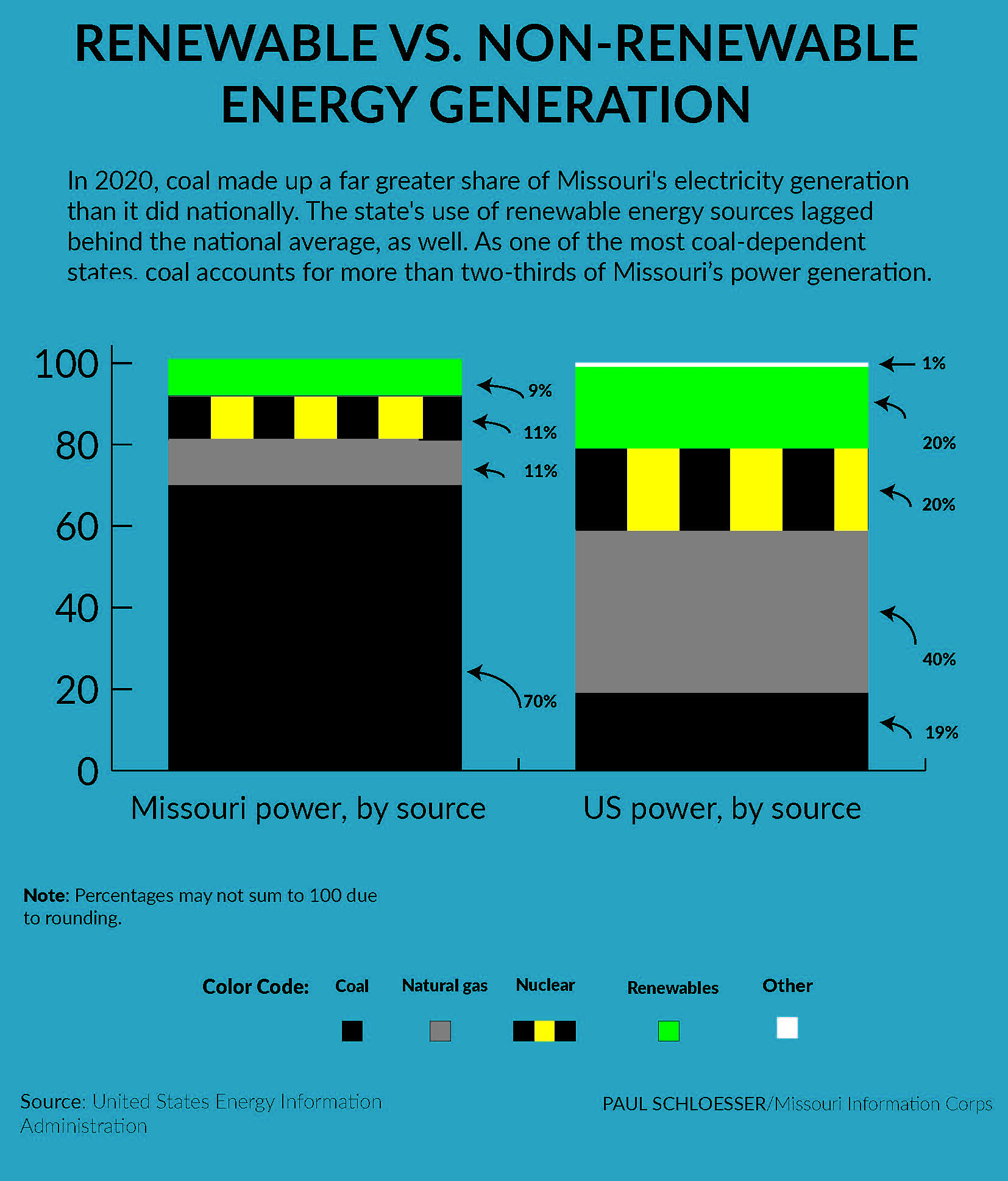
Nationally, renewables make up about 20% of electricity generation. The top renewable energy producers are Texas and the West Coast states, though Missouri also trails far behind neighboring Iowa, Illinois, Kansas and Oklahoma in renewable output.
However, the coal-based proportion of Missouri’s energy grid in 2020 did represent a decrease from a high of 81% in 2010, and figures to continue its decline as utilities retire old coal-fired plants, switch them to natural gas or replace them with renewable sources.
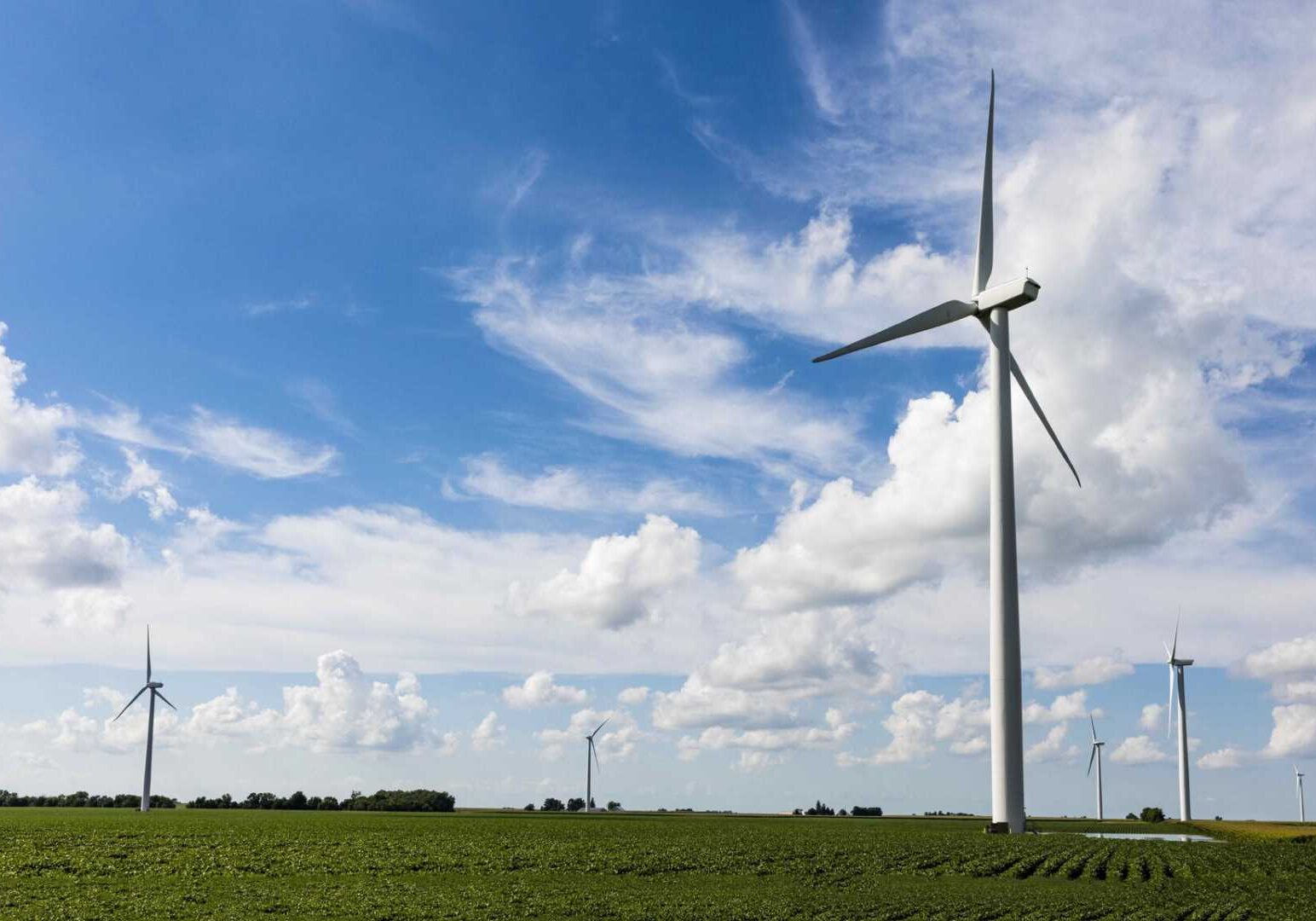
In 2020 alone, the state roughly doubled its total wind power capacity, from about 1,000 to 2,000 megawatts, which means wind now accounts for over half of Missouri’s total renewable energy output.
Wind turbines under construction in the state, as of the start of 2021, are expected to add another 448 megawatts, according to the U.S. Energy Information Administration.
“At the utilities level, there has been a dramatic shift in the past several years toward cleaner energy,” said James Owen, executive director of Renew Missouri, a Columbia-based clean energy advocacy group. “And I think you’re going to see it go even further.”
Missouri’s wind energy capacity, which is largely concentrated in the northwestern part of the state, still lags behind neighboring Iowa (more than 11,000 megawatts) and Kansas (6,500 megawatts). But Owen expects the recent move toward renewables to continue, especially in light of new legislation signed into law last week by Gov. Mike Parson.
The bill will enable utility companies to close old coal plants more quickly and speed up their transition to renewables. The legislation will allow these companies to refinance debt they took on to build the plants without taking a financial hit through a process known as securitization. This process would remove a hurdle that companies like Ameren and Evergy have cited as hindering their move away from fossil fuels, even as they have verbally committed to doing so.
Knott said that argument was partly a “convenient excuse” on the part of utilities that could still have been ramping up their investments in renewables more quickly, though he acknowledged that their hefty investments in coal-fired plants have presented a challenge.
Now, though, they have all the tools they need to accelerate their transition to renewables, Knott said.
“At this point, there won’t be any excuse to not move ahead,” he said.
Owen agreed, saying securitization will be crucial to attaining a more sustainable Missouri power grid.
Nonetheless, he said that while he is particularly encouraged by the state’s progress with regard to wind energy, Missouri needs to devote further attention to other renewable sources, especially solar energy.
Throughout Missouri, homeowners associations place limits on homeowners’ ability to purchase their own solar panels. Efforts to remove those restrictions by passing a “Solar Bill of Rights” in the state legislature, which organizations like the Missouri Sierra Club have supported, have been unsuccessful so far.
All in all, while they argue there is plenty of additional room for progress, renewable energy advocates like Knott and Owen are encouraged by what they view as Missouri’s recent move toward an energy infrastructure that will be cleaner and more sustainable as well as beneficial to the state’s economy.
“People don’t think about the economic benefits of this,” Owen said, citing the boon that an influx of green jobs and reduced need to purchase coal from other states could provide to Missouri.
“I am optimistic. The tide is turning in terms of utility and political support of clean energy,” Knott said. “We just have to be vigilant and keep the acceleration going.”
This story was produced by the Missouri Information Corps, a pop-up newsroom sponsored by the Missouri School of Journalism and the Missouri Press Association. Mark Ossolinski is a graduate student studying public policy reporting at the Missouri School of Journalism.

Reading these stories is free, but telling them is not. Start your monthly gift now to support Flatland’s community-focused reporting.
Related Stories
Nick’s Picks | Roads, Bathrooms, Costco and More …
New Toll Road Opens Kansas City’s first toll road opens this week. Starting Saturday, you’ll pay up to $3.50 to travel the new express lanes on U.S. Highway 69 from 103rd to 151st streets in Overland Park. There are no toll booths — cameras scan your license plate, and a bill arrives by mail. KTAG…
Up From the Ashes: Warwick Theatre Revival Draws Applause
Two years ago, John Cleary met a fellow Kansas City actor for drinks. Their conversation centered on the fate of the Metropolitan Ensemble Theatre. A large portion of the ensemble’s home, the Warwick Theatre, was ash, charred timbers and soot-saturated costumes and props — remnants from a recent massive fire. The destruction was so great…
Nick’s Picks | Baseball, Drones, Romance and More …
Royals Reveal Next week, the Kansas City Royals head to Arizona for Spring Training. And that’s the mayor’s self-imposed deadline to lock in a stadium deal. So, is this finally the week owner John Sherman steps to the plate and unveils where the Royals will build their next home? At last week’s council meeting, Mayor…