
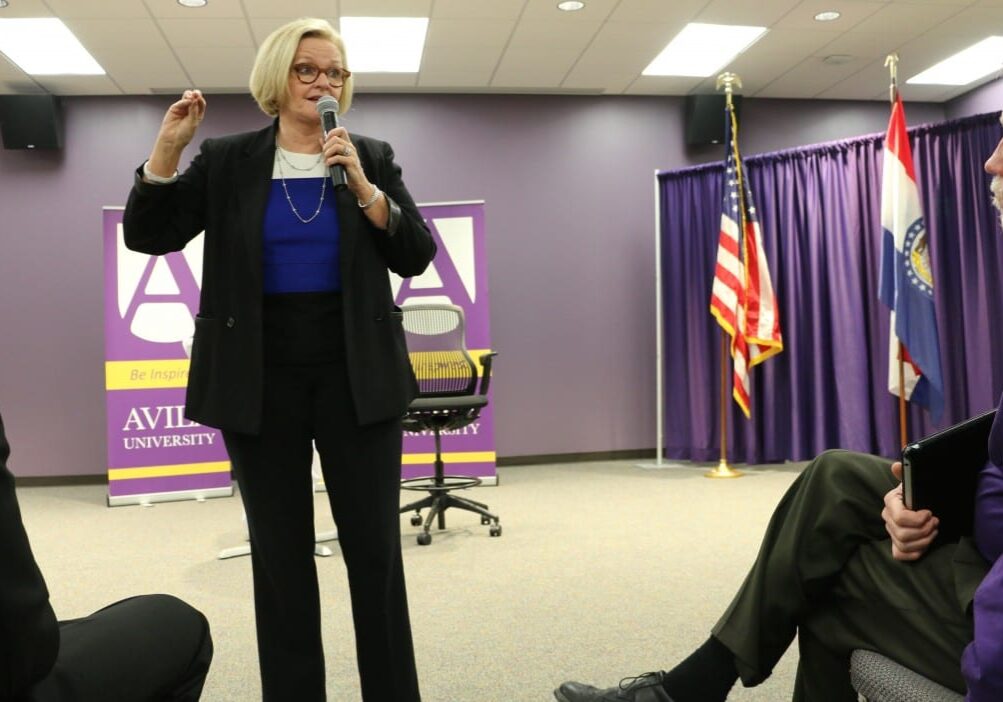
McCaskill visits Avila U to discuss campus sexual assault bill
October 9, 2014 | | 5 min read
Sen. Claire McCaskill visited Avila University in Kansas City, Missouri, Wednesday afternoon to speak with law enforcement and students and representatives of area colleges and universities about sexual violence on campus. This stop, which was the tenth in a series across the state of Missouri, also included representation from Metropolitan Community College, Penn Valley Community College and University of Missouri – Kansas City.
McCaskill said this legislation, the “Campus Safety and Accountability Act,” was inspired by the “embarrassing but true fact that you’re more likely to be sexually assaulted if you go to college than if you don’t.”
Much of the discussion — at this stop and others — revolved around whether students at these 40 Missouri colleges and universities understood the resources available to them in the instance of a sexual assault.
McCaskill said revelations around this topic were a surprise: Administrators may have built systems to protect students and train professionals to deal with the aftermath of sexual assault, but students just aren’t aware that these programs exist.
“It doesn’t help for them to build a good process if the students don’t know how to access it,” she said. “Students don’t sometimes even know … what the definition of a sexual assault is and what is consent.”
By allowing students and administrators to discuss the topic of sexual assault in the same room, McCaskill said educators are now more aware that students need to be further informed about these resources.
Suggestions made at these campus discussions are being used to inform the further drafting of legislation mandating that campuses assign advocates to confidentially discuss options with sexual assault victims and draft agreements with local law enforcement agencies on how sexual assault is handled. McCaskill said the legislation is supported by 17 senators on both sides of the aisle.
The bill’s provisions include enforceable fiscal penalties for Title IX violations. Failing to properly follow up after the alleged sexual assault of a student is a violation of Title IX, which reads “schools must have an established procedure for handling complaints of sex discrimination, sexual harassment or sexual violence.”
Under her bill, institutions would face a penalty of up to 1 percent of their operating budget for Title IX violation. She said that she has heard lots of pushback for this proposed penalty, but she’s determined that there must be a change. According to the Associated Press, 76 colleges and universities are currently under investigation for possible Title IX violations.
Currently, if a college of university violates Title IX, the punishment is a total loss of federal funding. McCaskill calls this an “empty threat.”
“This would be like me when I told my kids ‘If you do that again, I’ll never speak to you,’” she said. “That is not a meaningful deterrent for conduct.”
She said that the 1 percent penalty is intended for institutions that have been chronic problems. Suggestions for how that penalty money is used have been made during her recent campus visits, and she said she intends to use this particular suggestion in the legislation.
“We would take the penalty money, and it would be reprogrammed at that university for this problem,” she said. “For example, if University XYZ first failed to conduct an investigation after a sexual assault complaint, and they were warned, and then you came back again and they had failed to conduct an investigation after a sexual assault complaint, they would perhaps be fined a ½ percent of their operating budget with all that money going to the training of an investigator or people in the Title IX office in how an investigation should occur.”
A suggestion from this session that may make its way into the actual legislation? Allowing schools to avoid Title IX procedure if a student victim was allegedly assaulted by a non-student and had reported this alleged attack to police.
According to Title IX, schools must immediately investigate a sexual assault complaint, regardless of whether it was reported to police or not. Several educators at Wednesday’s meeting suggested that this process of dual investigations may subject victims to being traumatized more than necessary by having to repeat their stories to college or university representatives after they’ve already spoken with police. This seemed to be especially relevant when the accused perpetrator is not a student at the institution, so the university has no power to discipline him or her.
“The problem is, if we do that,” McCaskill said, “I’m afraid a lot of universities will hang their hat there and not do the investigation. Let me think about that. I’m glad you brought it up … It took 10 of these (meetings) for somebody to point this out to me!”
McCaskill ended the session by giving advice to the students present.
“You guys take more pictures in a week than I’ve taken in my entire college career. …” she said. “(So,) if you see a young lady passed out in the back of a car, you should take a picture of it. That means she’s incapacitated, and she could be sexually assaulted in the next hour, and that picture could be the difference between whether her perpetrator actually goes to prison.”
She added that the photographer should also call 911.
She also encouraged all victims to come forward, regardless of whether their behavior prior to the assault broke laws or campus conduct rules.
“If you have to have perfect judgement to be the victim of a crime, these guys (law enforcement) would be out of business,” she said.

Reading these stories is free, but telling them is not. Start your monthly gift now to support Flatland’s community-focused reporting.
Related Stories
Nick’s Picks | Roads, Bathrooms, Costco and More …
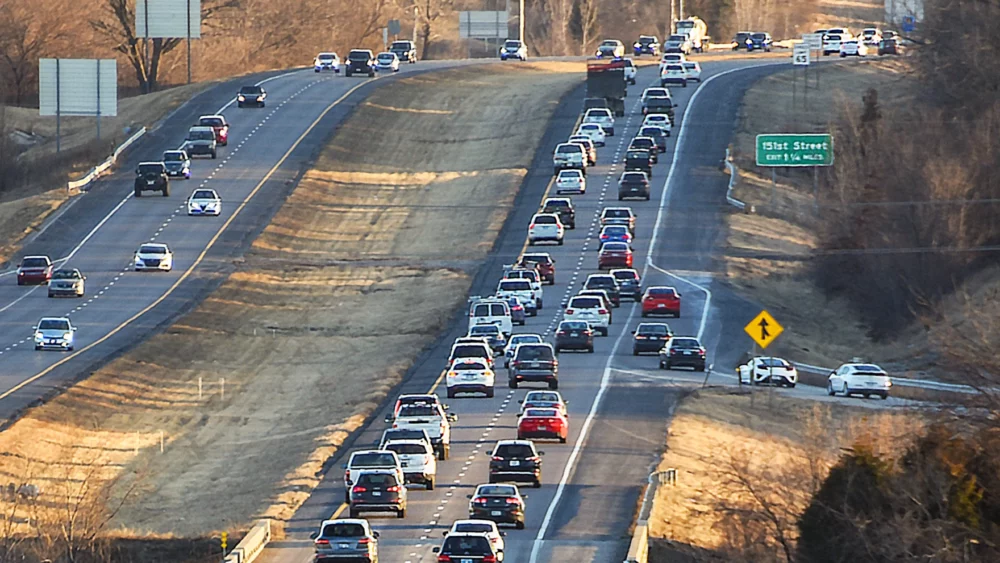
New Toll Road Opens Kansas City’s first toll road opens this week. Starting Saturday, you’ll pay up to $3.50 to travel the new express lanes on U.S. Highway 69 from 103rd to 151st streets in Overland Park. There are no toll booths — cameras scan your license plate, and a bill arrives by mail. KTAG…
Up From the Ashes: Warwick Theatre Revival Draws Applause
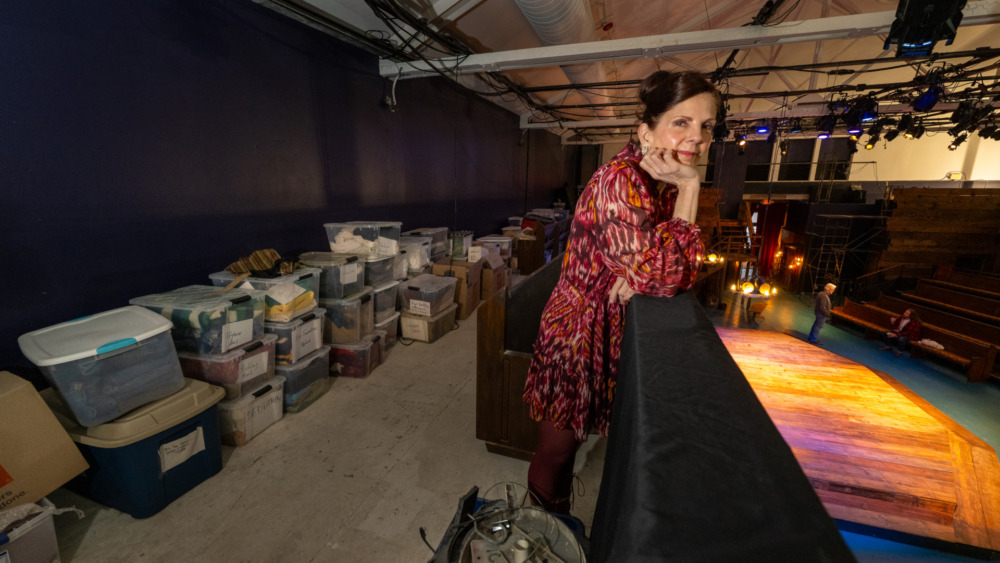
Two years ago, John Cleary met a fellow Kansas City actor for drinks. Their conversation centered on the fate of the Metropolitan Ensemble Theatre. A large portion of the ensemble’s home, the Warwick Theatre, was ash, charred timbers and soot-saturated costumes and props — remnants from a recent massive fire. The destruction was so great…
Nick’s Picks | Baseball, Drones, Romance and More …
Royals Reveal Next week, the Kansas City Royals head to Arizona for Spring Training. And that’s the mayor’s self-imposed deadline to lock in a stadium deal. So, is this finally the week owner John Sherman steps to the plate and unveils where the Royals will build their next home? At last week’s council meeting, Mayor…