
K-State Professor Designs Biodegradable Garments for Sustainable Deathcare
November 1, 2024 | | 3 min read
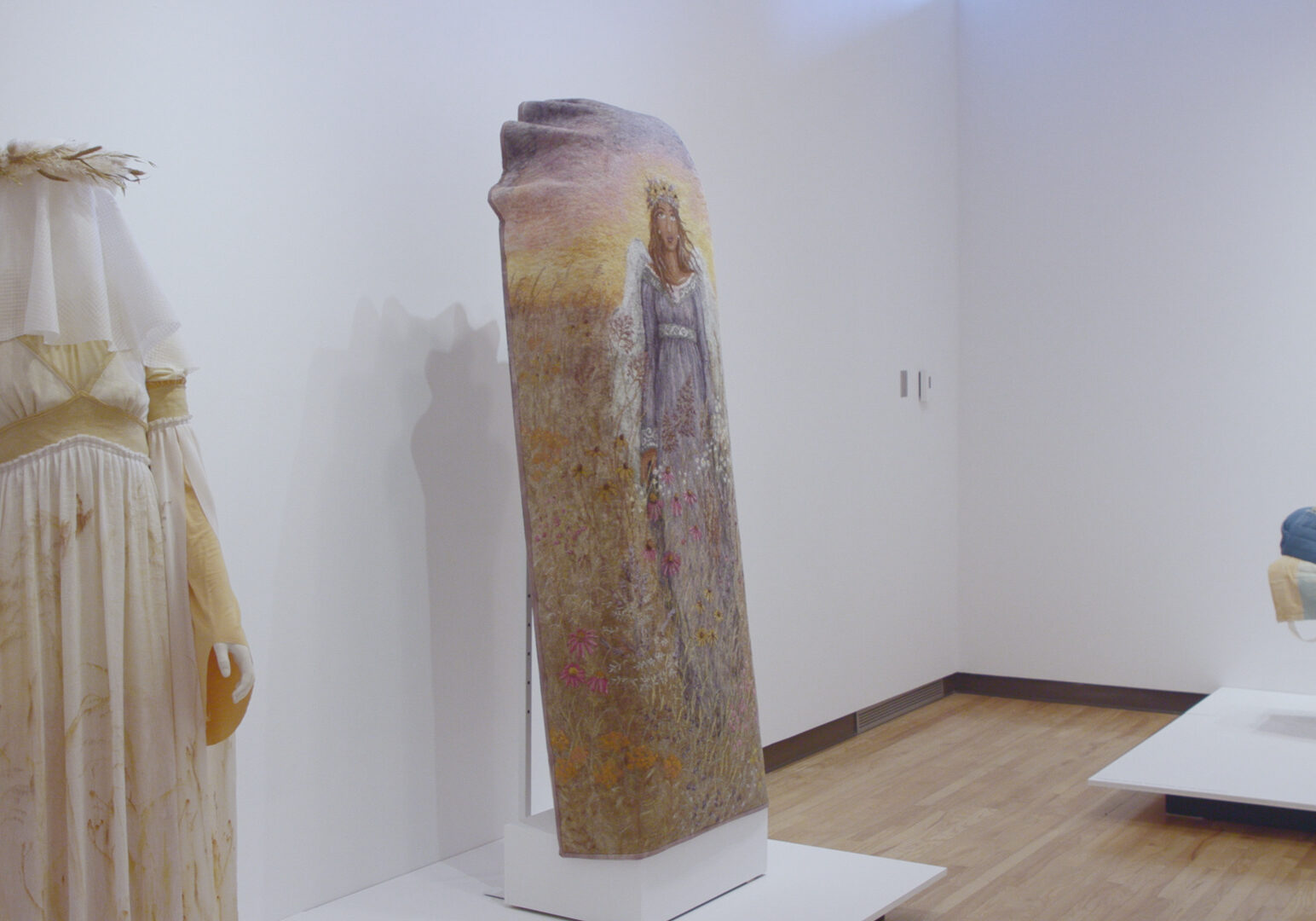
A professor at Kansas State University aims to tackle that question in a new exhibition on green burial practices. Sherry Haar, fashion studies professor, designed several garments and textiles for burial made from natural fibers and dyes. Haar said she hopes to start a conversation about green burial practices. The exhibition is available to view for the next few weeks at K-State’s Marianna Kistler Beach Museum of Art.
[Transcript: Sarah Crews, Director, Heart Land Prairie Cemetery]
Every year in the US, we bury approximately 800,000 gallons of embalming fluid or 104,000 tons of steel in caskets and vaults. Over a million and a half tons of reinforced concrete, over 17,000 tons of copper and bronze, and 45,000,040 feet of lumber, including hardwoods and rainforest. What I mean is it’s a staggering amount of resources that we’re burying in order to prevent our bodies from just returning to their.
So this is conventional burial, and it’s what inspired me to open a green burial ground. Green burial is really quite simple.
[Transcript: Sherry Haar, Fashion Studies Professor at K-State]
Green burial is a earth burial where the bodies turned into the earth with everything biodegradable. So there’s no and all meaning, there’s no hardwoods, there’s no polyester. And it allows the earth to decompose the body naturally. And along with that is bodies are often wrapped in a shroud or a textile.
I’m a professor at Kansas State University in the area of fashion studies.
My area of expertise is natural dyes. And recently I’ve been working on environmental sustainability through green burial awareness. The fiber in the exhibit includes a burial gown. There is a belted coffin cover. We also have a home way awareness part of the fiber arts. The bags contain for the home way things that you would need for a home lake techie eyes to keep the body cool.
Essential oils, a book and also a folder on end of life paperwork and what to expect who you need to contact. We also have a wear now very late or cloak. This is a statement piece intended to wear while you’re alive, and then it transforms into a burial shroud. So there’s ties that go with it. The hood comes down slowly to cover, and then the bag becomes a covering for the feet.
And then we also have a memory quilt. The inspiration for the prints of the pieces is directly related to the ecology of place. So we see the prairie colors. We see the prairie prints, even the prairie landscape. This could be through the horizon line, through the tall grasses, through the deep ridge systems. The fashion industry is really focused right now on sustainability and particularly circularity of fashion.
So this idea of how can the development of a product regenerate nature? My aim is to start that conversation, and I’m doing that through fiber art. And so my hope is that through the fiber art that people will start to think about end of life planning and how their bodies and what they choose to wear can contribute to environmental sustainability.

Reading these stories is free, but telling them is not. Start your monthly gift now to support Flatland’s community-focused reporting.

Related Stories

Nick’s Picks | Roads, Bathrooms, Costco and More …
New Toll Road Opens Kansas City’s first toll road opens this week. Starting Saturday, you’ll pay up to $3.50 to travel the new express lanes on U.S. Highway 69 from 103rd to 151st streets in Overland Park. There are no toll booths — cameras scan your license plate, and a bill arrives by mail. KTAG…
Up From the Ashes: Warwick Theatre Revival Draws Applause
Two years ago, John Cleary met a fellow Kansas City actor for drinks. Their conversation centered on the fate of the Metropolitan Ensemble Theatre. A large portion of the ensemble’s home, the Warwick Theatre, was ash, charred timbers and soot-saturated costumes and props — remnants from a recent massive fire. The destruction was so great…
Nick’s Picks | Baseball, Drones, Romance and More …
Royals Reveal Next week, the Kansas City Royals head to Arizona for Spring Training. And that’s the mayor’s self-imposed deadline to lock in a stadium deal. So, is this finally the week owner John Sherman steps to the plate and unveils where the Royals will build their next home? At last week’s council meeting, Mayor…