
How to Convince White KC it’s Time for Black Reparations
January 28, 2024 | | 6 min read
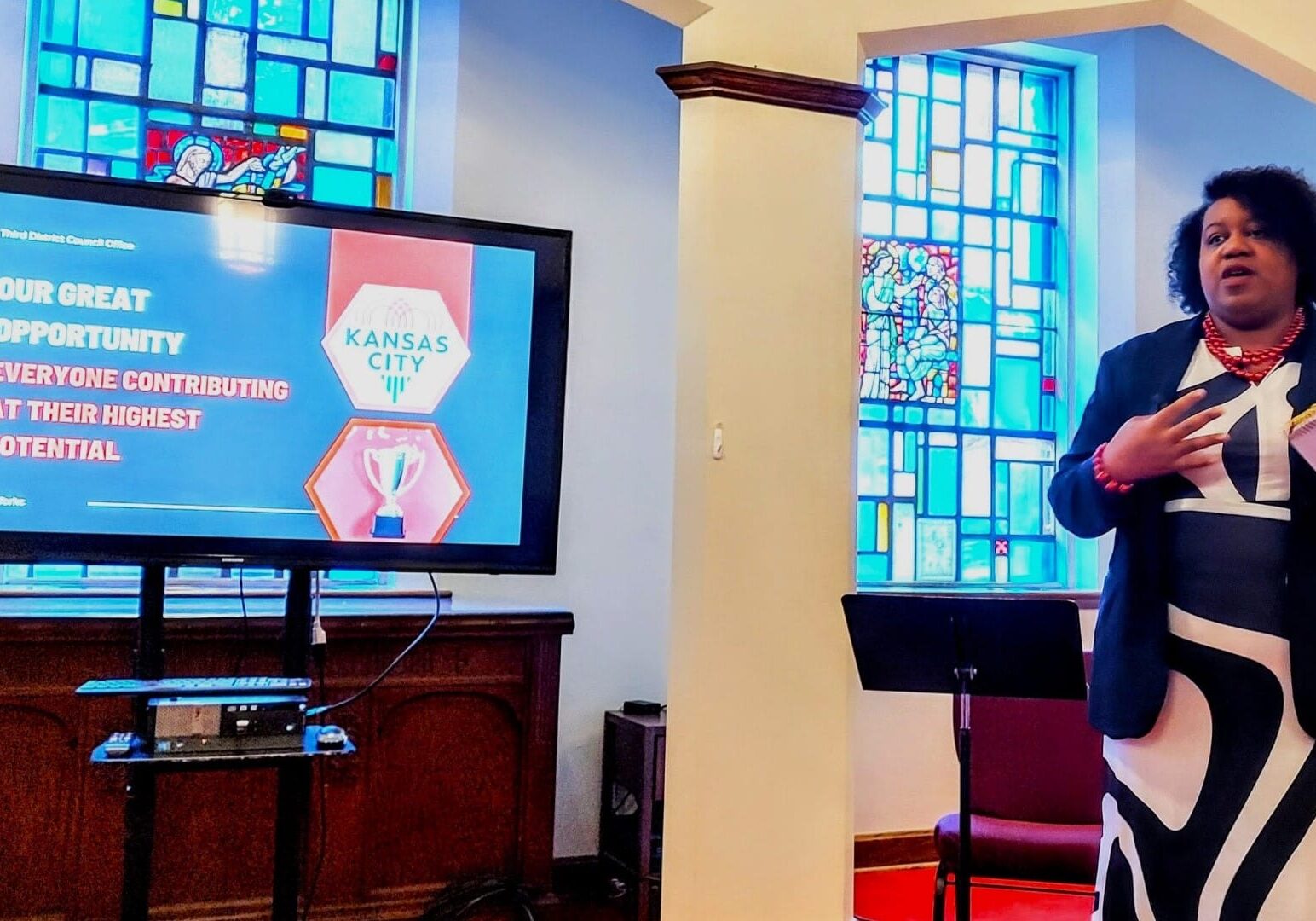
Kansas City Councilwoman Melissa Robinson is trying to educate citizens here about the important work of the Mayor’s Commission on Reparations.
But it’s hard to get current residents to consider whether and how to make amends for the countless ways that Black Kansas Citians have been (and are still) discriminated against. It’s a shameful part of this area’s history, starting with slavery. And it’s especially hard to get white residents here to think about an appropriate response to the destructive and ongoing results, which are rooted in white supremacy.
Robinson has thrown her heart into this work and deserves our thanks. She cares deeply about this and is trying hard.
But she and others advocating some kind of reparative response should give more attention to this idea: Improving the lot of people of color in Kansas City also could improve the lot of all residents here — including white people, many of whom oppose reparations for one or more of several reasons.
Many white people seem not to understand that helping Black Kansas Citians through reparations likely will benefit them, too. Beyond that, a well-thought-out healing response is the moral thing to do based on core teachings about restorative justice from the world’s major religions.
Helping white people understand how they will gain from reparations and teaching everyone how the need for reparative action has religious roots will be crucial to convincing Kansas Citians to support some kind of compensatory plan.

A November deadline faces Robinson and others working toward recommendations on how to shape reparations. To get there, they need to explain more clearly the role institutional religion played in creating and advancing white supremacy. That means helping people understand that from the time European invaders arrived on this land until now, the contemptible “Doctrine of Discovery,” promulgated by the Vatican in 1493, misshaped American history.
That doctrine (Catholic in origin but later followed by others) first gave white invaders religious authorization to convert Indigenous people to Christianity — by force if necessary — and to conquer their lands. The result was physical and cultural genocide. Beyond that, the doctrine supported chattel slavery.
When Robinson spoke to a church group last month about the Reparations Commission’s work, she asked audience members what difference it would make to Kansas City if reparations became a reality. Some in the audience suggested there would be more equitable education, more affordable housing and so on.
But people were slow to mention that reparations, if well conceived and fairly implemented, could economically reward the broader community, including the majority white population. Poverty exists partly because certain people benefit from it. Reducing poverty through reparations will help everyone financially — except perhaps those whose wealth depends on poverty’s existence. (The book to read is “Poverty, by America,” by Matthew Desmond.)
Because criminal activity often is related to poverty, reparations also may be at least a partial answer to reducing crime, including Kansas City’s appalling murder rate, which is driven in part by people trying to support themselves through illegal drug trafficking.
At the church gathering where Robinson spoke, one man said this about why reparations are needed: “I think that a central defining characteristic of Kansas City is that we have highly concentrated race-based poverty. I hope that this (reparations) effort will help improve that reality.”
To which another man predicted, “We will have an untapped resource that flourishes.” White Kansas Citians need to understand that.
The harsh reality is that many whites don’t want to hear about the damage white supremacy has done or how institutional religion enabled that racism. You would be right to picture people with their hands over their ears shouting “La-la-la-la-la.”
But imagine the possibility that certain kinds of reparations (and not all reparations mean cash transfers) could reduce racial disparities in education, health care, policing, job availability, housing, transportation and other areas of life. That’s exactly the idea behind them. They are, in short, the early 21st century’s version of “40 acres and a mule,” promised to Black people when slavery ended — promised but never quite delivered. What a missed opportunity.
Success today would mean that many people of color could participate more fully in the economy and help make Kansas City a more attractive arts, entertainment, educational, research and entrepreneurial center.
Yes, the Reparation Commission’s work is limited now to the Black experience. But what about the experience of Indigenous people here? Remember that it once (1839) was illegal for American Indians to live in Missouri. (The book to read is “Indigenous Missourians,” by Greg Olson.) Also remember that our Declaration of Independence called Indigenous people “merciless Indian savages.” Would it be too much to admit our civic ancestors got that wrong?
And what about reparations for other suppressed people of color or for women who have been held back economically and educationally across Kansas City’s history? Or for discriminated-against LGBTQ+ people? Or for those with developmental disabilities, some of whom were simply warehoused?
All good questions, but the only proposal now before City Hall has to do with Black people’s history here. And for that limited goal, it’s already past time for the Reparations Commission to be selling its restorative ideas by emphasizing that nearly everyone here can benefit from them.
Is it selfish if whites want to help Black people just because it also will help whites? Yes, of course it is. But it may be one of the few ways to encourage white support for reparations, whatever form they finally take.
In the end, failure to build white support for the idea may mean missing an opportunity to be a model for a nation still struggling to come to terms with evils from our past that continue to disfigure our present.
Bill Tammeus, an award-winning columnist formerly with The Kansas City Star, writes the “Faith Matters” blog for The Star’s website, book reviews for The National Catholic Reporter and for The Presbyterian Outlook. His latest book is “Love, Loss and Endurance: A 9/11 Story of Resilience and Hope in an Age of Anxiety.” Email him at wtammeus@gmail.com.

Reading these stories is free, but telling them is not. Start your monthly gift now to support Flatland’s community-focused reporting.

Related Stories

Nick’s Picks | Roads, Bathrooms, Costco and More …
New Toll Road Opens Kansas City’s first toll road opens this week. Starting Saturday, you’ll pay up to $3.50 to travel the new express lanes on U.S. Highway 69 from 103rd to 151st streets in Overland Park. There are no toll booths — cameras scan your license plate, and a bill arrives by mail. KTAG…

Up From the Ashes: Warwick Theatre Revival Draws Applause
Two years ago, John Cleary met a fellow Kansas City actor for drinks. Their conversation centered on the fate of the Metropolitan Ensemble Theatre. A large portion of the ensemble’s home, the Warwick Theatre, was ash, charred timbers and soot-saturated costumes and props — remnants from a recent massive fire. The destruction was so great…

Nick’s Picks | Baseball, Drones, Romance and More …
Royals Reveal Next week, the Kansas City Royals head to Arizona for Spring Training. And that’s the mayor’s self-imposed deadline to lock in a stadium deal. So, is this finally the week owner John Sherman steps to the plate and unveils where the Royals will build their next home? At last week’s council meeting, Mayor…