
How Midwestern Women Pioneered Feed Sack Fashion
March 23, 2021 | | 4 min read
If you had no idea that rural Kansas and Missouri birthed a nationwide fashion trend that lasted for decades, you’re not alone.

The Great Depression brought unprecedented levels of poverty, and the Dust Bowl put those in rural America in particularly dire straits. But as purse strings tightened, Midwestern women found a new way to stitch together the essentials.
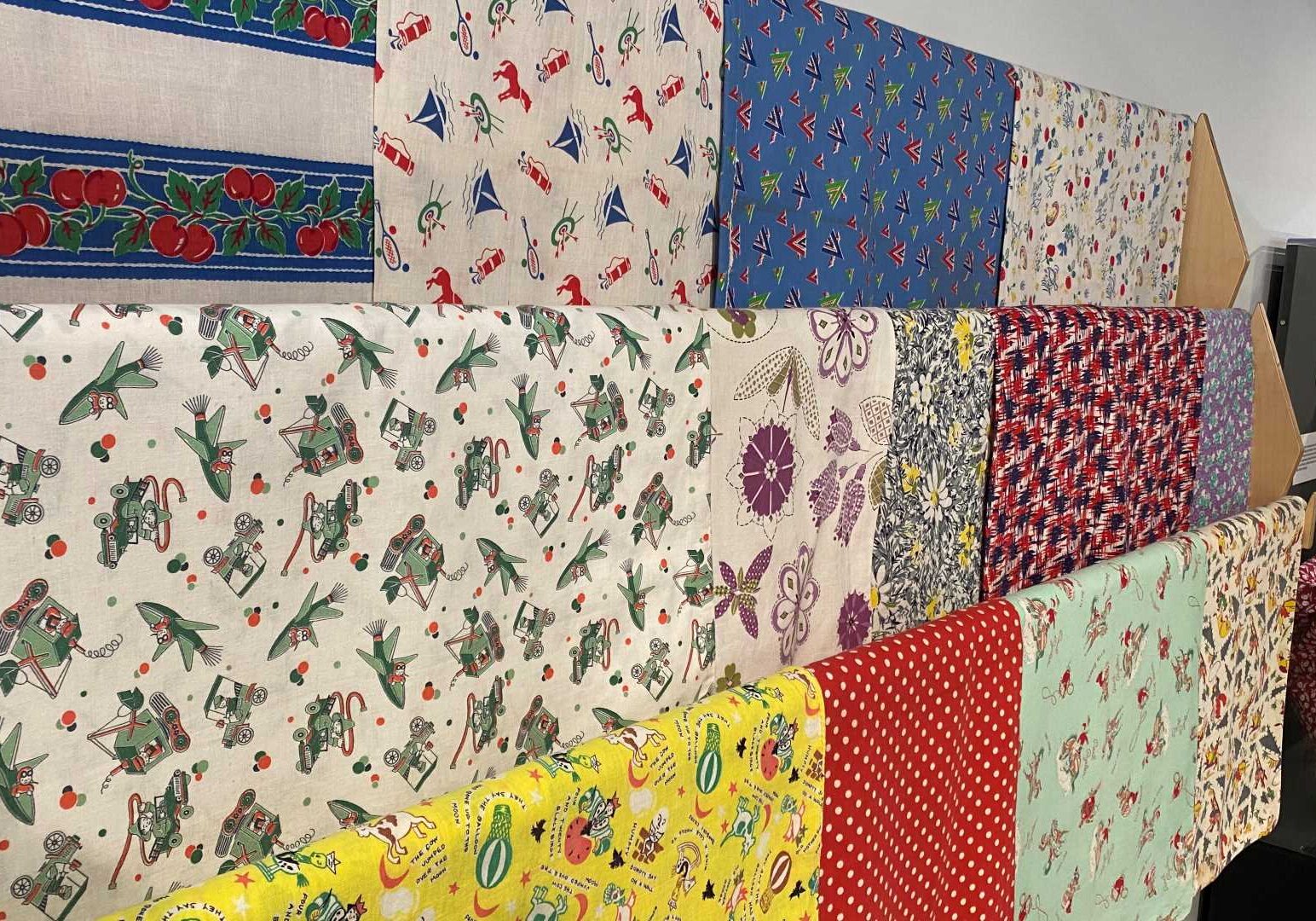
Women turned feed sacks, flour sacks, sugar sacks and other commodity bags into household items. Dresses were most popular, but the cotton bags also were used for aprons, quilts, baby clothes, curtains and towels.
“Even the original thread that held them together could be taken out and recycled and reused,” said Andrew Gustafson, the curator of interpretation at the Johnson County Museum.
The museum is the temporary home of the Thrift Style exhibit. Thrift Style memorializes the feed sack movement and features dresses, quilts and other materials made from feed sacks in the 20th century.

“It was just fascinating to me, the resourcefulness of people and to be able to take a common everyday object, find a new use for it, and that really allowed them to express a sense of creativity and met a need,” said Marla Day, the curator of Thrift Style.
According to the exhibit, “the late 19th and early 20th century was a time of market competition, brand development, and the rise of creative advertising that helped one product stand apart from the rest.”
Manufacturers started to take notice that even though men were picking up the grain from the store, it was their wives telling them what to purchase. In response, companies started to print attractive patterns on their cotton sacks and buyers started to show preference based on the pattern instead of its contents.
Asa Bales of the Southwest Milling Co. in Missouri was the first to patent patterned cloth sacks to be used for dresses. But he only specified a gingham pattern, which opened the floodgates for other companies to print their own designs.

A dress for an adult woman often took two or three feed sacks, so it became commonplace for women to hold swap parties to trade for the patterns they needed.
“These feed sacks presented them with a way to continue to live, to make their own towels or to make their own clothing or pillow shams, things that they needed to live, but also things that beautified their homes,” Gustafson said.
Because of the region’s high levels of agricultural production, the feed sack movement primarily took root in Kansas and Missouri. Even though they were simply setting out to provide for their family in a cost-effective way, these women set off a nation-wide trend.
In the 1950s, Marilyn Monroe even paid tribute to the bygone era.
Both Gustafson and Day feel that there is a lot that we can learn from the feed sack era.

“We don’t have to be such a throwaway society,” Day said.
They both agreed that the pandemic has taught people to be more resourceful and learn to make do with what they have.
“It’s a lesson for us in thinking outside the box and trying to make the best of your situation,” Gustafson said.
The Thrift Style exhibit will be at the Johnson County Museum until May 1. The museum is open Monday-Saturday from 9 a.m. – 4 p.m. and admission costs $6 for adults, $5 for seniors and $4 for children aged 1-18.
Catherine Hoffman covers community affairs and culture for Kansas City PBS in cooperation with Report for America.

Reading these stories is free, but telling them is not. Start your monthly gift now to support Flatland’s community-focused reporting.

Related Stories

Nick’s Picks | Roads, Bathrooms, Costco and More …
New Toll Road Opens Kansas City’s first toll road opens this week. Starting Saturday, you’ll pay up to $3.50 to travel the new express lanes on U.S. Highway 69 from 103rd to 151st streets in Overland Park. There are no toll booths — cameras scan your license plate, and a bill arrives by mail. KTAG…
Up From the Ashes: Warwick Theatre Revival Draws Applause
Two years ago, John Cleary met a fellow Kansas City actor for drinks. Their conversation centered on the fate of the Metropolitan Ensemble Theatre. A large portion of the ensemble’s home, the Warwick Theatre, was ash, charred timbers and soot-saturated costumes and props — remnants from a recent massive fire. The destruction was so great…

Nick’s Picks | Baseball, Drones, Romance and More …
Royals Reveal Next week, the Kansas City Royals head to Arizona for Spring Training. And that’s the mayor’s self-imposed deadline to lock in a stadium deal. So, is this finally the week owner John Sherman steps to the plate and unveils where the Royals will build their next home? At last week’s council meeting, Mayor…