
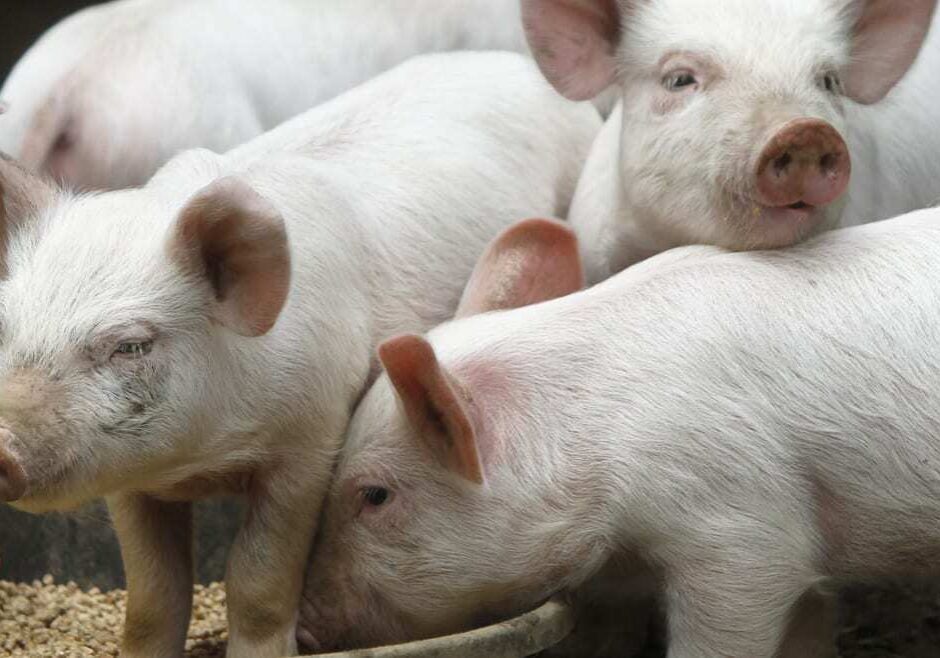
In the spring of 2013, hundreds of baby pigs were dying off and nobody knew what was making them so sick.
As a deadly virus hopscotched across farms, researchers went to work as disease detectives, hoping to contain, identify and track the cause.
The virus was identified as Porcine Epidemic Diarrhea, never before seen in the U.S. It killed millions of piglets, cost the pork industry roughly $1 billion and sent prices at the grocery store soaring.
Harvest Public Media spent months examining PED’s outbreak, piecing together interviews, government reports and public documents.
What we found is an intriguing international mystery about an emerging virus so virulent it could withstand the rough ride from China to the States, possibly by latching onto a common cargo container. We also found an industry struggling to prepare for PED to possibly decimate the industry a second time.
Follow the story as Harvest Public Media, a partner with KCPT, tracks the virus. Look for the two-part series this Saturday, Dec. 19 and Sunday, Dec. 20 on Flatland.
Reading these stories is free, but telling them is not. Start your monthly gift now to support Flatland’s community-focused reporting.

Related Stories
As High-Tech Farms Take Hold, Can Farm Towns Hold On?
Brandon Biesemeier climbs up a small ladder into a John Deere sprayer, takes a seat in the enclosed cab, closes the door, and blocks out most of the machine’s loud engine hum. It is a familiar perch to the fourth-generation farmer on Colorado’s eastern plains. He turns onto a country road, heading south to spray…

Without Big Trade Deals, Missouri Farmers Worry They’ll Lose Out
President Trump made campaign promises to pull the U.S. out of big international trade deals and focus instead on one-on-one agreements with other countries. But that has farmers worried they will lose some of the $135 billion in goods they sold overseas last year. Two years ago, Missouri rancher Mike John expected the U.S. beef…
Big Data Is Transforming How Scientists Create Better Seeds
This summer, in cornfields in Iowa and Nebraska, about a thousand small point-and-shoot digital cameras will be enclosed in waterproof cases, mounted on poles and attached to solar-powered battery chargers. They will take pictures every ten minutes as plants grow; all part of a plan to create better seeds. “We watch plants go through their…