
Missouri Farmer Enlists Bugs And Chickens In Battle Against Pests
September 4, 2016 | Kristofor Husted | 5 min read
In an effort to turn away from chemical pesticides, which have the potential to damage the environment, some farmers are looking in a new direction in the age-old, quiet struggle on farm fields of farmers versus pests. They’re warding off intruding insects and noxious weeds with bugs and chickens.
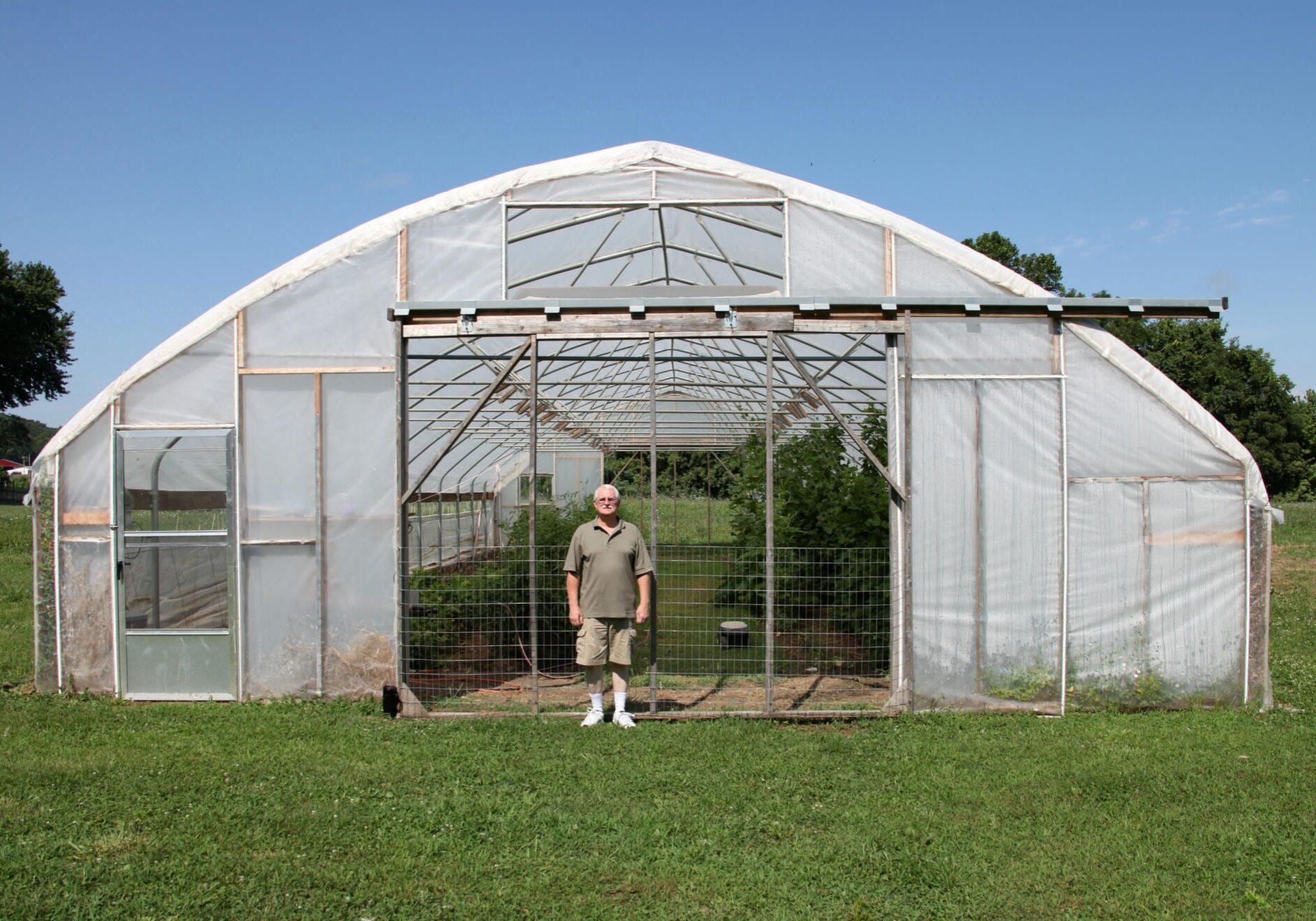
Gary Wenig and his wife bought 40 acres in central Missouri to grow organic vegetables. The land was full of weeds and insects, he says, and going organic meant the Wenigs couldn’t use conventional pesticides like the ubiquitous Round-Up or Atrazine. Organic farmers can use natural pesticides, but they’re expensive and still can be dangerous.
Wenig decided to experiment. He planted what are known as “trap crops,” sacrificial plants not raised for harvest but that are extra tasty for pesky insects like squash bugs. Trap crops like Blue Hubbard squash attract the harmful bugs, leaving his zucchinis largely untouched.
“The bugs will move in and they’ll stop at that point and eat those plants,” Wenig says. “So then you spray that portion of your garden only. You don’t have to spray the food you’re eating.”
It’s like a perimeter defense system. But Wenig took it even further. He wanted to cut out all pesticides – conventional and those approved to use under the organic label.
“We have free range chickens and the chickens love those bugs,” he says. “Instead of spraying (the trap crops), why don’t we get the chickens to eat them?”
Once the patches of planted trap were grown, Wenig rolled out a chicken tractor — basically a large, mobile coop on wheels with a mesh wire bottom — and let several chickens in there feast on the bugs from above. Every few hours, he moved the mobile coop to a new patch. The arrangement saves Wenig money on both pesticides and on feed for his chickens and ducks.
While the trap crop and chicken system has worked for the Wenigs’ small farm, it might not be feasible on a larger, conventional farm. That’s why university researchers, along with the U.S. Department of Agriculture, are looking at ways to combat pests by introducing predatory bugs.
Garden stores sell ladybugs to customers so they can release the helpful insects in their yard to eat the aphids that plague tomato plants. There are other pests that are damaging many more acres than the backyard aphids and in larger numbers, though.
“Take the soybean aphid right now,” says Ben Puttler, professor emeritus of Entomology at the University of Missouri, Columbia. “It’s considered a pest because they don’t have its natural enemies. And we’re trying to introduce natural enemies for it.”
The tiny soybean aphid popped up in the U.S. around 2000, Puttler says. It comes from Asia and sucks the juices out of the plant, which can lead to fungus and mold. The bugs can trash up to 40 percent of a farmer’s crop, according to the North Central Soybean Research Program.
Researchers went to China and Japan to find the aphid’s natural enemy. They found the teeny, tiny, parasitic wasp.
“You can look at it this way,” Puttler says. “We have an army. And the wasps are the air force and the ground force are the predators.”
The wasps inject their eggs into aphids. The larvae then eat the aphid from the inside out before emerging as an adult wasp.
Researchers are testing natural predators for other agricultural pests, too, including stink bugs and the infamous emerald ash borer, which has been devastating to ash trees all over the country.
But sometimes it’s the plant itself that bugs farmers. Weeds can send an organic farmer running for help, especially if it’s an unfamiliar plant, like the invasive garlic mustard.
Garlic mustard comes from Europe and has been creeping into Midwest pastures and forests for several years now, according to Hank Stelzer, a forestry specialist with University of Missouri Extension.
“It is very easy to pull out,” Stelzer says. “The problem is there is just so many of them.”
The weed stops grass and tree seedlings from starting, making it harder for grazing pastures and timber forests to reproduce. Researchers are currently testing a few weevil species and tiny wasps that love to chow down on garlic mustard.
“Some will attack the leaves, some will attack the stems,” Stelzer says. “They will both suck the life, if you will, out of the plant. But that’s also where they lay their eggs so they get more of those critters out there.”
Of course, there is danger in introducing a new species to an ecosystem and creating an even bigger problem. Stelzer says that’s why USDA first conducts rigorous tests in quarantined labs. The tests are done in controlled environments – in greenhouses and growth chambers – in advance of field tests. Regulatory approval can take decades, and many potential options don’t pan out.
Farmer Gary Wenig says he plans to expand his trap crop perimeter to encompass all of his garden plots, including his high tunnel greenhouse. He has teamed up with Lincoln University to do more studies and is hoping to get another USDA grant to implement the larger project.
Next year, he says he’ll plant more beneficial insect plants to attract the ladybugs and dragonflies, which eat pest bugs.
“We’re going to build two fences with about 15 feet in between them so we can get the tractor in there,” he says. “And we’re just going to plant nothing in there but sacrificial plants and beneficial insect plants.”
Then he’ll unleash the chickens.
— Harvest Public Media, based at KCUR 89.3, reports on farm and food issues in collaboration with public media stations across the Midwest. For more information, visit www.harvestpublicmedia.org.
Reading these stories is free, but telling them is not. Start your monthly gift now to support Flatland’s community-focused reporting.

Related Stories
As High-Tech Farms Take Hold, Can Farm Towns Hold On?
Brandon Biesemeier climbs up a small ladder into a John Deere sprayer, takes a seat in the enclosed cab, closes the door, and blocks out most of the machine’s loud engine hum. It is a familiar perch to the fourth-generation farmer on Colorado’s eastern plains. He turns onto a country road, heading south to spray…
Without Big Trade Deals, Missouri Farmers Worry They’ll Lose Out
President Trump made campaign promises to pull the U.S. out of big international trade deals and focus instead on one-on-one agreements with other countries. But that has farmers worried they will lose some of the $135 billion in goods they sold overseas last year. Two years ago, Missouri rancher Mike John expected the U.S. beef…
Big Data Is Transforming How Scientists Create Better Seeds
This summer, in cornfields in Iowa and Nebraska, about a thousand small point-and-shoot digital cameras will be enclosed in waterproof cases, mounted on poles and attached to solar-powered battery chargers. They will take pictures every ten minutes as plants grow; all part of a plan to create better seeds. “We watch plants go through their…