
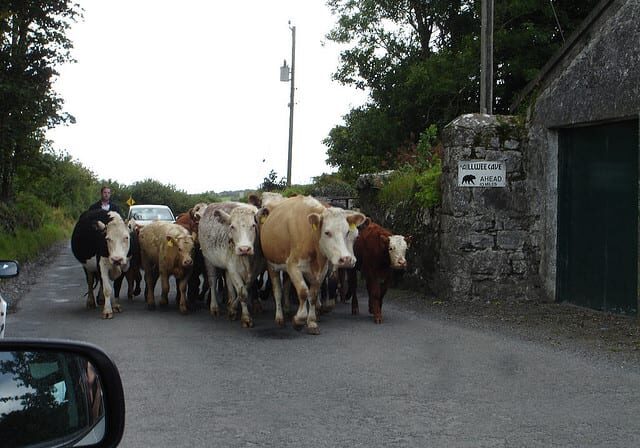
Irish beef imports approved after 15-year European ban
January 9, 2015 | Jeremy Bernfeld | 3 min read
Ireland will be the first European Union country allowed to send beef to U.S. dinner tables, more than 15 years after a deadly outbreak of mad cow disease in Europe led U.S. regulators to ban European beef imports.
The ban on EU beef imports was lifted in March and Ireland’s beef production systems passed a U.S. inspection, according to the Irish Agriculture Department.
The United Kingdom was the epicenter of the mad cow outbreak in the 1990s. As the fatal cattle disease spread to North America, the U.S. banned European beef in 1998. As a result, Jim Robb, an agricultural economist with the Livestock Marketing Information Center, says trade relationships collapsed.
“The U.S. lost export markets,” Robb said. “International trade in the beef complex was in great turmoil and it lowered cattle prices in many countries dramatically.”
Robb says since the mad cow scare, more countries, like Ireland, are proving they’ve been able to keep the disease in check, building confidence among trade partners. That confidence could translate into even more European countries given a greenlight to export beef to the U.S.
The growth of beef imports comes just as the rules for disclosing foreign-raised beef are expected to be watered-down.
Country of Origin Labeling, or COOL, rules currently force retailers and meatpackers to detail where the livestock from which the meat came was born, raised and slaughtered. But the World Trade Organization has said the rules amount to a trade barrier and recent Congressional action requires the USDA to change them.
It may be that U.S. consumers won’t know they’re buying beef that was raised in an Irish pasture.
For Ireland, expansion into the U.S. market has them seeing green – both because Irish producers will likely target the grass-fed beef market and because of the sheer size of U.S. consumption as the world’s top beef buyer.
“This U.S. market is a huge prize given the size of the market and the demand we know exists there for premium grass-fed beef,” Irish Minister of Agriculture Simon Coveney said in a statement. “We now have first-mover advantage as a result of being the first EU member state to gain entry.”
The announcement by Ireland agriculture officials did not give a date for the first beef imports from Ireland. The EU’s executive committee said in a statement that it hopes the move paves the way for even broader acceptance of beef from Europe.
Currently, Canada and Mexico are the only significant cattle suppliers to the U.S. market, according to USDA data. The U.S. market generally imports about 2 million-3 million head of cattle each year, about 2.5 percent of the total stock.
Reading these stories is free, but telling them is not. Start your monthly gift now to support Flatland’s community-focused reporting.

Related Stories
As High-Tech Farms Take Hold, Can Farm Towns Hold On?
Brandon Biesemeier climbs up a small ladder into a John Deere sprayer, takes a seat in the enclosed cab, closes the door, and blocks out most of the machine’s loud engine hum. It is a familiar perch to the fourth-generation farmer on Colorado’s eastern plains. He turns onto a country road, heading south to spray…
Without Big Trade Deals, Missouri Farmers Worry They’ll Lose Out
President Trump made campaign promises to pull the U.S. out of big international trade deals and focus instead on one-on-one agreements with other countries. But that has farmers worried they will lose some of the $135 billion in goods they sold overseas last year. Two years ago, Missouri rancher Mike John expected the U.S. beef…

Big Data Is Transforming How Scientists Create Better Seeds
This summer, in cornfields in Iowa and Nebraska, about a thousand small point-and-shoot digital cameras will be enclosed in waterproof cases, mounted on poles and attached to solar-powered battery chargers. They will take pictures every ten minutes as plants grow; all part of a plan to create better seeds. “We watch plants go through their…