
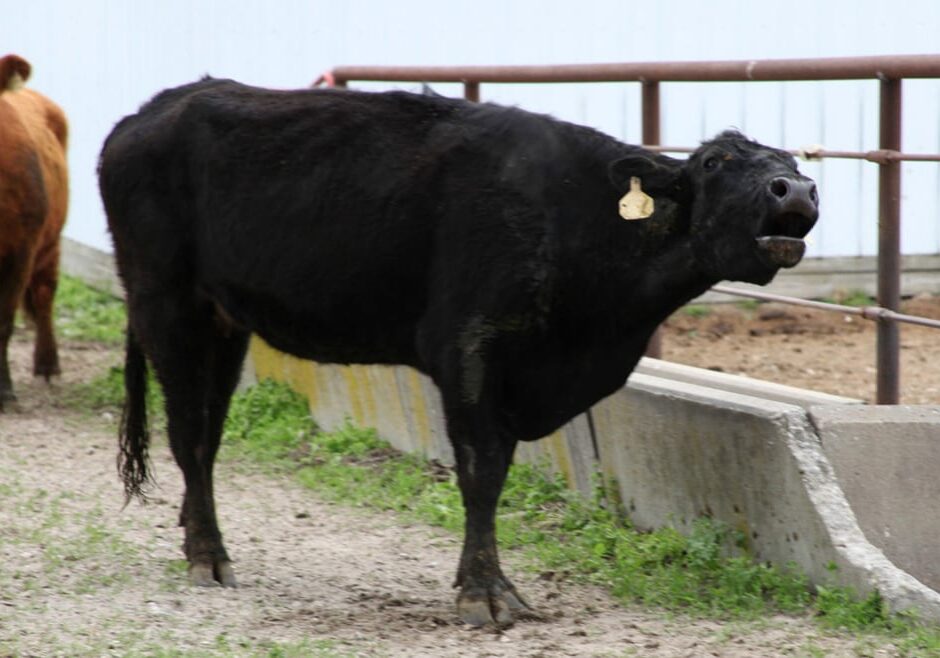
We all learned it as kids: Old MacDonald has a farm and on that farm he has a cow that says “moo.” But why? Why do cows moo?
Whenever I’m out reporting in the field I can tell many ranchers have a powerful connection with their cattle – they can almost understand them. But researchers today are trying to figure out exactly what cows are saying.
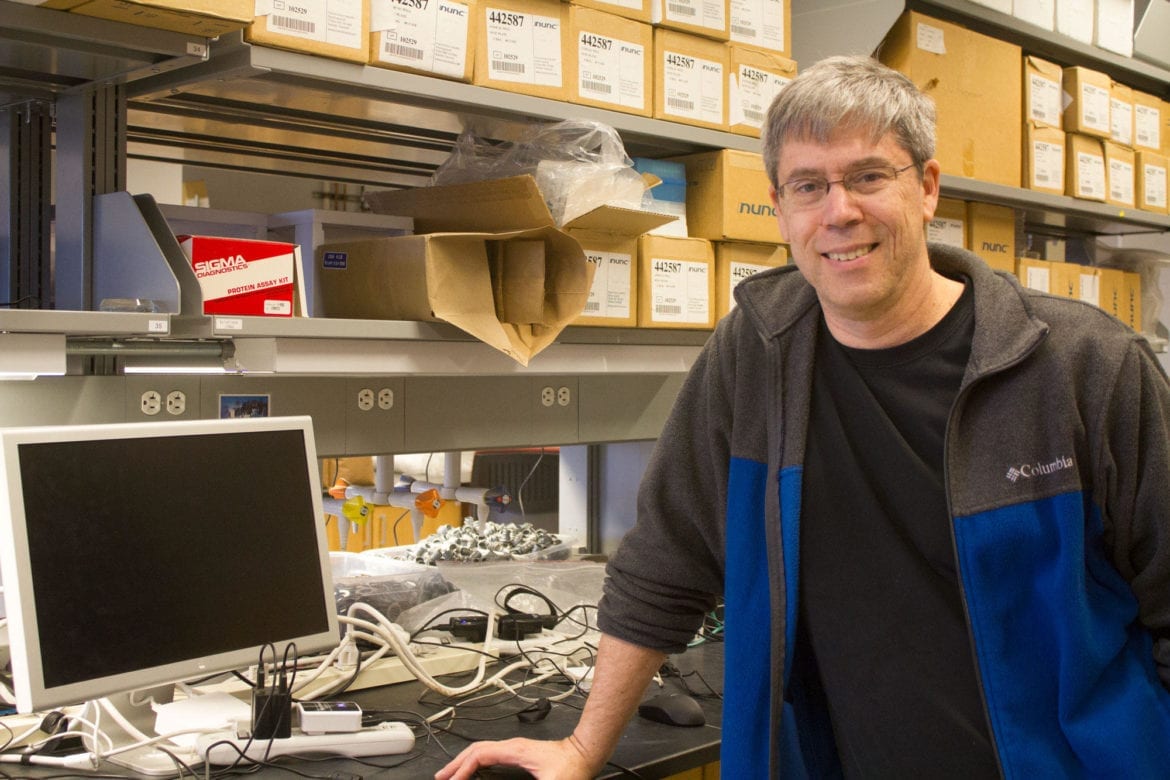
I drove out to the beef research farm at the University of Missouri Columbia to meet cattle geneticist Jared Decker and ask him: What’s in a moo?
“So I’m definitely not an expert. I can’t translate cow moos into English,” he said. “But there are certain times when you can tell when the cattle are communicating with one another.”
Here are some of the reasons cows moo:
They are Trying to Find Their Friends.
When cows change environments, like moving from one farm to another, they will moo to try to connect with their friends as they figure out their new surroundings. Decker said it’s like going to the school cafeteria after you’ve just left a classroom. When you enter the cafeteria, you look for your friends. Cows often do the same thing when they get off the trailer that brought them to a new location. Some researchers believe moos can be distinctive, leading cows to connect with each other.
They want to make a baby.
These moos are the pick-up lines of the cattle world. Bulls and cows let each other know that they are ready to, in the words of a bovine Marvin Gaye, get it on.
They’ve lost their calf or their mom.
Researcher Monica Padilla de la Torre and her team looked at communication between cows and their babies. When mama cows were separated from their babies, they made a higher pitched, louder call. When their babies were close by, the mothers gave a lower frequency call, suggesting that the higher frequency call is meant to alert calves that they are being missed.
The calves themselves gave a distinct moo when they wanted milk but couldn’t find their mothers.
De la Torre said the calves’ higher frequency moos and the older cow’s lower frequency moos were individually distinctive, suggesting moms and babies can actually recognize each other’s voices.
They’re hungry.
This call can be directed toward the farmer. The cattle wants to let him or her know that it’s time for some hay or grain.
They need to be milked.
Also, these moos can let the farmer know that it’s time for a helping hand.
They are stressed out.
Maybe it’s too hot, they are caught in a fence or they are receiving vaccination shots. Decker says he’s noticed a higher pitched, more frequent moo when cows are dealing with these issues.
[FLEX-CONTENT]
There is a flip side to this. One of my biggest problems as a radio reporter: cows not mooing when I’m out collecting audio for my stories. Cattle geneticist Jared Decker says that’s because happy cows don’t need to moo.
“It’s when something’s out of the ordinary that they need to moo, right?” he said. “It’s ‘I’m hungry, farmer come feed me.’ It’s ‘my baby’s not near me, let me find my baby calf.’ It’s…’let’s make a baby calf.’”
So whether they’re on the Missouri research farm or Old MacDonald’s farm, cows use moos to communicate. It turns out that that moo actually means something specific.
Reading these stories is free, but telling them is not. Start your monthly gift now to support Flatland’s community-focused reporting.
Related Stories
As High-Tech Farms Take Hold, Can Farm Towns Hold On?
Brandon Biesemeier climbs up a small ladder into a John Deere sprayer, takes a seat in the enclosed cab, closes the door, and blocks out most of the machine’s loud engine hum. It is a familiar perch to the fourth-generation farmer on Colorado’s eastern plains. He turns onto a country road, heading south to spray…
Without Big Trade Deals, Missouri Farmers Worry They’ll Lose Out
President Trump made campaign promises to pull the U.S. out of big international trade deals and focus instead on one-on-one agreements with other countries. But that has farmers worried they will lose some of the $135 billion in goods they sold overseas last year. Two years ago, Missouri rancher Mike John expected the U.S. beef…
Big Data Is Transforming How Scientists Create Better Seeds
This summer, in cornfields in Iowa and Nebraska, about a thousand small point-and-shoot digital cameras will be enclosed in waterproof cases, mounted on poles and attached to solar-powered battery chargers. They will take pictures every ten minutes as plants grow; all part of a plan to create better seeds. “We watch plants go through their…