
Experts Question Property Tax Reform Idea Pending in Kansas
October 10, 2023 | | 7 min read
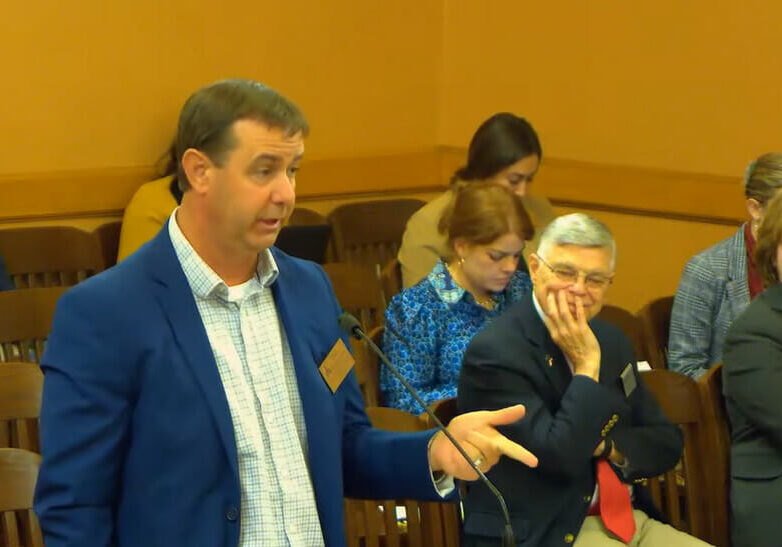
TOPEKA — Saline County appraiser Sean Robertson started with positive elements of the Legislature’s proposed amendment to the Kansas Constitution capping real estate valuation increases on residential, commercial and agriculture property at 4% annually in a bid to slow skyrocketing taxes.
Robertson, representing the Kansas County Appraiser’s Association, told a House and Senate committee studying the amendment that passage by Kansas voters could bring stability to property values, reduce complaints about surging taxes and shrink the number of complex tax appeals. It would also impose a cap on the state’s imposition of the property tax on Kansans, he said.
Then, to the disappointment of several lawmakers, he delved into reasons the constitutional amendment was a bad idea.
Robertson said the change would create financial inequities among owners of similar properties because divergent levels of property taxation would become the norm. Property appreciating rapidly in wake of strong market forces would be artificially devalued for taxation reasons as valuations climbed a maximum of 4% each year. Owners of real estate dealing with stagnant valuations would be on the hook for property taxes pegged at actual market value.
The amendment could fuel lawsuits by plaintiffs convinced it produced a fundamentally regressive method of figuring property taxes, he said.
The Kansas Senate adopted the constitutional amendment 28-11 during the 2023 legislative session. The Kansas House didn’t take up the measure, leaving it until the 2024 session opening in January. An interim bipartisan committee was appointed so lawmakers could prepare a report on attributes or flaws with Senate Concurrent Resolution 1611.
If adopted by a two-thirds supermajority in the Senate and House — there is no mechanism for a veto by Gov. Laura Kelly — the property tax amendment would be placed before voters statewide. The plan was to do that in November 2024, but the date could be moved. A simple majority of Kansans participating in the vote would determine fate of the amendment. The original goal was to implement it for tax year 2025.
New construction or improvements to real estate would be exempted from the 4% valuation benefit. The measure as currently written wouldn’t suspend the ability of city or county governments to raise property tax revenue, because mill levies wouldn’t be frozen by the amendment.
Sen. Caryn Tyson, a Republican from Parker who chairs the Senate Assessment and Taxation Committee, said the goal was to deal with county appraisers who for years had overvalued real estate. Even if tax levies were unchanged, a simple increase in property valuation each year meant local governments could generate new revenue. The increases, especially during the past decade, pushed homeowners out of their Kansas homes and into more tax-friendly states such as Oklahoma, Tyson said.
“The current system is picking winners and losers,” Tyson said. “They are being removed from their home because they are choosing between between food, medicine and taxes. The process is broken.”

‘How is That Fair?’
Robertson, during his give-and-take with the committee, said a perfect storm of economic forces led to a frenzy of elevated real estate sale prices and higher property valuations for assessing taxes. The federal government funneled cash to individuals and businesses with onset of the COVID-19 pandemic. Interest rates on loans were low and savings rates were high, he said. And, he said, there was significant wage growth in the U.S. economy.
“The idea that people are being run out of their homes by the taxes is a concern that we need to address,” Robertson said. “How many of these people are not able to stay in their homes because they can’t afford the principle mortgage payment and the interest, the maintenance and upkeep, the insurance, the utilities and the taxes?”
Tyson said it was wrong for a Kansas homeowner to endure a property tax surge because neighbors to the right and left remodeled their homes, sold them to the highest bidder and forced the stuck-in-the-middle resident to absorb consequences of a higher valuation of that home.
Tyson put an exclamation point on her frustration: “How fair is that?”
Weskan Rep. Adam Smith, the GOP chair of the House Taxation Committee, said the Senate’s proposal to amend the Constitution had to be fully vetted to avoid potential problems with people gaming the tax system. He said the state should be wary of shifting tax burden from agriculture property, especially in rural counties, onto commercial or residential property.
It would be folly for the Legislature to leave the impression with Kansans voting on a constitutional question that passage of the amendment would reduce property taxes, said Rep. Mike Amyx, a Democrat from Lawrence.
“I don’t think I’ve ever seen my property taxes come down,” he said. “I want to make sure that what we’re doing is for the benefit of taxpayers in our state.”

‘Overly Blunt Instrument’
Katherine Longhead, senior policy analyst with the Center for State Tax Policy at the nonpartisan, nonprofit Tax Foundation, said state politicians often responded to anxiety about escalating property taxes by capping the amount of revenue collected through the tax, constraining the mill levy tied to the tax or limiting increases in assessed valuation of property. The Senate’s solution would involve the third option.
“It’s important to keep in mind that assessment limits do not protect homeowners from property tax increases attributable to conscious policy choices of local taxing officials or state lawmakers,” Longhead said.
In addition, Longhead said, passage of the amendment could be politically popular among current homeowners but render Kansas less attractive to future homebuyers due to creation of an unequal tax burden among similarly situated properties. A related problem was the “lock-in effect” resulting from homeowners’ reluctance to move because they didn’t want to lose their preferential property tax treatment, she said.
Policymakers in some states, including Florida, added a portability provision so people could transfer a property tax benefit when moving, she said.
“Portability does reduce the disincentive to move,” Longhead said. “In the long run, portabilty does exacerbate inequalities and widen the tax differential between younger and older homeowners. That can make the tax code even more complex. There’s little economic justification for establishing a pretty non-neutral policy like this, where the tax burden ends up getting shifted from some property owners to others.”
She said unfairness resulted from property tax policy based on how long a person lived in a home rather than actual market value of that residence.
“Assessment limits are often introduced to prevent people from ‘getting taxed out of their homes,’ but if that is the goal I would argue that an assessment limit is an overly blunt instrument for achieving what ought to be a relatively targeted policy goal,” Longhead said.
Tim Carpenter covers the Capitol for the Kansas Reflector, a nonprofit news operation covering Kansas state government and politics as part of States Newsroom. This story first appeared on the Reflector.

Reading these stories is free, but telling them is not. Start your monthly gift now to support Flatland’s community-focused reporting.
Related Stories
Nick’s Picks | Roads, Bathrooms, Costco and More …
New Toll Road Opens Kansas City’s first toll road opens this week. Starting Saturday, you’ll pay up to $3.50 to travel the new express lanes on U.S. Highway 69 from 103rd to 151st streets in Overland Park. There are no toll booths — cameras scan your license plate, and a bill arrives by mail. KTAG…

Up From the Ashes: Warwick Theatre Revival Draws Applause
Two years ago, John Cleary met a fellow Kansas City actor for drinks. Their conversation centered on the fate of the Metropolitan Ensemble Theatre. A large portion of the ensemble’s home, the Warwick Theatre, was ash, charred timbers and soot-saturated costumes and props — remnants from a recent massive fire. The destruction was so great…

Nick’s Picks | Baseball, Drones, Romance and More …
Royals Reveal Next week, the Kansas City Royals head to Arizona for Spring Training. And that’s the mayor’s self-imposed deadline to lock in a stadium deal. So, is this finally the week owner John Sherman steps to the plate and unveils where the Royals will build their next home? At last week’s council meeting, Mayor…