
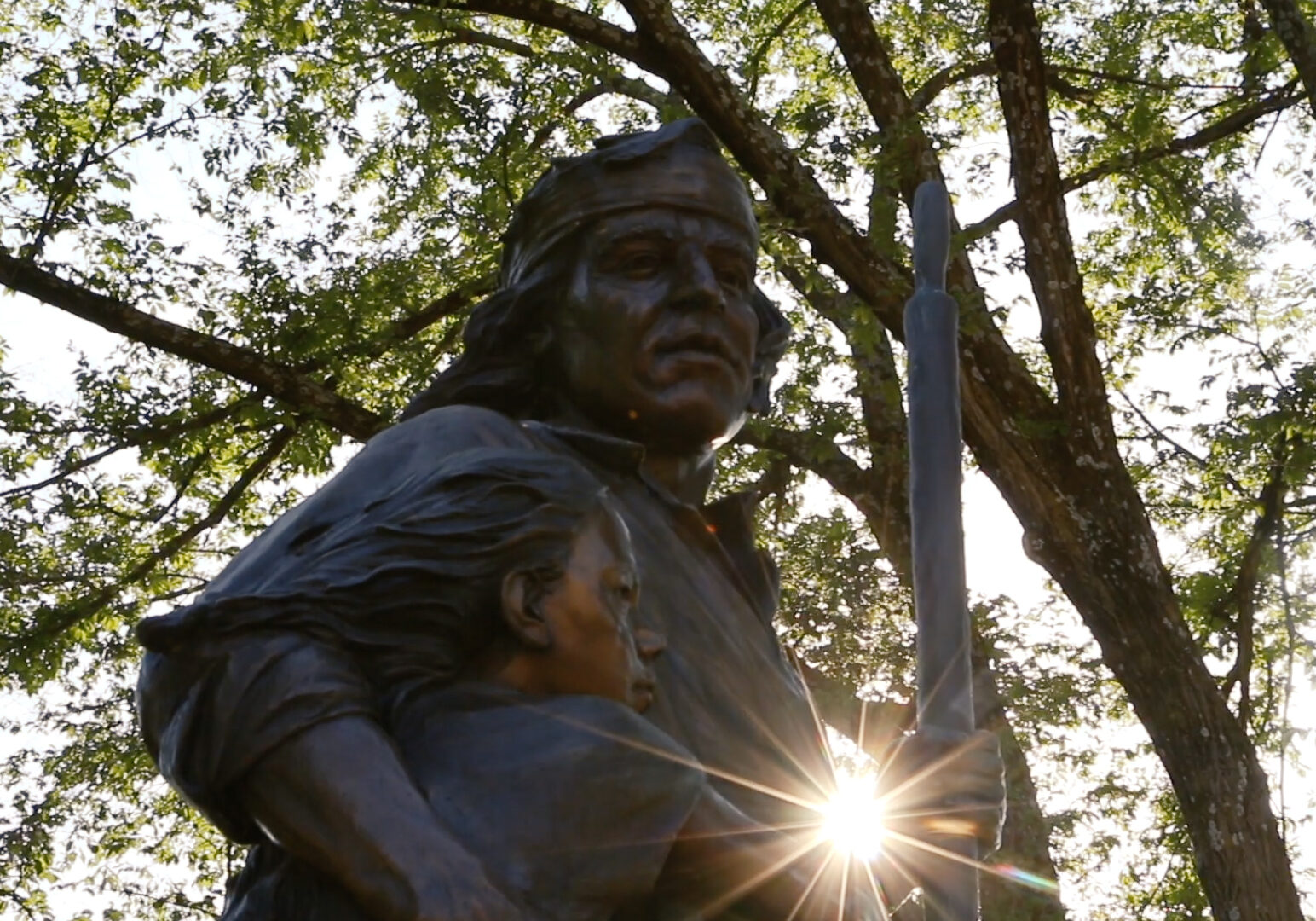
For years, Kathy Dix, has walked her dogs on a mulch path behind the Shawnee Indian Mission, which is located in her Fairway, Kansas, neighborhood.
She’s a longtime volunteer at the mission, but as a history buff, she can never get enough information about the sprawling site along West 53rd Street. And one thing that has always intrigued her is the story of Paschal Fish. He is featured in the mission’s exhibit, but she turned to curiousKC to learn more about his link to the historical site.
The chain of events, Flatland found, goes back to the late 1700s.
A wealth of history illuminated not only Fish’s impact on the mission but also a whole town, which will soon be revealed. First, let’s take a walk through this history story.
Fishing For the Answer
In the 1820s through the 1830s, the U.S. government removed eastern tribes, including the Shawnee, from their native lands and placed them on reservations in present-day Kansas, Oklahoma and Nebraska.
Almost 2 million acres were set aside for the Shawnee tribe and, at around the same time, Christian missionaries began to arrive. A mission to “Christianize and civilize” the Shawnee people was established in 1830 in the Kansas City area.
Enter Paschal Fish Sr., a white man named William Jackson, who was educated at a mission school in Ohio. The Black Fish family adopted Jackson, and he took the name “Paschal,” the Latin word for “Easter.”
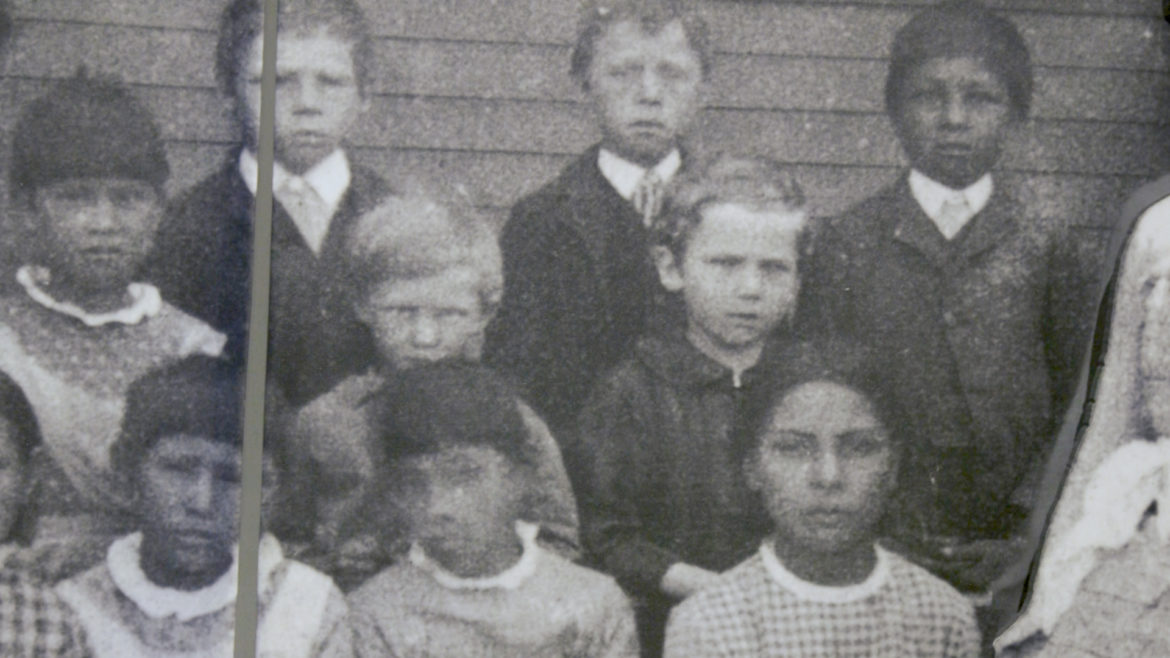
This group of Native American children is typical of the types of students that attended school at the Shawnee Indian Mission.
The image is displayed at the mission courtesy of the Denver Public Libary.
In 1831, Fish Sr. brought 30 interracial Shawnee and five white people to the mission, which was a Methodist-run school for Native youths. He married a Shawnee woman, Polly Rogers, and they had a son, Paschal Fish Jr.
So that is the connection that Dix was wondering about. Fish Sr. died in 1834.
But, as an added bonus, we have included some history that flowed from the senior Fish.
His son was a sharp businessman, said Ben Terwilliger, executive director of the Eudora History Museum. Fish Jr. became a blacksmith at Ft. Leavenworth and operated a ferry and a hotel for travelers on the Oregon Trail.
“Probably his greatest achievement of all was when he sold his land,” Terwilliger said.
Records show that Paschal Jr. sold the land for $10,000 to a German immigrant company. The original signed deed and an original photo of junior’s daughter still exist, and they happen to be in a museum in a small community 40 miles west of Kansas City, Missouri.
So remember that town we referenced earlier? This is how it all comes together.
The land sold by Fish Jr., the offspring of the original Paschal Fish, became that small town that houses the museum. And that town, Eudora, took its name from Fish Jr.’s daughter.
–Catherine Hoffman is a summer intern for Kansas City PBS
Reading these stories is free, but telling them is not. Start your monthly gift now to support Flatland’s community-focused reporting.
Related Stories
A Better Big Blue Battlefield in Kansas City | Part III
Editor’s note: This is the final installment of a three-part series on the restoration of the Big Blue Battlefield in Kansas City, Missouri. The engagement on the Big Blue Battlefield was pivotal in the larger Battle of Westport, an October 1864 clash that effectively ended organized Confederate military operations in Missouri. As the years receded,…
A Better Big Blue Battlefield in Kansas City | Part II
Editor’s note: This is the second installment of a three-part series on the restoration of the Big Blue Battlefield in Kansas City, Missouri. In the mid-19th century, overland trail teamsters driving wagons west sometimes followed a branch of the Santa Fe Trail out of Independence, using the shortcut to reach fields where the animals used…
A Better Big Blue Battlefield | Part I
Editor’s note: This is the first installment of a three-part series on the restoration of the Big Blue Battlefield in Kansas City, Missouri. It was cold for late October in Kansas City. In 1864 Lt. Patrick Henry Minor, then leading an artillery battery against Confederate forces, would die the following March, from what likely had…