
curiousKC | A Brief History of KC Radio and the Broadcaster Who Started It All
February 8, 2021 | Vicky Diaz-Camacho | 2 min read
Last month, a curious Kansas Citian wrote: “Who was Arthur B. Church and what was his contribution to early KC Television and Radio?”
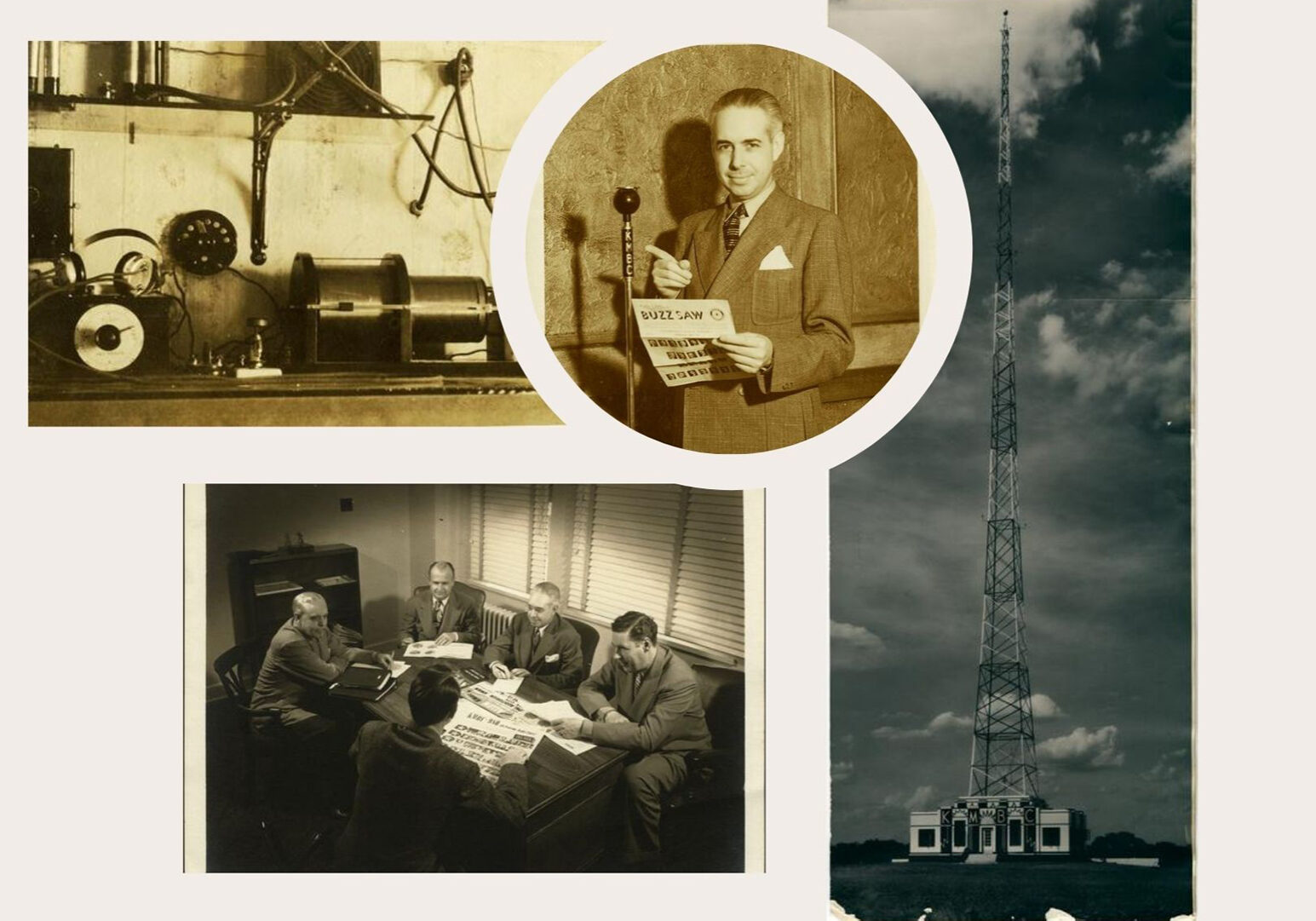
Considered a “broadcast pioneer” in the heartland, Church got his start in radio broadcasting in 1913 when he was in college.
According to the University of Missouri-Kansas City library, Church made his first big professional move in 1914. That year, Church helped found an experimental wireless station called 9WU at Graceland College in Lamoni, Iowa.
“Church became one of the first to use radio to advertise merchandise,” according to UMKC’s Arthur B. Church KMBC Special Collections.

What’s more, his station also covered local, national and international news, which can still be heard in the UMKC’s Marr Sound Archive. The station’s broadcasts ranged from music programs to news coverage of Pearl Harbor.
Church’s career in radio quickly took off.
Four years after founding 9WU, Church enlisted in the U.S. Signal Corps during World War I. The Signal Corps, a separate branch of the Army, were “responsible for implementing and designing radio technology.” Church taught telegraphy in Leavenworth, Kansas, where he was stationed.
When the war ended, he created the Central Radio Station and a school of the same name, according to UMKC’s special collections.
In 1921, Central Radio Station began operating channel 9 AXJ broadcasts. After switching hands a few times, 9 AXJ became WPE in 1922, then KMBC and, later, KMBZ. Church’s influence in the radio world happened during what was known as the Golden Age of Radio, between 1920 and the 1950s.
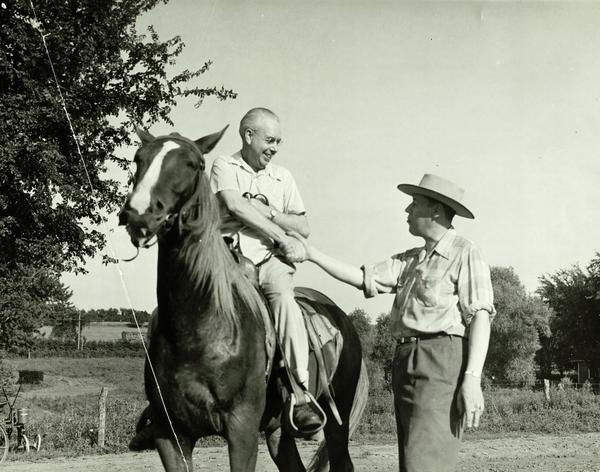
Church also was credited with starting the first broadcasting studio – AXJ – in the Midwest.
According to Leah Weinryb Grohsgal’s blog for the National Endowment for the Humanities, his station was seen as the “model for the industry.”
Reading these stories is free, but telling them is not. Start your monthly gift now to support Flatland’s community-focused reporting.
Related Stories
A Better Big Blue Battlefield in Kansas City | Part III
Editor’s note: This is the final installment of a three-part series on the restoration of the Big Blue Battlefield in Kansas City, Missouri. The engagement on the Big Blue Battlefield was pivotal in the larger Battle of Westport, an October 1864 clash that effectively ended organized Confederate military operations in Missouri. As the years receded,…
A Better Big Blue Battlefield in Kansas City | Part II
Editor’s note: This is the second installment of a three-part series on the restoration of the Big Blue Battlefield in Kansas City, Missouri. In the mid-19th century, overland trail teamsters driving wagons west sometimes followed a branch of the Santa Fe Trail out of Independence, using the shortcut to reach fields where the animals used…
A Better Big Blue Battlefield | Part I
Editor’s note: This is the first installment of a three-part series on the restoration of the Big Blue Battlefield in Kansas City, Missouri. It was cold for late October in Kansas City. In 1864 Lt. Patrick Henry Minor, then leading an artillery battery against Confederate forces, would die the following March, from what likely had…