
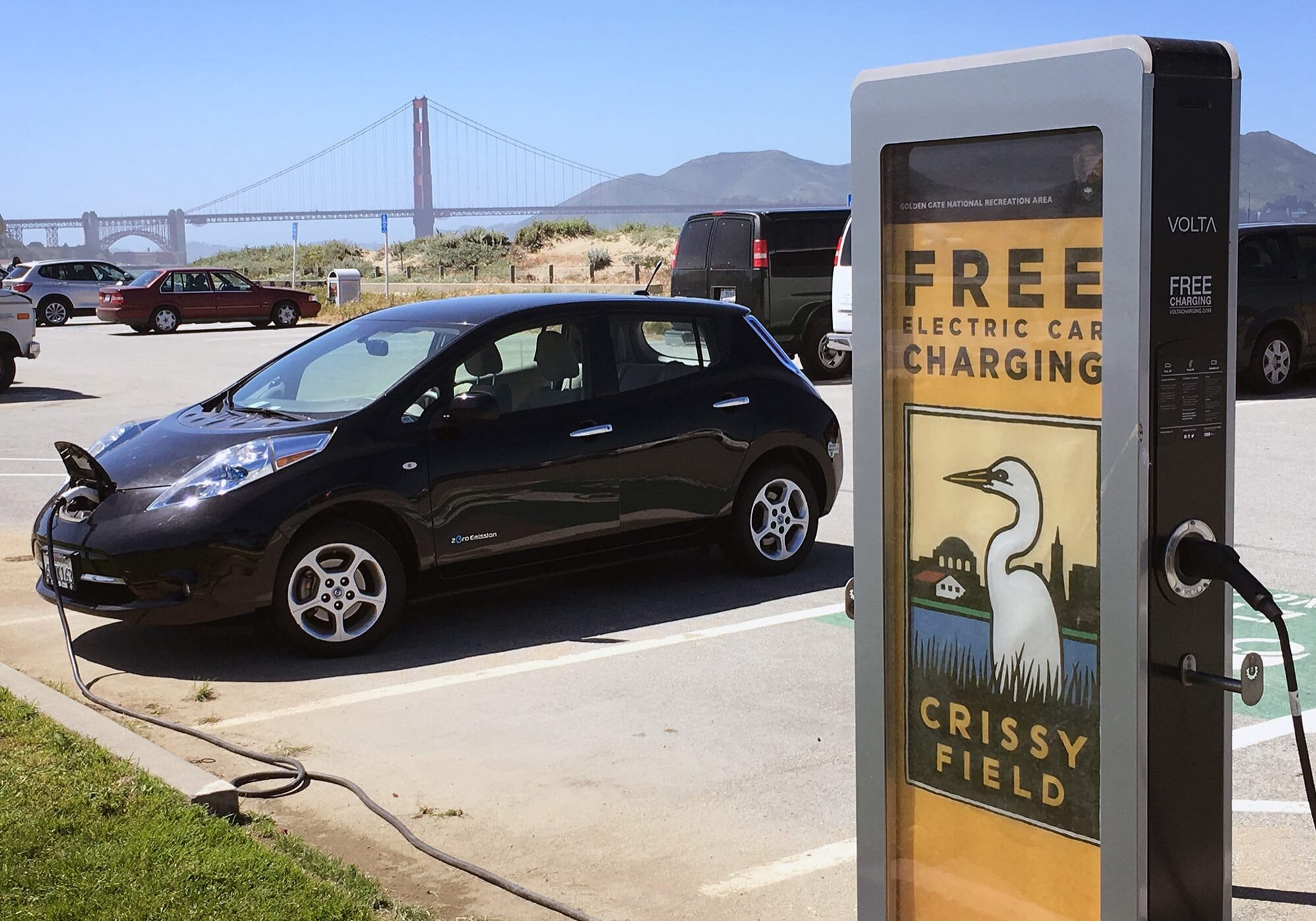
It May Not Cost You More To Drive Home In A Climate-Friendly Car
September 28, 2016 | | 3 min read
It has been a common belief that low-emissions vehicles, like hybrids and electric cars, are more expensive than other choices. But a new study finds that when operating and maintenance costs are included in a vehicle’s price, cleaner cars may actually be a better bet.
The cars and trucks we drive are responsible for about a fifth of greenhouse gas emissions in this country. That’s why Jessika Trancik, an energy scientist at the Massachusetts Institute of Technology (MIT), decided it was time to take a closer look at vehicle emissions.
“The question that we started with was ‘How do cars, how do personal vehicles, compare to climate targets?'” Trancik says.
She and her colleagues wanted to know which of the 125 most popular cars in the U.S. are both cost-efficient and climate-friendly.
This week, they published the results online and in an accompanying paper in the journal Environmental Science & Technology — with some surprising results about the cost of cleaner cars.
[FLEX-CONTENT]
“You don’t actually have to pay more for those lowest-emitting vehicles,” says Trancik.
And, they found that some cars on the market — most hybrid and battery electric cars — already meet the global emissions goals the U.S. recently agreed to meet by the year 2030. This group includes cars like the Ford Focus Electric, Chevrolet Volt, Nissan Leaf, Toyota Prius, Tesla Model 3 and BMW i3.
It’s a sliver of good news, which is rare when talking about climate change.
But, says Trancik: “The average car sold is about 50 percent above the 2030 target. So, there certainly is a disconnect between the kind of cars people are buying and where we need to get by 2030.”
The Chevrolet Suburban, for example, falls on the other end of the chart — with high lifetime costs and greenhouse gas emissions well above the American average.
And there’s a bigger gap in terms of the goals set for 2050, says Chris Gearhart, who directs transportation research at the National Renewable Energy Laboratory in Colorado.
“I come to work every day because I think that getting greenhouse gas emissions out of the transportation sector is one of the most important things that we can work on,” Gearhart says.
He says Trancik’s work is exciting because it clearly shows how individual choices can make an impact.
“And you don’t have to have a bank account that can afford a Tesla,” he says.
But, he says, there’s still a lot of work to do.
Right now, U.S. cars emit enough greenhouse gases per year to fill more than 700,000 empire state buildings. To meet 2050 goals, we’d have to reduce that volume by about 150,000 empire state buildings.
9(MDA1MjcyMDE0MDEyNzUzOTU1NTMzNmE5NQ010))

Reading these stories is free, but telling them is not. Start your monthly gift now to support Flatland’s community-focused reporting.
Related Stories
Nick’s Picks | Roads, Bathrooms, Costco and More …
New Toll Road Opens Kansas City’s first toll road opens this week. Starting Saturday, you’ll pay up to $3.50 to travel the new express lanes on U.S. Highway 69 from 103rd to 151st streets in Overland Park. There are no toll booths — cameras scan your license plate, and a bill arrives by mail. KTAG…
Up From the Ashes: Warwick Theatre Revival Draws Applause
Two years ago, John Cleary met a fellow Kansas City actor for drinks. Their conversation centered on the fate of the Metropolitan Ensemble Theatre. A large portion of the ensemble’s home, the Warwick Theatre, was ash, charred timbers and soot-saturated costumes and props — remnants from a recent massive fire. The destruction was so great…
Nick’s Picks | Baseball, Drones, Romance and More …
Royals Reveal Next week, the Kansas City Royals head to Arizona for Spring Training. And that’s the mayor’s self-imposed deadline to lock in a stadium deal. So, is this finally the week owner John Sherman steps to the plate and unveils where the Royals will build their next home? At last week’s council meeting, Mayor…