
‘Lest We Forget’ Holocaust Exhibit Opens Friday at World War I Museum
September 19, 2019 | Kevin Collison | 3 min read
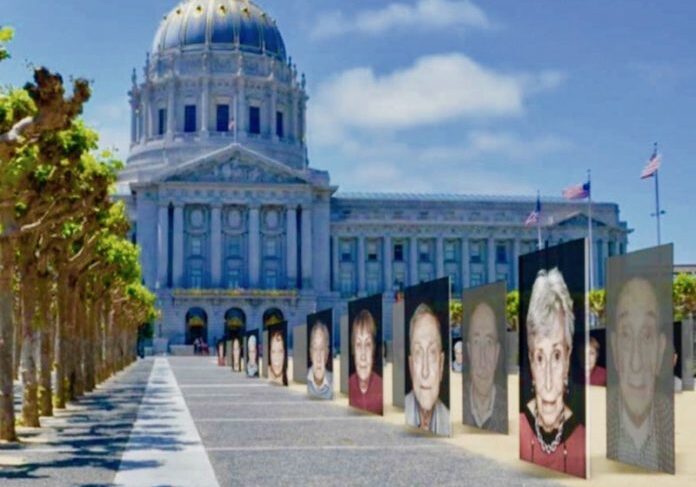
“Lest We Forget,” a traveling Holocaust exhibition that opened in Germany in 2015, is arriving at the National World War I Museum and Memorial at a time anti-Semitism is increasing in the U.S. and white nationalists are fanning intolerance.
The outdoor exhibition will feature 70 large portraits of Holocaust survivors, including seven living in Kansas City. It was created by Luigi Toscano, a German-Italian photographer and filmmaker.
Matt Naylor, executive director of the World War I Museum, sees a troubling connection between current events and the years leading up to the outbreak of World War I in 1914.
“The world today is more like the world of 1913 than it has been anytime in the last 106 years,” he said.
“Internationally, we see a rise in tribalism, we see changing or shifting alliances, and we see a growing disparity between the most wealthy and everybody else.
“These were contributing factors to World War I. There are ominous parallels. This installation is even more topical and important to the conversations we’re having.”
At its formal opening Friday on the Memorial Courtyard, the local survivors whose portraits are displayed will be among the guests. Toscano will conduct guided tours following the ceremony.

Kansas City resident Sonia Warshawski’s portrait will be part of the exhibition. She was liberated from the Bergen Belsen concentration camp in 1945 by a British Army unit in which WWI Museum director Matt Naylor’s father served. (Photo by Luigi Toscano)
For Naylor, the exhibition has a personal connection. One of the local residents whose portrait is included is Sonia Warshawski.
In 1945, she was imprisoned by the Nazis in the Bergen Belsen concentration camp when it was liberated by a British tank division. Naylor’s father was among the soldiers serving in the unit.
As a teenager, Warshawski and her family had been forced from their Polish village to the Jewish ghetto in 1942 to work as slave laborers. She and her mother were later deported to the Majdanek death camp where her mother died.
Warshawski was then sent to Auschwitz and finally Bergen Belsen. After being liberated, she met her husband John at a displaced persons camp and they immigrated to Kansas City in 1948. Her story became a recent documentary, “Big Sonia.”
“One of the powerful effects of having these local photos is it personalizes the exhibition,” Naylor said.
“The Holocaust was not an abstract event of the past. Sonja and the others live among us. Many of their families and neighbors did not survive.”
“Lest We Forget” has been touring the United States since 2018 and has been in New York, Washington D.C., Boston and San Francisco. After its Kansas City stay, it will go on to Pittsburgh, Chicago, Brussels and Geneva.
The exhibition, which will run through Oct. 6, is coming to Kansas City with the help of Goethe Pop Up Kansas City.
Naylor said the World War I Museum was approached by its organizers to bring it here.
“It was something we were very interested in,” he said.
“The conversation around the Holocaust is never a tired conversation and what better location in Kansas City to host this than this civic place, this place of memory?”
The University of Missouri-Kansas City also is holding two events associated with the “Lest We Forget” exhibition. Details can be found here.
Flatland contributor Kevin Collison is founder and publisher of CityScene KC, an online source for downtown news and issues.
Reading these stories is free, but telling them is not. Start your monthly gift now to support Flatland’s community-focused reporting.
Related Stories
A Better Big Blue Battlefield in Kansas City | Part II
Editor’s note: This is the second installment of a three-part series on the restoration of the Big Blue Battlefield in Kansas City, Missouri. In the mid-19th century, overland trail teamsters driving wagons west sometimes followed a branch of the Santa Fe Trail out of Independence, using the shortcut to reach fields where the animals used…
A Better Big Blue Battlefield | Part I
Editor’s note: This is the first installment of a three-part series on the restoration of the Big Blue Battlefield in Kansas City, Missouri. It was cold for late October in Kansas City. In 1864 Lt. Patrick Henry Minor, then leading an artillery battery against Confederate forces, would die the following March, from what likely had…
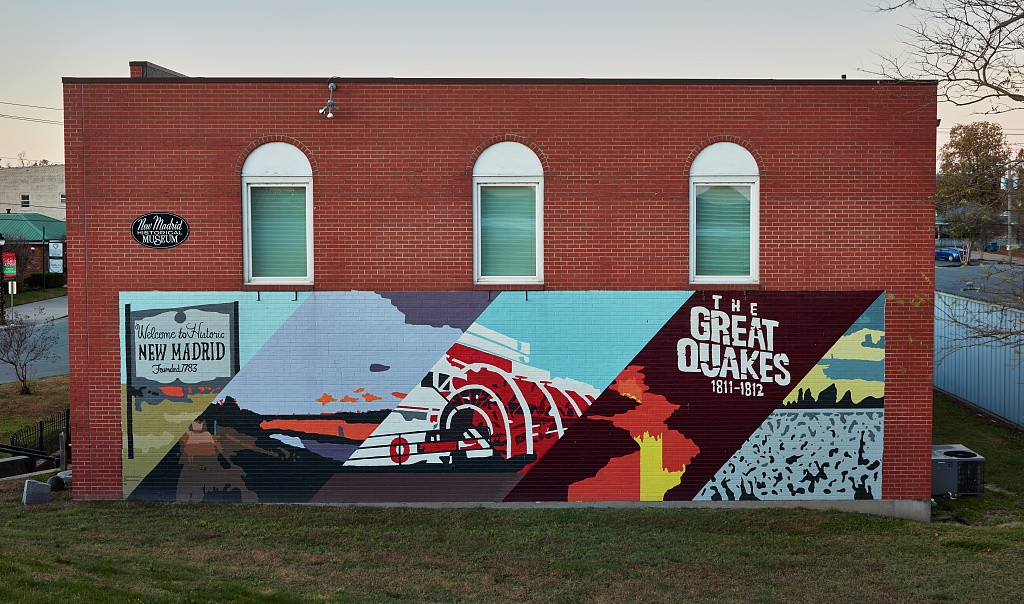
Historic Earthquakes Accounts Guide Modern First Responders
On December 16, 1811, a U.S. Army officer stationed in the soon-to-be-established Missouri Territory woke just after 2 a.m. reacting to what he described as a “great agitation”, an earthquake. Several of the officer’s guards, he soon wrote to a friend, “could scarcely keep their feet” during the shaking, which he said lasted about eight…