
curiousKC: What is the history of the Rosedale Arch?
November 16, 2020 | Clarence Dennis | 4 min read
Driving south on Interstate 35 from downtown Kansas City and across the state line, look to the hills on the left at about 7th Street Trafficway.
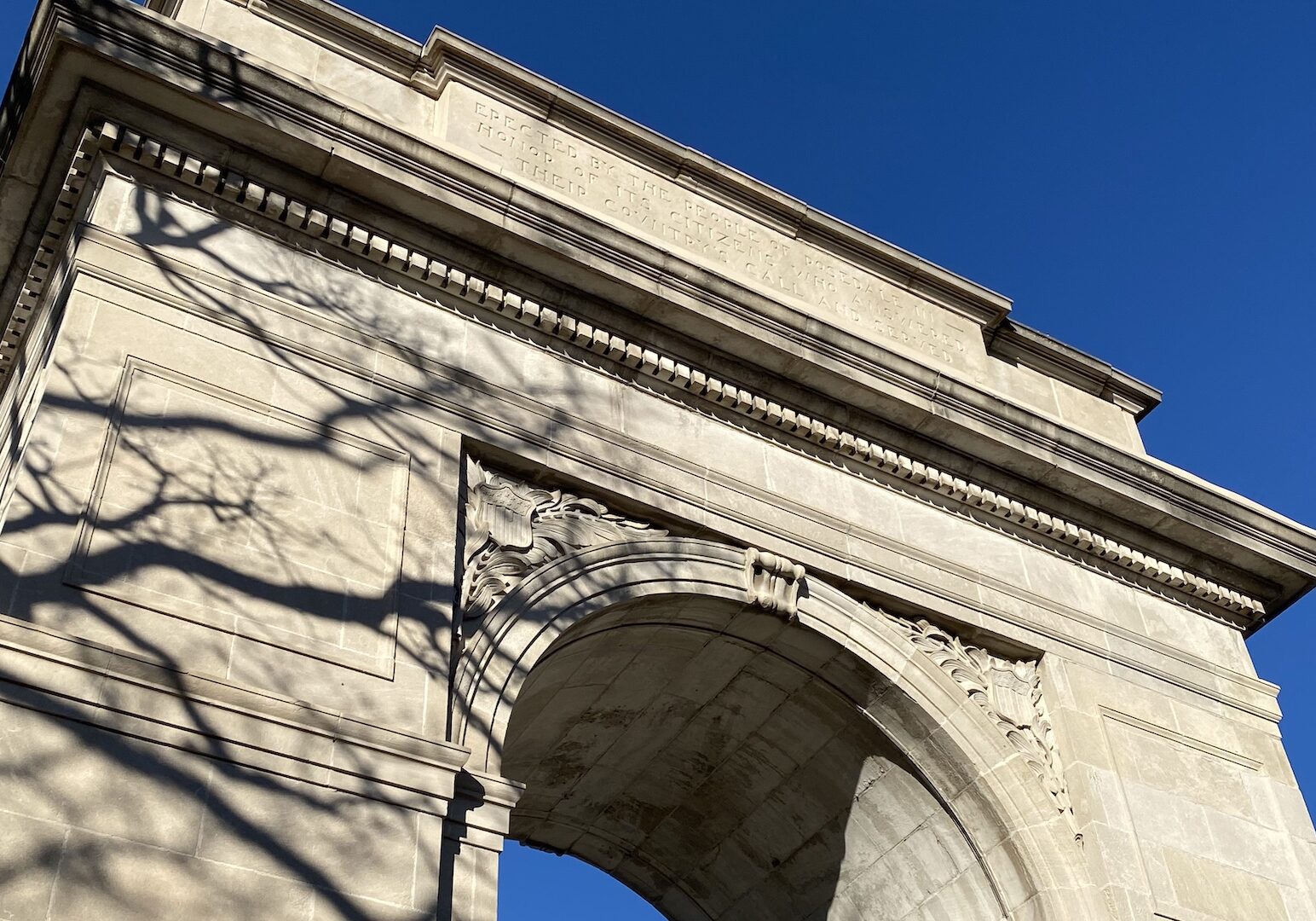
That stone monument up there in the trees? That’s the Rosedale Arch.
Look closely, though, because even born-and-raised Kansas City, Kansan and curiousKC reader Bea Springer admits the 35-foot-tall monument is hard to find.
“My husband and I were looking for it one day and couldn’t find it anywhere,” Springer said, recalling the moment that sparked curiosity. “Then we looked up and we were right in front of it.”
Springer wanted to know a little more about her hometown’s historic place.
“What’s the story behind it? How long has it been there and who maintains it?”
‘Erected By The People of Rosedale’

On July 20, 1923, a crowd of nearly 6,000 people gathered at the top of Mount Marty in Rosedale, just a few blocks from the modern-day KU Medical Center campus.
According to the monument’s National Register of Historic Places nomination form filed in 1976, elected officials and military commanders made their respective speeches that day to the crowd of community members, before turning it over to the guest of honor and his golden spade.
Then with a jab of the shovel, the famous one-armed French Fourth Army General Henri Gouraud officially broke ground for a project to immortalize Rosedale community members who fought in World War I. It was a long time coming.
In 1922, the city of Rosedale was annexed by Kansas City, Kansas, creating legal issues regarding the $25,000 bond approved by Rosedale citizens a year prior to fund construction of the arch.
Complications were eventually straightened out and ground was broken before proud community members. Just over a year later the Rosedale World War I Memorial Arch was completed in September of 1924.

An inscription on the monument’s south face reads:
“ERECTED BY THE PEOPLE OF ROSEDALE IN HONOR OF ITS CITIZENS WHO ANSWERED THEIR COUNTRY’S CALL AND SERVED UNDER ARMS FOR THE TRUMP OF RIGHT OVER MIGHT IN THE WORLD WAR.”
Through The Years
The Rosedale Arch was designed by Rosedale resident and American Legion member John Marshall.
His original plans called for the arch to serve as a gateway to an athletics field, though the dream never came to fruition.
Ironically, construction of the adjacent Rosedale High School’s athletic field in 1930 cut off access to the arch. (Don’t feel too bad, Bea. The arch always has been hard to find.)
The planning blunder resulted in nearly 30 years of overgrown brush and dilapidation surrounding the stone memorial, until 1962 when a WWI veteran spoke up regarding the proud structure’s deterioration.
The space was soon restored by the creation of a new access road, which is still in use today. In the same year, the Rosedale Arch was rededicated to veterans of all wars.

Additional changes were made to the area in 1972, when a plaza with benches, lighting and walkways was constructed surrounding the arch, making for an ideal viewpoint overlooking the Kansas City skyline.
Today, the Rosedale Arch is maintained through a joint effort by the Wyandotte County and Kansas City, Kansas Unified Government Parks and Recreation Department and the Rosedale Development Association along with its AmeriCorps Kansas team.
Monument Mini-Me
The 96-year-old stone arch might look a little familiar.
One of the first students to enroll in the School of Architecture at the University of Kansas in 1912, Marshall’s studies were soon interrupted when the United States joined the Great War.
The college student enlisted and deployed overseas, where often he made sketches of the structures in Paris, including the famous Arc de Triomphe.
The National Register document also details that despite the Arc de Triomphe’s obvious source of inspiration, the Rosedale Arch more proportionately resembles the Washington Square Arch in New York City.

“I just don’t think a lot of people know it’s there,” Springer added about her city’s unsuspecting memorial that’s in quite the architectural company.
Today, the Rosedale Arch serves as a symbol of the quiet KCK community. The Rosedale Development Center’s Rosedale Arch Club, is “comprised of the generous individuals, households, businesses, and institutions who are proud members of the Rosedale community and support the work we do to achieve RDA’s community-informed goals.”
Reading these stories is free, but telling them is not. Start your monthly gift now to support Flatland’s community-focused reporting.
Related Stories
A Better Big Blue Battlefield in Kansas City | Part II
Editor’s note: This is the second installment of a three-part series on the restoration of the Big Blue Battlefield in Kansas City, Missouri. In the mid-19th century, overland trail teamsters driving wagons west sometimes followed a branch of the Santa Fe Trail out of Independence, using the shortcut to reach fields where the animals used…
A Better Big Blue Battlefield | Part I
Editor’s note: This is the first installment of a three-part series on the restoration of the Big Blue Battlefield in Kansas City, Missouri. It was cold for late October in Kansas City. In 1864 Lt. Patrick Henry Minor, then leading an artillery battery against Confederate forces, would die the following March, from what likely had…
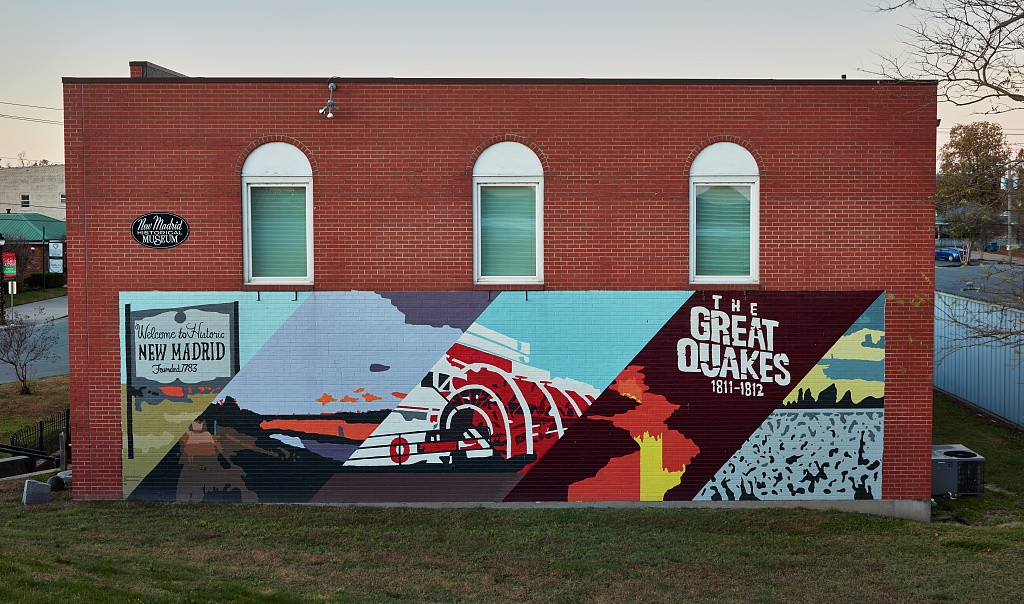
Historic Earthquakes Accounts Guide Modern First Responders
On December 16, 1811, a U.S. Army officer stationed in the soon-to-be-established Missouri Territory woke just after 2 a.m. reacting to what he described as a “great agitation”, an earthquake. Several of the officer’s guards, he soon wrote to a friend, “could scarcely keep their feet” during the shaking, which he said lasted about eight…