

Frustrated Jackson County Lawmakers Enact Their Own Prescription Drug Monitoring Plan
Frustrated by the Missouri Legislature’s failure to enact a statewide prescription drug plan, Jackson County last week joined St. Louis and St. Louis County in enacting its own plan, hoping it will cut down on painkiller abuse and addiction.
Missouri is the lone state in the nation without a prescription drug database, a tool used to track patients who abuse prescription painkillers and to prevent “doctor shopping” by individuals seeking prescriptions from multiple physicians.
Missouri’s efforts to adopt a prescription drug monitoring program, or PDMP, have been stymied by a small group of lawmakers led by Sen. Rob Schaaf, a St. Joseph Republican and family physician, who says it would infringe on individuals’ privacy.
— Dan Margolies is editor of Heartland Health Monitor, a reporting collaboration that includes KCUR, KCPT and KHI News Service, an editorially independent initiative of the Kansas Health Institute.
State’s Legal Fees Mount In Case Challenging Effort To Defund Planned Parenthood In Kansas
The state of Kansas incurred nearly $300,000 in legal fees in just three months to defend a lawsuit brought by Planned Parenthood challenging the state’s decision to boot the organization from the Medicaid program.
Invoices obtained by KCUR show that outside law firms representing the state billed it $282,477 in legal fees and $2,725 in expenses between May 29 and Aug. 31.
The invoices were provided by the Kansas Department of Health and Environment in response to a Kansas Open Records Act request. KDHE Secretary Susan Mosier is the defendant in the lawsuit, which seeks to overturn her decision in May to block Medicaid payments to Planned Parenthood.
— D.M.
Federal Officials Question Kansas Disability Support Policies
Federal officials Monday opened their regional office in Kansas City to take feedback on several changes to disability support policies in Kansas — including one they’ve instructed state officials to put on hold.
The Centers for Medicare and Medicaid Services told leaders of the Kansas Department of Health and Environment and Kansas Department for Aging and Disability Services earlier this month they cannot implement a change to the “capable person” policy — one of two changes to home and community-based disability support services made in May to help balance the state budget.
Federal officials also have instructed the state to provide more information about the elimination of a waiting list for Kansans with physical disabilities who requested such services. KDADS announced in August that the list was eliminated, but CMS officials say they have questions about whether Kansans were dropped from the list improperly.
The inclusion of home and community-based services in KanCare was one of the most controversial aspects of the state’s 2013 switch to managed care Medicaid administered by three private insurance companies.
—Andy Marso is a reporter for KHI News Service
Parents Seek Right Autism Medication Mix for Children with Disabilities
Judy Talbot is trying to get her daughter out of a state facility for Kansans with intellectual and developmental disabilities. Zack Zbeeb is trying to get his son into one.
But both ultimately have the same goal: to do a “medication washout” to determine whether the prescription drugs their autistic kids take are helping to control their recent dangerous psychotic episodes or actually causing them.
[FLEX-CONTENT]
Zbeeb, from Wichita, wants his 15-year-old son to be weaned off his medications at a place like Parsons State Hospital and Training Center.
“We felt this was an appropriate place for my son to be in a 100 percent structured setting,” Zbeeb said.
Talbot got her 32-year-old daughter into a state facility, the Kansas Neurological Institute, in August after her daughter spent a week strapped to a bed in a hospital emergency room.
—A.M.
From PBS NewsHour
Published on Oct 17, 2016
In the midst of radical changes in health care policy, some U.S. providers are looking to an unlikely model: Sub-Saharan Africa, where ordinary citizens are trained as medical support for their communities. In the U.S., City Health Works is following suit, using community members to form long-term relationships with patients to fill gaps in care. Special correspondent Sarah Varney reports.

Reading these stories is free, but telling them is not. Start your monthly gift now to support Flatland’s community-focused reporting.

Related Stories

Nick’s Picks | Roads, Bathrooms, Costco and More …
New Toll Road Opens Kansas City’s first toll road opens this week. Starting Saturday, you’ll pay up to $3.50 to travel the new express lanes on U.S. Highway 69 from 103rd to 151st streets in Overland Park. There are no toll booths — cameras scan your license plate, and a bill arrives by mail. KTAG…
Up From the Ashes: Warwick Theatre Revival Draws Applause
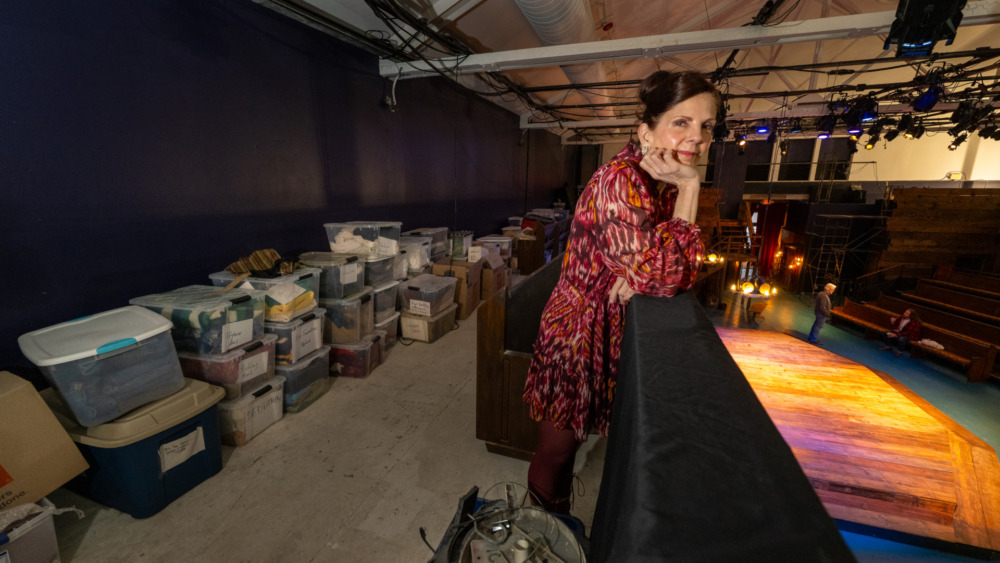
Two years ago, John Cleary met a fellow Kansas City actor for drinks. Their conversation centered on the fate of the Metropolitan Ensemble Theatre. A large portion of the ensemble’s home, the Warwick Theatre, was ash, charred timbers and soot-saturated costumes and props — remnants from a recent massive fire. The destruction was so great…

Nick’s Picks | Baseball, Drones, Romance and More …
Royals Reveal Next week, the Kansas City Royals head to Arizona for Spring Training. And that’s the mayor’s self-imposed deadline to lock in a stadium deal. So, is this finally the week owner John Sherman steps to the plate and unveils where the Royals will build their next home? At last week’s council meeting, Mayor…